

Exam Code: H12-224
Exam Name: HCNP-R&S Fast Track (Huawei Certified Network Professional - Routing & Switching Fast Track)
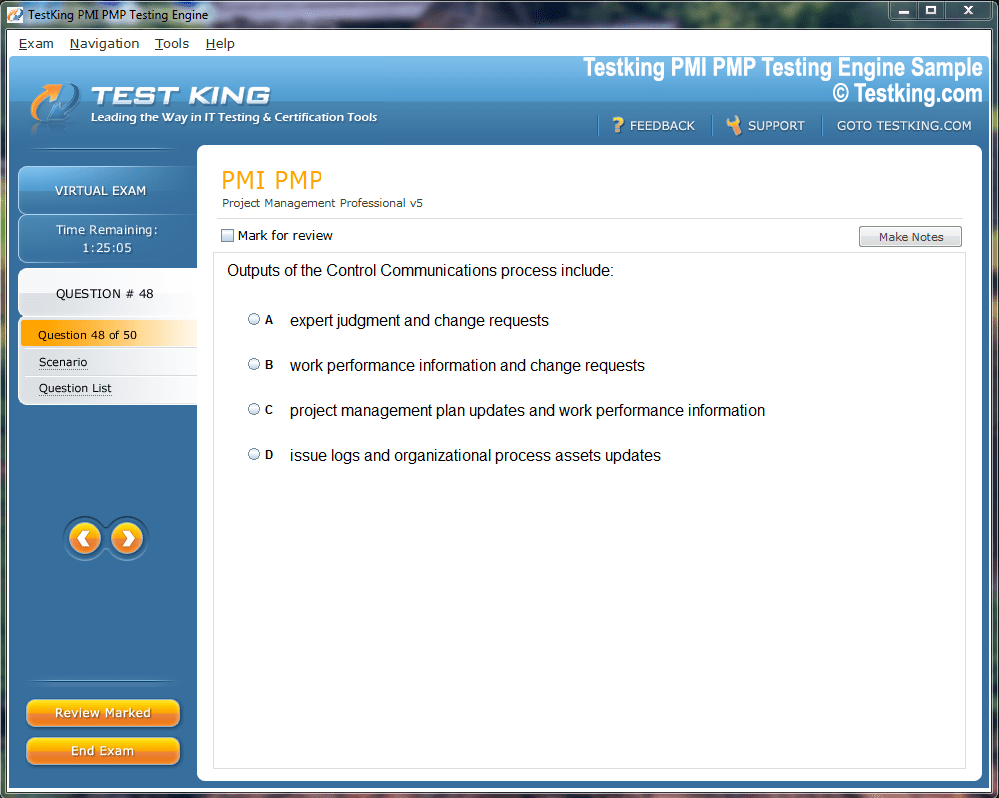
Product Screenshots

Frequently Asked Questions
Where can I download my products after I have completed the purchase?
Your products are available immediately after you have made the payment. You can download them from your Member's Area. Right after your purchase has been confirmed, the website will transfer you to Member's Area. All you will have to do is login and download the products you have purchased to your computer.
How long will my product be valid?
All Testking products are valid for 90 days from the date of purchase. These 90 days also cover updates that may come in during this time. This includes new questions, updates and changes by our editing team and more. These updates will be automatically downloaded to computer to make sure that you get the most updated version of your exam preparation materials.
How can I renew my products after the expiry date? Or do I need to purchase it again?
When your product expires after the 90 days, you don't need to purchase it again. Instead, you should head to your Member's Area, where there is an option of renewing your products with a 30% discount.
Please keep in mind that you need to renew your product to continue using it after the expiry date.
How many computers I can download Testking software on?
You can download your Testking products on the maximum number of 2 (two) computers/devices. To use the software on more than 2 machines, you need to purchase an additional subscription which can be easily done on the website. Please email support@testking.com if you need to use more than 5 (five) computers.
What operating systems are supported by your Testing Engine software?
Our H12-224 testing engine is supported by all modern Windows editions, Android and iPhone/iPad versions. Mac and IOS versions of the software are now being developed. Please stay tuned for updates if you're interested in Mac and IOS versions of Testking software.
Top Huawei Exams
- H12-811_V2.0 - HCIA-Datacom V2.0
- H12-821 - HCIP-Datacom-Core Technology V1.0
- H12-811 - HCIA-Datacom V1.0
- H13-611 - HCIA-Storage
- H13-624_V5.5 - HCIP-Storage V5.5
- H19-308 - HCSA-Presales-Storage V4.0
- H19-301 - Huawei Certified Pre-sales Associate-IP Network(Datacom)-ENU
- H19-338_V3.0 - HCSP-Presales-Storage V3.0
- H12-831 - HCIP-Datacom-Advanced Routing & Switching Technology
- H19-101_V6.0 - HCSA-Sales-IP Network V6.0
- H19-401_V2.0 - HCSP-Presales-Campus Network Planning and Design V2.0
- H12-711_V4.0 - HCIA-Security V4.0
- H13-629 - HCIE-Storage
- H13-624 - HCIP-Storage V5.0
- H12-891 - HCIE-Datacom
- H35-210_V2.5 - HCIA-Access V2.5
- H31-311_V2.5 - HCIA-Transmission V2.5
- H12-841_V1.5 - HCIP-Datacom-Campus Network Planning and Deployment V1.5
- H19-461_V1.0 - HCSP-Presales-Transmission V1.0
- H13-811_V2.2 - HCIA-Cloud Service V2.2
- H12-323_V2.0 - HCIP-WLAN V2.0
- H13-821_V3.5 - HCIP-Cloud Service Solutions Architect V3.5
- H12-351 - HCIE-WLAN (Written) V1.0
Elevating ICT Careers with Huawei H12-224 Certification
Huawei Certification stands as one of the most comprehensive frameworks in the global ICT domain, embodying the company’s vision of nurturing professionals who can thrive in an era dominated by digital convergence. Built upon decades of industrial experience and technological exploration, this certification system is not merely an assessment of knowledge but a structured pathway toward mastering the multifaceted disciplines of information and communications technology. It represents a blend of theoretical understanding, practical expertise, and alignment with the most current industrial paradigms.
The foundation of Huawei Certification lies in its profound understanding of how ICT technologies evolve and how human expertise must evolve in parallel. With years of involvement in research, network design, and innovation, Huawei recognized the urgent need to connect education, application, and enterprise-level skills into one cohesive ecosystem. This vision materialized in the form of a unified certification model that merges technology, talent cultivation, and strategic foresight. Through this integration, Huawei has succeeded in creating a learning and validation structure that not only strengthens individual competence but also contributes to the advancement of digital infrastructure worldwide.
At its core, Huawei Certification functions as a dynamic instrument for shaping ICT professionals capable of handling the interconnected dimensions of modern networks. The program is anchored in the career development life cycle of the ICT industry, ensuring that every stage of certification aligns with the natural progression of an individual’s professional journey. This structured hierarchy fosters continuous growth and helps experts transition smoothly from foundational understanding to advanced specialization.
Huawei’s approach to technical education is guided by the principle of “Cloud-Pipe-Device” convergence. This synergy reflects how cloud computing, network transmission, and intelligent devices interact seamlessly within the digital ecosystem. By basing its certification architecture on this triad, Huawei ensures that learners acquire an integrated perspective on modern information systems rather than fragmented technical knowledge. The resulting outcome is a workforce that can understand, design, and implement technologies that drive digital transformation across industries.
The Structural Foundation of Huawei Certification
The Huawei Certification framework encompasses a spectrum of technical domains, including IP networking, IT infrastructure, communication technology (CT), and ICT convergence. Its strength lies in its inclusiveness; it does not isolate these domains but interconnects them through shared learning objectives and practical applications. Unlike traditional certification systems that tend to focus on narrow areas of expertise, Huawei’s model embraces the full continuum of ICT technologies, preparing individuals to adapt to hybrid infrastructures and emerging industry demands.
The certification system follows a hierarchical pattern designed to guide learners through multiple stages of proficiency. The journey begins with foundational knowledge, advances toward professional-level capabilities, and culminates in expert-level mastery. This progressive structure enables participants to refine both their conceptual understanding and hands-on experience at every phase. The hierarchy also corresponds with specific occupational roles, ensuring that each level aligns with real-world career paths within the ICT sector.
Moreover, Huawei Certification continuously evolves to mirror the latest technological innovations and market trends. As the ICT industry experiences rapid changes due to cloud computing, artificial intelligence, and data convergence, the certification framework updates its content to remain relevant and forward-looking. This adaptive mechanism reflects Huawei’s broader strategy of “Platform + Ecosystem,” emphasizing the creation of a sustainable digital environment where technology, partners, and talent co-develop harmoniously.
Each certification domain under Huawei’s framework is meticulously structured to encapsulate new ideas and technical advancements. This includes emerging technologies such as cloud services, intelligent computing, and integrated network management. By embedding these innovations into its courses and assessments, Huawei ensures that certification holders possess knowledge that aligns with contemporary enterprise requirements and global digital strategies.
Huawei’s Vision of Cloud-Pipe-Device Synergy
The concept of “Cloud-Pipe-Device” forms the intellectual and operational backbone of Huawei Certification. It reflects a holistic technological philosophy that integrates cloud-based computing, efficient network transport, and intelligent terminal devices into a unified system. This model underpins how data flows, how services are delivered, and how users experience digital interaction.
In the context of Huawei’s certification system, this synergy translates into a training paradigm that develops professionals capable of managing the full spectrum of ICT operations—from infrastructure design to service deployment. The cloud element represents data centers, virtualization, and service platforms; the pipe embodies transmission networks, routing, and switching; and the device encompasses user-end interfaces and intelligent hardware. Together, these elements create a coherent ecosystem that defines modern information and communication architectures.
By incorporating this concept into its educational framework, Huawei ensures that learners develop not only isolated technical competencies but also a systemic understanding of how various technological layers depend on and complement one another. This comprehension is particularly critical as industries adopt hybrid infrastructures that blend physical networks with digital intelligence. Through its certification programs, Huawei fosters a generation of engineers who can visualize the interconnectedness of technological ecosystems and optimize them for efficiency and innovation.
The Two Pillars of Huawei Certification
The Huawei Certification structure is broadly divided into two primary categories: Cloud Service & Platform and ICT Infrastructure. Each category represents a core dimension of the digital transformation landscape and encompasses distinct skill sets necessary for today’s complex ICT environments.
The Cloud Service & Platform branch focuses on technologies related to cloud architecture, virtualization, data management, and application enablement. Professionals under this category learn to design, deploy, and manage scalable cloud ecosystems that support business agility and innovation. They acquire expertise in cloud migration, storage optimization, and service orchestration—skills that are increasingly vital as organizations transition from traditional IT infrastructures to cloud-native models.
The ICT Infrastructure category, on the other hand, emphasizes networking, communication, and integrated technology foundations. It involves mastery over routing, switching, security, wireless communication, and the orchestration of enterprise network systems. Professionals in this stream become adept at designing and maintaining stable, high-performing networks that serve as the backbone for digital connectivity.
Both pillars are intrinsically linked, mirroring the real-world dependence between cloud services and physical network layers. The dual structure allows candidates to select their specialization while retaining a comprehensive understanding of the broader technological ecosystem. This balance of focus and integration ensures that Huawei-certified professionals remain versatile and adaptable in a rapidly transforming ICT environment.
Huawei’s Contribution to Industry Talent Ecosystems
Huawei Certification does not function in isolation; it is part of a larger mission to cultivate a sustainable ICT talent ecosystem. The company has leveraged its experience across various sectors—such as government, finance, energy, transportation, and education—to develop training solutions that address each industry’s distinctive requirements. These solutions go beyond generic skill development, offering specialized consulting and capability-building programs tailored to the nuances of specific markets.
Huawei’s approach to talent development is strategic and multi-layered. It begins with an understanding of industry objectives and translates them into training frameworks that support long-term growth. This process unfolds across three interconnected levels: strategy planning, system construction, and capability enhancement. By assisting enterprises in building customized training systems, Huawei helps them align workforce development with corporate objectives, technological evolution, and competitive demands.
The company’s strength lies in its ability to merge technical expertise with pedagogical design. Through a combination of structured learning paths, professional mentorship, and applied practice, Huawei ensures that learners not only acquire theoretical knowledge but also gain the confidence to apply it effectively. This comprehensive methodology results in the creation of a resilient workforce that can lead digital innovation within its respective fields.
From Education to Industry: Bridging the Knowledge Gap
A defining characteristic of Huawei Certification is its close connection with higher education. Recognizing that universities are the starting point of most professional journeys, Huawei collaborates with academic institutions to integrate its certification programs into academic curricula. This partnership creates a bridge between formal education and industry expectations, ensuring that students enter the workforce with both academic credentials and practical technical validation.
Through its hierarchical capability development model, Huawei offers structured progression for learners at different stages of their careers. Students and recent graduates begin with associate-level certifications, which cover the foundational concepts of ICT technologies. As they accumulate professional experience, they can pursue higher-level credentials that demand greater technical depth and problem-solving acumen. Ultimately, this continuum leads to expert-level certifications that signify mastery in specialized domains.
By fostering collaboration between academia and industry, Huawei strengthens the alignment between education and employment. This integration minimizes skill gaps, enhances employability, and accelerates technological innovation across sectors. It also encourages a culture of continuous learning, where professionals regularly update their competencies in response to emerging technologies.
Exploring the Essence of the Huawei H12-224 HCIP-Routing & Switching Certification
Among Huawei’s numerous certifications, the H12-224: HCIP-Routing & Switching (Fast Track) V2.0 exam holds a distinctive position. It serves as a crucial bridge between foundational and expert-level competencies within the routing and switching domain. This examination is meticulously structured to assess not only theoretical understanding but also the candidate’s ability to apply complex concepts in small and medium-sized network environments.
The certification reflects Huawei’s long-term dedication to enhancing global network engineering standards and ensuring that professionals can design, deploy, and maintain sophisticated data communication systems. The exam’s focus on routing, switching, and network control embodies the essential components that define reliable and scalable communication infrastructures. Candidates who pursue this certification are often network engineers, ICT professionals, and students who aspire to contribute meaningfully to the growing landscape of digital connectivity.
Huawei designed the H12-224 exam to be more than a test—it functions as a developmental instrument that molds practitioners into resourceful thinkers. By mastering the exam’s content, learners gain a holistic perception of network design principles, protocol behaviors, and device interconnectivity. In essence, the certification transforms conceptual awareness into technical dexterity.
The Foundational Philosophy Behind the H12-224 Exam
The philosophy guiding the HCIP-Routing & Switching (Fast Track) V2.0 certification stems from Huawei’s belief that effective network management requires an equilibrium between conceptual insight and operational agility. A professional must not only comprehend how data traverses through interconnected systems but also anticipate potential inefficiencies and design architectures that withstand scalability challenges.
Huawei recognizes that the ICT environment has expanded beyond traditional static networks. Enterprises now operate in dynamic ecosystems characterized by distributed applications, hybrid clouds, and multi-vendor environments. The H12-224 certification aims to cultivate professionals who can navigate these complexities with precision. It emphasizes the orchestration of routing protocols, the optimization of network control mechanisms, and the deployment of advanced switching technologies—all vital for ensuring efficient data transmission.
Furthermore, the exam’s structure mirrors Huawei’s broader pedagogical framework: theory, implementation, and innovation. Candidates must grasp conceptual frameworks, configure devices according to specified requirements, and troubleshoot networks to restore optimal functionality. This tri-layered methodology allows Huawei to uphold a global standard of excellence in ICT training and assessment.
Exam Overview and Core Objectives
The H12-224 exam evaluates a participant’s ability to manage and design small-to-medium network topologies using Huawei routers and switches. It ensures that candidates can integrate general network technologies while applying Huawei-specific protocols and configurations.
Key objectives of the exam include:
Demonstrating understanding of routing mechanisms such as OSPF, IS-IS, and BGP.
Applying routing control tools to manage data flow effectively.
Configuring multicast and Eth-Trunk technologies to enhance network performance.
Implementing switch-based security and redundancy protocols.
Understanding advanced Ethernet concepts and spanning tree optimizations.
Through these objectives, the certification verifies that individuals possess both the breadth and depth of knowledge necessary for real-world ICT environments. The assessment is designed to replicate the technical challenges encountered in professional scenarios, ensuring that successful candidates can function autonomously in demanding network roles.
In-Depth Examination of Routing Protocols
Routing protocols form the cognitive foundation of the H12-224 exam. They dictate how information travels between network nodes, determine path efficiency, and maintain network stability. Within this context, the exam places considerable emphasis on three primary routing technologies: OSPF, IS-IS, and BGP.
OSPF (Open Shortest Path First)
OSPF is a link-state routing protocol that establishes network topology awareness by exchanging information about the state of links between routers. In the H12-224 exam, candidates must demonstrate mastery of OSPF principles, configuration, and troubleshooting. They must understand the formation of neighbor relationships, the synchronization of link-state databases, and the hierarchical structure that divides networks into areas to optimize performance.
Additionally, the exam requires familiarity with OSPF’s special area configurations, including stub, totally stubby, and not-so-stubby areas (NSSA). These configurations help balance routing efficiency with resource conservation. Candidates are also expected to interpret protocol packets, LSAs, and route calculation methods for both intra-area and inter-area communications.
IS-IS (Intermediate System to Intermediate System)
IS-IS is another link-state protocol that operates at the network layer and is often compared to OSPF for its scalability and adaptability in large network environments. Within the Huawei H12-224 exam, participants explore the operational differences between IS-IS and OSPF while learning the configuration methods for IS-IS routers.
Candidates must demonstrate understanding of IS-IS hierarchical design, adjacency establishment, and route propagation. The exam also examines how IS-IS contributes to redundancy and efficient routing within service provider and enterprise infrastructures.
BGP (Border Gateway Protocol)
BGP operates as the de facto standard for routing between autonomous systems. Its complexity lies in its ability to manage extensive routing tables and influence traffic flow through policies and attributes. In the H12-224 certification, participants study the principles of establishing BGP neighbor relationships, route generation methods, and advertisement rules.
The exam also delves into key BGP attributes such as AS-PATH, MED, LOCAL-PREF, and NEXT-HOP, along with route selection rules that determine the best path based on various metrics. Understanding these components enables network professionals to maintain stable external connectivity and avoid routing loops in multi-domain environments.
Routing Control Mechanisms
Routing control is an indispensable component of modern network administration, and Huawei places significant focus on this area within the H12-224 certification. Candidates are expected to demonstrate proficiency in filtering, modifying, and prioritizing routes according to policy requirements.
Participants learn how to implement route filtering using access control lists (ACLs) and IP-prefix lists to manage inbound and outbound traffic. The exam also covers the utilization of routing policy tools and policy-based routing (PBR) to direct specific types of traffic through designated paths. These techniques enable administrators to optimize bandwidth, manage congestion, and enforce organizational policies on network behavior.
The H12-224 exam further evaluates problem-solving capabilities by presenting scenarios involving issues caused by route redistribution. Candidates must identify potential routing loops, inconsistencies, and inefficiencies, then apply corrective configurations to restore network stability.
Understanding Multicast and Eth-Trunk Technologies
Modern enterprise networks rely heavily on multicast communication and link aggregation to enhance performance and reliability. These technologies constitute another significant section of the Huawei H12-224 exam.
Multicast Protocols
Multicast communication allows the transmission of data packets to multiple destinations simultaneously without unnecessarily duplicating traffic. The exam assesses understanding of IGMP (Internet Group Management Protocol) versions 1, 2, and 3, as well as IGMP snooping, which optimizes data forwarding within Layer 2 networks.
Candidates also explore PIM-DM (Protocol Independent Multicast – Dense Mode) and PIM-SM (Sparse Mode), learning how each operates within different network density environments. Configuring and troubleshooting these protocols form an essential part of the practical evaluation.
Eth-Trunk Technology
Eth-Trunk (Ethernet Trunk) technology aggregates multiple physical links into a single logical connection to increase bandwidth and ensure redundancy. Candidates must grasp Eth-Trunk modes, configuration steps, and load-balancing mechanisms. This area reinforces the understanding of network resilience and efficiency, both of which are critical to maintaining consistent performance in enterprise networks.
Advanced Switching Features and Spanning Tree Enhancements
The switching component of the H12-224 exam evaluates the candidate’s capability to design secure and stable Layer 2 infrastructures. Topics include MUX VLANs, port isolation, and port security—each addressing a unique aspect of network segmentation and protection.
MUX VLANs allow communication control between different user groups within the same VLAN, ensuring that specific interfaces remain isolated while still enabling controlled access to shared resources. Port isolation extends this concept by restricting communication between designated ports, improving internal security. Port security mechanisms prevent unauthorized access by binding specific MAC addresses to switch interfaces.
In addition to these security-oriented topics, candidates study RSTP (Rapid Spanning Tree Protocol) and MSTP (Multiple Spanning Tree Protocol). These protocols eliminate network loops and provide faster convergence times. Understanding the limitations of the original STP, the improvements brought by RSTP, and the logical segmentation provided by MSTP ensures that candidates can design resilient, loop-free network topologies.
Exam Format and Evaluation Criteria
The H12-224 exam maintains a rigorous assessment structure that balances conceptual questions with practical problem-solving scenarios. The examination format typically consists of multiple-choice and multiple-answer questions that test understanding across the eight primary technical areas outlined in the syllabus.
The duration of the examination is approximately 90 minutes, during which candidates must achieve a minimum passing score of 600 out of 1000. The test is available in multiple languages, including English, Simplified Chinese, French, and Spanish (Modern), to accommodate the diverse global pool of examinees.
Huawei designs its assessments to mirror real-world conditions. Candidates must analyze configurations, interpret protocol behaviors, and identify correct solutions based on given scenarios. The questions demand a deep comprehension of not just how a network functions but why specific configurations are implemented. This analytical aspect differentiates Huawei certifications from those that rely purely on theoretical memorization.
The Relevance of the H12-224 Exam in Today’s ICT Landscape
As enterprises embrace digital transformation, networking technologies have become the backbone of nearly every operation. From cloud connectivity to data center automation, routing and switching remain the silent engines that power modern infrastructures. The H12-224 certification thus holds immense practical relevance.
Professionals who obtain this certification are equipped with the capacity to design scalable network frameworks capable of handling complex business operations. They become proficient in managing enterprise routing systems, optimizing resource utilization, and ensuring security compliance. In an age where organizations seek efficiency and reliability, such expertise translates directly into strategic value.
Moreover, the certification contributes to global ICT standardization. Huawei’s routing and switching technologies are widely deployed across industries, from telecommunications and energy to education and transportation. Certified professionals, therefore, play a pivotal role in maintaining interoperability and technical excellence across various sectors.
Establishing a Foundation: Grasping Core Network Principles
Before delving into advanced routing and switching topics, candidates must possess a strong grasp of core networking principles. This includes an understanding of data transmission, addressing schemes, the OSI and TCP/IP models, subnetting, and basic routing concepts. These foundational principles act as the linguistic and logical framework through which more sophisticated concepts can be interpreted.
Huawei’s HCIA-Routing & Switching certification serves as the ideal precursor to the H12-224 exam. It introduces the essential components of IP networking, such as the functioning of switches, routers, and communication protocols. Candidates who have completed this initial level generally approach the HCIP exam with greater confidence and conceptual fluency.
Once these fundamentals are consolidated, aspirants can gradually transition to advanced topics such as dynamic routing protocols, network optimization, and redundancy planning. Huawei’s training materials are designed to reflect this natural progression, ensuring that learners build upon previously established cognitive structures rather than assimilating fragmented information.
Structuring a Study Timeline
A disciplined study plan is indispensable for mastering the diverse content of the H12-224 exam. The recommended preparation period varies depending on the candidate’s prior experience, but an average timeline of three to four months offers an optimal balance between comprehension and practice.
During the initial phase, candidates should allocate time to reading comprehensive study guides and official courseware. This stage is focused on immersion—developing an intuitive sense of how network systems operate. Passive reading should be complemented by note-taking, diagram creation, and summarization of key ideas. These cognitive techniques aid memory consolidation by transforming abstract information into visual and contextual representations.
The second phase involves hands-on configuration practice. The theoretical understanding of protocols must be reinforced through actual implementation using Huawei routers and switches, or through simulation environments such as eNSP (Enterprise Network Simulation Platform). By configuring OSPF areas, BGP neighbor relationships, or Eth-Trunk interfaces, candidates transform abstract definitions into tangible actions.
The final phase of preparation should focus on practice tests, review sessions, and scenario-based problem solving. Here, the objective is not simply to recall concepts but to apply them under exam conditions. Time management, question interpretation, and analytical reasoning become critical competencies.
Recommended Learning Resources
While the Huawei certification ecosystem provides structured training materials, candidates often enhance their preparation through a blend of resources. Study guides, online lectures, simulation tools, and community discussions contribute to a multidimensional understanding of the subject matter.
Books and manuals offer in-depth conceptual explanations and are particularly useful for understanding theoretical frameworks. Video tutorials provide a more dynamic experience by demonstrating configuration processes in real-time, allowing learners to visualize device interaction and command-line execution.
Simulation software remains one of the most powerful tools in the candidate’s arsenal. Platforms such as Huawei’s eNSP or other network emulation systems allow learners to practice configurations in safe, repeatable environments. This experiential learning reinforces both memory and skill. By repeatedly simulating configurations, troubleshooting tasks, and protocol interactions, candidates develop an intuitive command over routing and switching concepts.
Study groups can also play a crucial role in preparation. Collaborative discussions foster peer learning, enabling participants to exchange interpretations, clarify ambiguities, and reinforce their understanding through explanation. The collective problem-solving dynamic mirrors real-world teamwork, a skill that Huawei values deeply within its certification framework.
Mastering Key Knowledge Areas
The H12-224 exam encompasses a broad array of topics, each contributing to the candidate’s ability to design and manage resilient network architectures. Candidates must focus their efforts on mastering certain areas that hold significant weight within the examination.
Routing Protocols and Network Design
Routing constitutes the intellectual core of the exam. Mastery of OSPF, IS-IS, and BGP is indispensable. Candidates should understand each protocol’s operational principles, neighbor relationships, and route calculation methods. They must also be capable of distinguishing the scenarios where each protocol excels and identifying how these protocols interact within hybrid networks.
Additionally, the ability to design a hierarchical network topology using these protocols is essential. Candidates should practice calculating metrics, defining areas, and implementing route redistribution without introducing loops or instability.
Switching Mechanisms and VLAN Configuration
Understanding VLAN architecture, trunking, and spanning tree mechanisms is vital for managing Layer 2 networks. The candidate must comprehend how traffic segmentation enhances security and performance. Practicing the configuration of MUX VLANs, port isolation, and port security helps reinforce conceptual understanding through practical application.
Routing Control and Policy Management
The Huawei H12-224 exam places emphasis on the use of routing policies and filtering mechanisms. Candidates must understand how to control route propagation and manipulate traffic flow using ACLs, prefix lists, and policy-based routing. These techniques are foundational to enforcing efficient network governance.
Network Resilience and Multicast Technology
Proficiency in redundancy protocols such as RSTP and MSTP, as well as multicast communication protocols like IGMP and PIM, allows candidates to ensure continuous service availability and optimized bandwidth utilization. Understanding the subtleties of these technologies prepares candidates to troubleshoot performance issues in real-world environments.
Cognitive Strategies for Effective Learning
Beyond technical knowledge, successful candidates demonstrate mastery of cognitive strategies that improve comprehension and retention. Huawei Certification encourages analytical reasoning and the cultivation of problem-solving habits.
Active recall and spaced repetition are two powerful methods that enhance long-term memory. By repeatedly testing oneself on key concepts and revisiting material at increasing intervals, information becomes deeply embedded. Mind mapping and concept linking also help by visually connecting different topics, enabling a more holistic understanding of how protocols and technologies interrelate.
Another important cognitive technique involves teaching or explaining concepts to others. When candidates articulate a topic in their own words, they uncover gaps in their understanding and reinforce their command of the material. This reflective practice transforms passive learning into active intellectual engagement.
Developing Analytical Thinking for Network Scenarios
The H12-224 exam demands more than factual knowledge; it requires analytical thinking. Each configuration scenario presented in the test challenges the candidate to diagnose problems, interpret data, and predict outcomes. Analytical thinking develops through exposure to real-world challenges and through reflective problem-solving.
To cultivate this ability, candidates should engage with complex simulation exercises where configurations produce unexpected results. Instead of relying solely on step-by-step tutorials, they should experiment with variations, analyze protocol behaviors, and infer causes for observed phenomena. This experimental mindset mirrors the cognitive process of network engineers who adapt continuously to unpredictable system behaviors.
Analytical thinking also benefits from case study analysis. Reviewing practical network designs or troubleshooting records provides insight into how theoretical knowledge manifests in practice. By examining successful configurations and failed ones alike, candidates acquire discernment—the capacity to recognize subtle distinctions that influence network performance.
Overcoming Common Preparation Challenges
Despite their dedication, many candidates encounter obstacles during preparation. The most frequent challenges include information overload, limited practice resources, and difficulty maintaining focus. Overcoming these obstacles requires strategic discipline.
Information overload can be managed by prioritizing high-impact topics based on Huawei’s official exam outline. Candidates should avoid the temptation to study every conceivable detail and instead focus on mastering the concepts that underpin multiple areas of the exam. For instance, understanding the logic of link-state routing simplifies both OSPF and IS-IS, allowing for efficient study across related domains.
Limited practice resources can be mitigated through creativity. Even without access to physical Huawei equipment, learners can rely on simulation platforms and open-source materials. Practical repetition—whether virtual or physical—remains the cornerstone of technical confidence.
Maintaining focus requires balancing study intensity with rest. Continuous cognitive strain diminishes retention. Strategic pauses and structured schedules enhance concentration and sustain motivation over extended study periods.
The Importance of Reflection and Iteration
One of the most underestimated aspects of exam preparation is reflection. Candidates often rush through materials without assessing how well they have internalized concepts. Huawei’s pedagogical philosophy advocates iterative learning—an ongoing cycle of comprehension, application, and review.
After each study session, candidates should dedicate time to reflection: summarizing key insights, identifying weaknesses, and formulating strategies for improvement. This recursive process transforms learning into an evolving discipline. Over time, these small reflections accumulate into a deep, enduring mastery that transcends the scope of the examination.
Furthermore, reflection nurtures metacognition—the awareness of one’s own thought process. Metacognitive learners can adjust their methods dynamically, optimizing study efficiency and aligning strategies with personal cognitive preferences. Such awareness distinguishes exceptional learners from average ones, especially in complex domains like routing and switching.
Cultivating Professional Maturity Through Preparation
The preparation journey for the Huawei H12-224 certification extends beyond academic learning. It fosters professional maturity, resilience, and self-discipline. Each challenge faced during study—whether conceptual confusion or practical troubleshooting—becomes an opportunity for growth.
Huawei’s certification framework is designed to mirror real-world professional progression. As candidates engage with complex scenarios, they develop the patience and analytical endurance that define effective network engineers. These attributes are transferable to the workplace, where professionals must respond calmly and precisely to high-stakes technical challenges.
The H12-224 preparation phase also instills ethical and procedural rigor. Configuring network systems requires meticulous attention to detail and adherence to best practices. Candidates who internalize these values during their preparation carry them into their professional conduct, thereby elevating the overall standards of the ICT industry.
The Professional Significance of the Huawei H12-224 Certification
In the rapidly evolving domain of information and communications technology, professional credibility is measured by a combination of knowledge, adaptability, and verified competence. The Huawei H12-224: HCIP-Routing & Switching (Fast Track) V2.0 certification represents a rigorous affirmation of an individual’s technical expertise and analytical maturity. It is not merely a qualification but a reflection of one’s ability to operate within the complex networks that sustain global digital infrastructure.
Professionals who undertake this certification align themselves with a structured framework of skill recognition that transcends geographical boundaries. Huawei’s global influence in ICT infrastructure makes its certification program an internationally acknowledged standard. This recognition carries immense value, as it validates a candidate’s proficiency in network design, implementation, and optimization in both enterprise and service provider environments.
The certification also demonstrates an alignment with the philosophical essence of modern technology management—where efficiency, security, and scalability converge. Employers and institutions interpret this credential as evidence that an individual has mastered the intellectual and practical aspects of networking, possesses a problem-solving mindset, and understands the interdependence of various network components within a converged ICT ecosystem.
Positioning Within the Global ICT Ecosystem
The Huawei certification system occupies a distinct position within the international ICT landscape. It forms part of a broader developmental hierarchy designed to cultivate professionals across different stages of expertise. This tiered framework—comprising the Huawei Certified ICT Associate (HCIA), Huawei Certified ICT Professional (HCIP), and Huawei Certified ICT Expert (HCIE)—ensures that individuals progress through a structured learning trajectory.
The H12-224 certification, situated at the HCIP level, represents a transitional milestone where theoretical comprehension matures into strategic application. It bridges the fundamental understanding of routing and switching obtained at the HCIA level with the advanced analytical and architectural design proficiencies required at the HCIE level.
Within this continuum, the H12-224 certification emphasizes the integration of routing and switching concepts with operational practice. It validates the candidate’s ability to construct small to medium-sized networks, configure routing protocols such as OSPF, IS-IS, and BGP, and optimize network performance through refined policy control. This combination of theoretical and applied mastery enables professionals to contribute meaningfully to the design and maintenance of efficient, scalable, and secure networks.
As industries undergo digital transformation, Huawei’s “Cloud-Pipe-Device” strategy plays a central role in uniting infrastructure layers. Professionals certified under this framework possess the ability to adapt to environments that integrate networking, cloud computing, and intelligent device management. Consequently, individuals holding the H12-224 credential are equipped to participate in the next generation of ICT infrastructure evolution, where network intelligence and automation define competitive advantage.
Expanding Career Horizons Through Certification
The attainment of the Huawei H12-224 certification expands career opportunities across a diverse spectrum of industries. In an era defined by ubiquitous connectivity, virtually every sector—government, finance, energy, education, healthcare, and logistics—depends on robust and secure network systems. Certified professionals find themselves at the intersection of technical execution and strategic innovation, supporting the design, deployment, and governance of mission-critical infrastructure.
Network engineers with this certification often assume roles such as system administrators, network consultants, infrastructure specialists, and technical support engineers. Their responsibilities range from configuring and maintaining routing architectures to ensuring operational continuity and optimizing traffic flow. As organizations migrate toward hybrid and cloud-centric architectures, the demand for professionals capable of integrating traditional routing principles with emerging digital solutions continues to rise.
The certification’s credibility also enhances professional mobility. Because Huawei is recognized globally, certified professionals can access opportunities beyond their domestic markets. The universality of networking principles ensures that the competencies validated by the H12-224 exam remain relevant in diverse international environments, enabling mobility across borders and industries.
The Certification’s Role in Professional Identity
The Huawei H12-224 certification transcends its technical dimension—it becomes part of the professional identity of the individual. Earning this credential signifies a commitment to excellence and a respect for disciplined technical practice. It distinguishes professionals who not only understand networking concepts but can also execute them with precision and foresight.
This sense of professional identity is vital in the ICT sector, where ethical and procedural rigor are paramount. The certification process instills a respect for methodological consistency, accurate documentation, and strategic problem-solving. Certified professionals develop the composure required to address challenges systematically, avoiding impulsive or unsustainable solutions.
Moreover, the certification reflects an ongoing relationship with technological innovation. It represents not a final destination but a point of progression within an evolving learning journey. Those who achieve it embody Huawei’s vision of fostering ICT professionals who are both technically capable and intellectually adaptive—individuals who view their careers as dynamic evolutions of thought and skill.
Influence on Workplace Dynamics and Leadership Potential
Within organizational ecosystems, certified professionals often become catalysts of innovation and operational efficiency. The Huawei H12-224 certification, by endorsing advanced networking expertise, positions individuals to assume leadership roles in design, planning, and optimization. Their capacity to interpret network requirements and translate them into coherent solutions enhances team performance and strategic decision-making.
In many enterprises, certified individuals become mentors, guiding junior engineers and promoting knowledge dissemination. This leadership dynamic strengthens organizational learning and contributes to the cultivation of technical excellence within teams. By fostering collaboration and analytical rigor, certified professionals elevate the overall capability of their organizations.
Leadership in this context is not confined to hierarchical authority; it manifests as intellectual influence. The ability to articulate complex networking principles clearly, diagnose issues efficiently, and propose solutions that balance performance and cost embodies the qualities of a true network architect. The certification thus becomes a credential of trust—an affirmation that an individual can be relied upon to manage critical systems with integrity and competence.
Economic and Institutional Value of Certification
From an economic perspective, certifications like the Huawei H12-224 contribute to both individual and institutional advancement. For individuals, the certification often translates into improved remuneration, broader career choices, and greater job security. It signals to employers that the candidate possesses a verified skill set, reducing the risk associated with technical hiring.
For organizations, employing certified professionals enhances operational resilience and strategic agility. The ability of staff to implement and troubleshoot Huawei-based solutions internally reduces dependency on external consultants and accelerates deployment cycles. Moreover, certified personnel contribute to higher network uptime, improved performance, and efficient problem resolution—all of which have measurable financial implications.
At a macro level, the certification contributes to the development of national and regional ICT capabilities. As more professionals acquire advanced technical expertise, local industries become better equipped to adopt and sustain digital transformation initiatives. This ripple effect supports Huawei’s broader mission of nurturing ICT ecosystems capable of independent innovation and sustainable growth.
Navigating the Global Technology Landscape
The modern technology landscape is characterized by convergence, where computing, communication, and cloud services intertwine. The Huawei H12-224 certification equips professionals to navigate this convergence confidently. Its curriculum encompasses traditional routing and switching principles while simultaneously embedding the contextual awareness necessary for integrated network management.
Professionals who possess this certification are adept at understanding how network architecture interacts with cloud environments, edge computing nodes, and Internet of Things ecosystems. They can design configurations that accommodate increasing data volumes, dynamic workloads, and stringent security demands. This adaptability is essential as digital systems become more distributed and automated.
Moreover, as global enterprises pursue sustainability and efficiency, network design increasingly incorporates energy optimization, virtualization, and software-defined networking. The knowledge framework validated by the H12-224 certification allows professionals to integrate these modern methodologies into their operational strategies, ensuring that networks remain agile, efficient, and future-ready.
Integration of Certification into Professional Development
Professional development in the ICT industry is an ongoing process, and the Huawei H12-224 certification plays a pivotal role within it. It serves as both a benchmark of current ability and a foundation for future growth. The certification process encourages continuous learning through exposure to complex technical scenarios and the disciplined pursuit of mastery.
Certified professionals often continue their education through advanced Huawei programs or complementary certifications in cloud, security, or network automation. Each new qualification enriches their understanding of the technological ecosystem, creating a versatile skill portfolio. The integration of multiple certifications amplifies professional value, allowing individuals to contribute effectively to multidisciplinary teams.
Beyond formal certification, professionals benefit from participating in research projects, open-source initiatives, and knowledge-sharing forums. These endeavors not only reinforce technical expertise but also expand professional networks, fostering collaboration and innovation within the global ICT community.
The Structure and Essence of the Huawei H12-224 Examination
The Huawei H12-224: HCIP-Routing & Switching (Fast Track) V2.0 examination represents the culmination of technical understanding, cognitive agility, and professional maturity. It is structured to evaluate not just factual recall but the candidate’s ability to apply knowledge dynamically across multifaceted scenarios. This design reflects Huawei’s commitment to cultivating practitioners who think strategically and act decisively in complex network environments.
The exam is composed of multiple-choice and multiple-answer questions that encompass a wide spectrum of routing and switching principles. It assesses theoretical comprehension, configuration proficiency, and situational analysis. Candidates have 90 minutes to complete the assessment, which is administered in multiple languages, including English, Chinese Simplified, French, and Spanish-Modern. A passing score of 600 out of 1,000 is required, establishing a balanced standard that rewards deep understanding rather than superficial memorization.
Huawei’s decision to construct the exam in this manner underscores its pedagogical philosophy of applied intelligence. The evaluation process mirrors real-world conditions in which engineers must diagnose network challenges swiftly, identify optimal configurations, and make informed decisions under time constraints. Consequently, success in the exam reflects readiness to operate in professional settings where both speed and accuracy are paramount.
Interpreting Questions with Analytical Precision
The complexity of the Huawei H12-224 examination lies not in obscure content but in the subtle phrasing of its questions. Each item is designed to probe the depth of understanding, often testing conceptual clarity rather than rote memorization. Successful candidates interpret questions as engineers interpret network topologies—by identifying structure, dependencies, and logical flow.
To interpret effectively, candidates must read each question carefully, discerning key terms and contextual cues. For example, distinctions between “area,” “domain,” or “neighbor” in routing terminology may significantly alter the interpretation of a scenario. Understanding the underlying intent behind each question allows for precise reasoning.
Many questions integrate theoretical concepts with configuration scenarios, requiring candidates to visualize practical outcomes. This hybrid questioning style reflects Huawei’s educational intent: to ensure that certified professionals can bridge the gap between conceptual knowledge and operational execution. Developing the habit of mental simulation—predicting the behavior of a configuration before testing it—enhances analytical precision during the exam.
Adaptive Reasoning and the Problem-Solving Mindset
At its core, the Huawei H12-224 certification exam measures adaptive reasoning—the ability to synthesize information dynamically in response to unfamiliar problems. Network engineers must frequently confront challenges for which no standard solutions exist. Thus, the assessment emphasizes logical deduction and situational adaptability.
To cultivate adaptive reasoning, candidates should engage in practice that extends beyond repetitive question memorization. They should expose themselves to diverse configuration scenarios and deliberate on alternative strategies. For instance, understanding how to achieve network redundancy through multiple routing protocols or optimizing policies for asymmetric paths reflects the kind of flexible reasoning tested in the exam.
Huawei’s inclusion of multifaceted questions encourages candidates to think like architects rather than operators. The goal is not only to execute configurations but to understand the consequences of those configurations within the broader system. Candidates who develop this mindset transform from reactive troubleshooters into proactive designers, capable of anticipating challenges before they manifest.
The Integration of Knowledge, Intuition, and Experience
The H12-224 certification represents a unique synthesis of knowledge, intuition, and experience. Knowledge refers to the factual and conceptual mastery of protocols and technologies. Intuition develops through repeated exposure to practical scenarios, enabling rapid recognition of patterns and anomalies. Experience refines both, reinforcing the link between theory and practice.
During the exam, this integration manifests as fluid problem-solving. A candidate faced with an ambiguous question about OSPF behavior, for instance, may recall theoretical rules (knowledge), predict likely outcomes based on similar configurations (intuition), and evaluate practical feasibility (experience). This multidimensional reasoning reflects the hallmark of a mature network professional.
Huawei’s certification model intentionally cultivates this synthesis through its layered learning pathway. By progressing from associate to professional to expert levels, candidates internalize a cognitive architecture where each level deepens the interplay between understanding and application. The H12-224 exam thus becomes both a test and a milestone within this lifelong developmental journey.
Post-Certification Growth and Recertification Pathways
Achieving the Huawei H12-224 certification is a distinguished accomplishment, yet it also signals the beginning of a continuous evolution. The ICT industry is characterized by rapid transformation, with new protocols, devices, and paradigms emerging regularly. Huawei’s recertification process ensures that professionals remain aligned with contemporary advancements and industry best practices.
Recertification renews the validity of one’s credential while fostering sustained learning. It encourages professionals to engage with emerging technologies such as IPv6 deployment, software-defined networking, and network automation. This ongoing commitment to learning reinforces adaptability—a quality indispensable in modern digital environments.
Professionals who maintain active certification status benefit from both technical currency and professional credibility. Employers regard recertified individuals as dedicated learners who invest in their growth and contribute to organizational innovation. Moreover, this continuous renewal reflects Huawei’s vision of a resilient, evolving global ICT community driven by intellectual vitality.
The Broader Impact on the ICT Profession
The ripple effects of the Huawei certification framework extend beyond individual achievement. As professionals enhance their capabilities, the collective intelligence of the global ICT community expands. Certified experts contribute to improved infrastructure design, more resilient systems, and more secure communication networks.
This collective advancement benefits entire industries. Governments, enterprises, and educational institutions gain access to a workforce capable of implementing advanced digital solutions. The certification thereby becomes an instrument of societal progress, enabling the proliferation of technologies that connect and empower communities.
Huawei’s vision of an interconnected, intelligent world relies on this foundation of skilled professionals. Through certifications like the H12-224, the company nurtures not only technical expertise but also the human intellect that sustains technological evolution. The harmony between human cognition and technological precision defines the enduring legacy of the certification system.
Enduring Lessons from the Certification Journey
The experience of preparing for and achieving the Huawei H12-224 certification imparts lessons that extend far beyond the exam. Candidates learn the value of systematic study, the discipline of focus, and the necessity of perseverance. They develop analytical acuity, self-awareness, and the confidence to confront complexity without apprehension.
These lessons translate directly into professional and personal growth. Certified individuals become more than technical specialists—they evolve into strategic thinkers capable of bridging gaps between technology and organizational vision. The same analytical discipline that governs network troubleshooting informs leadership decisions, innovation strategies, and project management.
In this sense, the certification journey mirrors the architecture of a network itself: a system of interconnected insights, experiences, and decisions that together create coherence and purpose. Each learning milestone becomes a node in this intellectual network, contributing to the broader fabric of professional wisdom.
The Legacy of Certification as a Catalyst for Transformation
Ultimately, the Huawei H12-224: HCIP-Routing & Switching (Fast Track) V2.0 certification stands as a catalyst for transformation—both personal and collective. For individuals, it marks the transition from competence to mastery, from technical understanding to intellectual empowerment. For organizations, it signifies access to professionals who embody reliability, creativity, and foresight.
The legacy of this certification resides not in the paper certificate or digital badge but in the enduring transformation of thought and behavior it inspires. Those who achieve it become part of an evolving lineage of professionals who define the standards of modern networking.
The path to mastery continues long after the examination concludes. Each challenge encountered in the professional world reinforces and extends the lessons learned through certification. In this continuous dialogue between knowledge and experience, the professional spirit finds its truest expression.
Conclusion
The Huawei H12-224: HCIP-Routing & Switching (Fast Track) V2.0 certification represents more than technical proficiency; it embodies a philosophy of lifelong learning, analytical rigor, and professional integrity. Through its structured curriculum and rigorous examination, it equips candidates with the knowledge, practical skills, and adaptive reasoning required to design, implement, and optimize modern network infrastructures. Beyond individual advancement, it enhances organizational capability and contributes to the broader evolution of the global ICT ecosystem. The preparation journey fosters discipline, problem-solving acumen, and cognitive resilience, shaping professionals who can navigate complexity with confidence and precision. Achieving this certification signals a commitment to excellence and positions individuals as trusted contributors to technological innovation. Ultimately, the H12-224 credential is not merely a milestone—it is a catalyst for ongoing professional growth, empowering individuals to transform challenges into opportunities and to elevate the standards of networking and ICT practice worldwide.