

Exam Code: PEGAPCSA80V1_2019
Exam Name: Pega Certified System Architect
Certification Provider: Pegasystems
Corresponding Certification: Pega PCSA
Product Screenshots
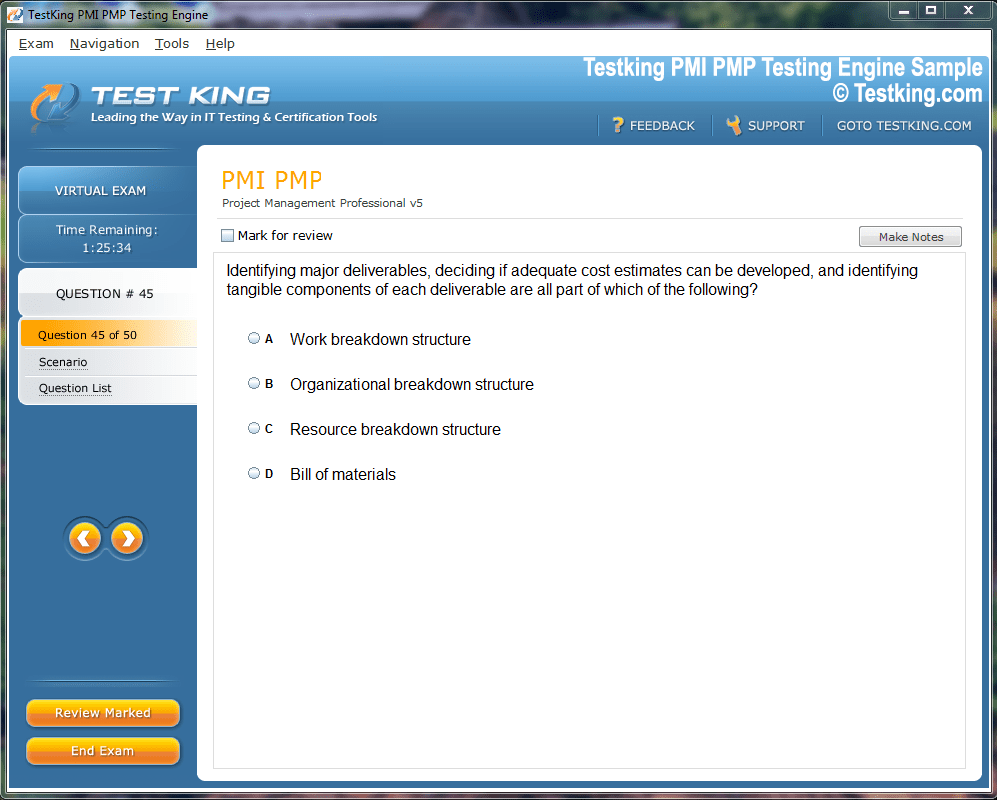
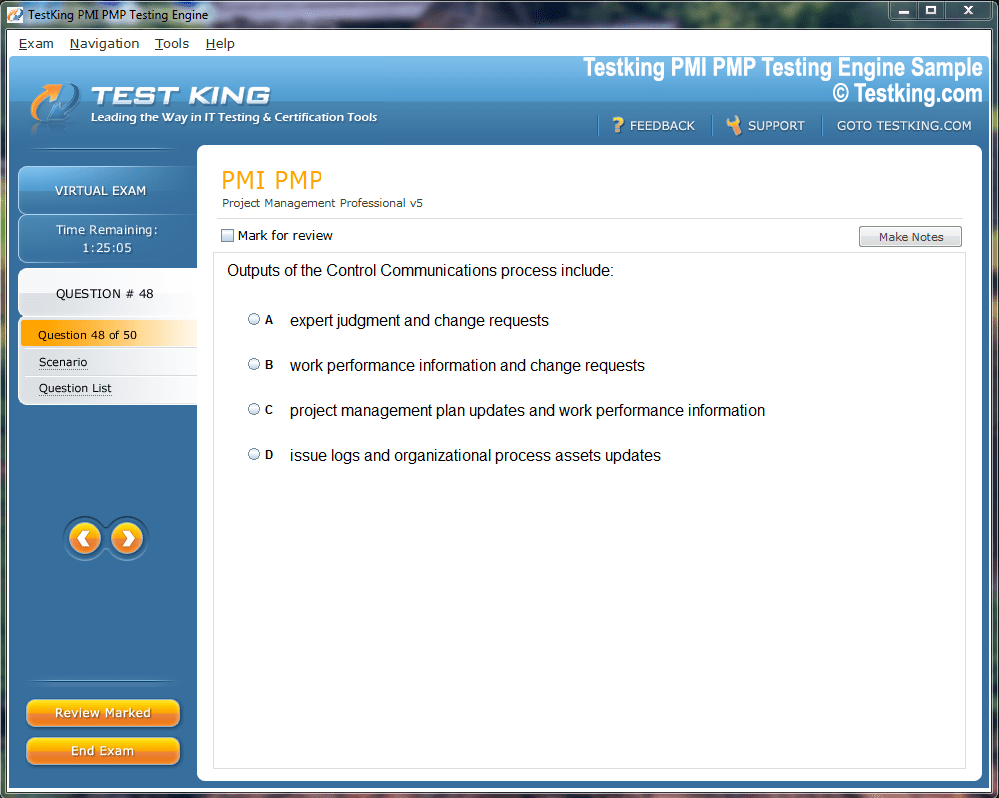
Product Reviews
You Are Best exam Pega PCSA PEGAPCSA80V1_2019
"Purchased study material from another site and was disappointed I did not pass the Pega PCSA PEGAPCSA80V1_2019 exam. After purchasing Testking exam preps what a difference. Your prep exams focused on the most pertinent material in all of the catagories. I just passed my Pega PCSA PEGAPCSA80V1_2019 Exam, yeah!!!! Thank you very much!!! I studied all 450 questions you provided and passed the exam with ease. You are the best! I recommend everyone to use Testking exam prep, it really works!
Victoria"
Eternal Happiness
"Finding this Testking.com during my PEGAPCSA80V1_2019 exams was like finding eternal happiness. What could be a more happier moment for a student then finding a source through which he could get all answers to his academic problem and all notes to study from. I used their notes in order to get excellent grades in my exams and they did not disappoint me. If you thought happiness is not easy to find then sign up on this Testking.com and get ready to be happy and joyous. Your exam worries will definitely be solved.
Amanda Edge"
This Is The Most Amazing Source!
"When I was preparing for my PEGAPCSA80V1_2019 exam with the guidance and help of Testking, I decided to join an online institute so as to aid in my studies. I wanted that help for I was unsure whether I was good enough on my own to pass the tough exam or not. That was something I wasn't ready to risk so I decided to go the safe way and join Testking which is a reouted study guide and which has no doubt over its credibility. With the help of Testking, I passed the PEGAPCSA80V1_2019 exam.
Chris Doyle."
The Reason Behind My Good Scores!
"There is no secret formula or anything special to my road to triumph and I was just as normal a student as you are right now before appearing for the PEGAPCSA80V1_2019 exam. The thing that distinguished me later on form the rest and helped me achieve distinctive grades was the teachings of Testking. Testking with its superb training and commitment transformed me into a student I could only dream of becoming and this is the kind of change that will happen to you if you opt for Testking for your PEGAPCSA80V1_2019 exam preparations.
Franklin Ronald."
Successfully Through The PEGAPCSA80V1_2019 Exam!
"I come to know about this product from my one closest friends who informed me that these are adequately sufficient for passing the PEGAPCSA80V1_2019 exam with high scores. This increased my confidence on these products, and I bought the Test King exam preparation material for PEGAPCSA80V1_2019 exam, and it is due to this material that I have been able to successfully get the certification after passing the PEGAPCSA80V1_2019 with notably high scores. I must say, Test King, You Rock!!
Bert Cage"
Got a great score
"Just wanted to let you know the Pega PCSA PEGAPCSA80V1_2019 Q&A really helped me to pass the exam. I took it today and got a great score. By using the testing questions along with other notes I was able to pass the exams. Based on the the effectiveness of this study ai"
Frequently Asked Questions
Where can I download my products after I have completed the purchase?
Your products are available immediately after you have made the payment. You can download them from your Member's Area. Right after your purchase has been confirmed, the website will transfer you to Member's Area. All you will have to do is login and download the products you have purchased to your computer.
How long will my product be valid?
All Testking products are valid for 90 days from the date of purchase. These 90 days also cover updates that may come in during this time. This includes new questions, updates and changes by our editing team and more. These updates will be automatically downloaded to computer to make sure that you get the most updated version of your exam preparation materials.
How can I renew my products after the expiry date? Or do I need to purchase it again?
When your product expires after the 90 days, you don't need to purchase it again. Instead, you should head to your Member's Area, where there is an option of renewing your products with a 30% discount.
Please keep in mind that you need to renew your product to continue using it after the expiry date.
How many computers I can download Testking software on?
You can download your Testking products on the maximum number of 2 (two) computers/devices. To use the software on more than 2 machines, you need to purchase an additional subscription which can be easily done on the website. Please email support@testking.com if you need to use more than 5 (five) computers.
What operating systems are supported by your Testing Engine software?
Our PEGAPCSA80V1_2019 testing engine is supported by all modern Windows editions, Android and iPhone/iPad versions. Mac and IOS versions of the software are now being developed. Please stay tuned for updates if you're interested in Mac and IOS versions of Testking software.
Top Pegasystems Exams
Ultimate Strategies for Pegasystems PEGAPCSA80V1_2019 Success
The pursuit of certification in the Pegasystems ecosystem represents a commitment to mastering the complexities of Pega technology and its application in designing efficient business solutions. Among the most respected certifications in this domain is the Pegasystems Certified System Architect, formally recognized through the PEGAPCSA80V1_2019 examination. This credential is a vital stepping stone for professionals who aspire to validate their technical expertise in the field of intelligent automation and enterprise-level application development. Understanding the structure, scope, and value of this certification is essential for any aspirant seeking to advance within the discipline of Pega architecture.
The Pegasystems Certified System Architect credential is more than a mere verification of competence; it signifies a candidate’s ability to create robust, maintainable, and scalable applications within the Pega platform. The PEGAPCSA80V1_2019 exam, in particular, measures the participant’s understanding of how business processes can be designed and executed using Pega’s rule-based architecture. Individuals pursuing this certification must cultivate both theoretical comprehension and practical insight into Pega’s extensive suite of tools and methodologies.
The technological environment that surrounds the PEGAPCSA80V1_2019 exam is dynamic, characterized by continuous evolution and refinement. Pegasystems regularly updates its frameworks to support more intelligent workflows, enhanced case management, and improved customer engagement capabilities. Therefore, candidates must be adaptive learners capable of embracing such transformations. The exam’s structure is built to assess not only factual knowledge but also the ability to synthesize that knowledge in real-world contexts.
The Purpose and Value of the Certification
The PEGAPCSA80V1_2019 certification serves as a benchmark that distinguishes proficient practitioners from casual users of the Pega platform. Its primary purpose is to validate an individual’s understanding of how to design, configure, and implement applications that meet complex business requirements. Employers view this certification as evidence of a candidate’s ability to deliver functional and strategic value through the efficient application of Pega’s architecture.
From a career perspective, the certification enhances professional credibility and opens avenues for advancement within organizations that depend on Pega solutions. Many enterprises across finance, telecommunications, insurance, and healthcare sectors integrate Pega’s software into their digital operations. Certified System Architects play an instrumental role in bridging the gap between conceptual design and operational execution in such environments. Their work ensures that automated processes remain efficient, adaptable, and aligned with business objectives.
Beyond professional recognition, the certification cultivates a deeper appreciation for Pega’s rule-driven approach to automation. The system’s capacity to encapsulate decision-making logic through reusable rulesets exemplifies one of the most advanced paradigms in application development. Certified professionals develop the skill to harmonize technical constraints with business imperatives, producing solutions that exhibit precision and elegance.
Exam Overview and Structure
The PEGAPCSA80V1_2019 exam is meticulously designed to evaluate a wide spectrum of competencies related to system architecture and application development within Pega. The test consists primarily of multiple-choice questions that encompass conceptual understanding, applied knowledge, and problem-solving aptitude. Candidates are required to interpret scenarios, analyze requirements, and choose appropriate configurations or rule types based on Pega’s established conventions.
The examination’s questions typically span across multiple thematic domains. These include but are not limited to application structure, user interface design, data modeling, decision management, process automation, and integration capabilities. Understanding how these elements coalesce within the Pega environment is essential for success. Each question aims to measure not only what the candidate knows but also how effectively they can apply that knowledge in a simulated professional scenario.
The duration and difficulty of the PEGAPCSA80V1_2019 exam reflect the expectation that candidates possess both practical experience and foundational training. Individuals who have completed the relevant Pegasystems training modules, such as the System Architect Essentials course, are generally better prepared to engage with the exam’s complexities. The questions are crafted to reflect real-world challenges that Pega professionals encounter, thereby ensuring that certified individuals are adequately equipped to perform in their respective roles.
The Role of the Certified System Architect
The title of Pegasystems Certified System Architect denotes more than a technical qualification; it embodies a comprehensive understanding of how to architect, design, and implement systems that drive enterprise functionality. System Architects within the Pega ecosystem are responsible for translating organizational goals into structured workflows and automation logic. Their decisions influence not only the technical architecture of an application but also the strategic alignment between technology and business objectives.
In practice, a Certified System Architect engages in a variety of responsibilities that span the entire software development lifecycle. They participate in requirement analysis, solution design, rule configuration, user interface customization, and deployment management. Each of these stages demands a precise balance between analytical reasoning and creative problem-solving. The System Architect must be capable of discerning patterns within complex processes and translating them into Pega’s rule-based constructs.
Another crucial aspect of this role is ensuring maintainability and scalability. A well-designed Pega application should be capable of evolving alongside changing business needs without extensive reconfiguration. Architects achieve this by employing modular design practices, defining reusable components, and adhering to Pega’s best practices. The certification process reinforces these principles, ensuring that professionals can produce systems that remain reliable over time.
Key Competencies Evaluated in the Exam
The PEGAPCSA80V1_2019 exam is designed to evaluate specific competencies that collectively define a proficient Pega System Architect. Among the most critical of these are logical reasoning, technical implementation, and conceptual clarity. Each competency aligns with Pega’s broader objective of fostering efficiency through intelligent design.
A substantial portion of the exam focuses on application structure and case management. Candidates must understand how to construct cases, stages, and steps that reflect business processes accurately. They are also expected to configure routing logic, automate assignments, and define escalation mechanisms to ensure workflow efficiency.
Another area of emphasis is data management. Effective handling of data within the Pega platform requires familiarity with data pages, data transforms, and integrations. Architects must be adept at structuring data models that maintain integrity while supporting flexible application behavior. Questions related to integration and data exchange often challenge candidates to demonstrate a clear understanding of service interfaces and connectors.
User interface design also features prominently in the examination. Candidates must know how to develop forms, sections, and harnesses that provide intuitive and responsive user experiences. The ability to apply branding and ensure accessibility compliance reflects an understanding of the end-user perspective—a vital skill in enterprise software development.
Finally, the exam assesses knowledge of decision management and rule resolution. Pega’s rule engine is the foundation upon which decision-making automation is built. A Certified System Architect must comprehend how rules are prioritized, overridden, or inherited across different layers of the application stack. This awareness ensures that architects can predict and control application behavior with precision.
The Evolution of Pegasystems Certification Standards
Pegasystems has continually refined its certification framework to mirror the industry’s progression toward intelligent automation and digital transformation. The PEGAPCSA80V1_2019 exam represents one of these evolutionary milestones. It embodies the shift from conventional programming paradigms toward rule-centric architecture, emphasizing adaptability, consistency, and maintainability.
Earlier iterations of the certification process primarily tested procedural understanding and manual configuration. However, as Pega’s platform evolved to incorporate artificial intelligence, robotic automation, and advanced case management, the certification exams were updated to reflect these technological advancements. Today, passing the PEGAPCSA80V1_2019 exam demonstrates not only a candidate’s command of technical fundamentals but also their ability to engage with a continuously modernizing ecosystem.
This progression underscores Pegasystems’ commitment to cultivating professionals who can bridge traditional business process management with next-generation digital solutions. Certified System Architects are thus positioned at the forefront of innovation, playing pivotal roles in designing systems that merge human decision-making with automated intelligence.
Exam Structure and Conceptual Framework of the PEGAPCSA80V1_2019 Certification
The PEGAPCSA80V1_2019 certification examination serves as a crucial evaluation tool within the Pegasystems certification hierarchy, meticulously structured to measure not only a candidate’s theoretical understanding but also their pragmatic application of system architecture principles.
The purpose of this examination extends far beyond the acquisition of a certificate. It embodies an intellectual exercise intended to assess how well an individual can interpret business requirements and translate them into well-architected, rule-driven configurations. The PEGAPCSA80V1_2019 exam challenges the candidate to demonstrate both granular and holistic comprehension of how applications behave within Pega’s declarative ecosystem. It tests the limits of one’s capacity to analyze data relationships, manage decision logic, and create robust workflows that reflect the complexities of real-world operations.
The Foundational Design of the PEGAPCSA80V1_2019 Exam
At its core, the PEGAPCSA80V1_2019 exam is an instrument of calibration, gauging the alignment between a developer’s understanding of Pega’s mechanisms and the standardized practices promoted by Pegasystems itself. The test primarily consists of multiple-choice and scenario-based questions. Each question type is constructed to evaluate a distinct facet of knowledge, ranging from foundational definitions to applied implementation.
Scenario-based questions, for instance, require the candidate to immerse themselves in contextual problem-solving. They must analyze a situation that simulates an enterprise challenge—such as automating a claims process, structuring data pages, or integrating with external services—and determine the most efficient configuration within the platform’s rule hierarchy. The ability to interpret the underlying business intent while maintaining architectural integrity is the essence of what these questions seek to measure.
Multiple-choice questions, though seemingly straightforward, often incorporate nuanced options that demand precision of thought. Many of them differentiate between superficially similar rule types or functionalities. This deliberate complexity ensures that only those with an authentic understanding of Pega’s architecture can discern the correct answer. The exam therefore rewards insight, not memorization.
Core Domains of Evaluation
The PEGAPCSA80V1_2019 exam evaluates proficiency across several domains, each representing an integral component of system architecture within Pega. These domains encompass the complete lifecycle of application development—from conceptualization to deployment—and together reflect the comprehensive nature of the certification.
One of the principal domains assessed is Application Structure and Case Design. Here, candidates must exhibit familiarity with the way applications are layered within Pega’s organizational framework. Understanding class structure, inheritance, and ruleset management is vital. Each application within the Pega environment is built upon a hierarchy that allows for reuse, scalability, and modularity. The examination’s focus on this area underscores the importance of adhering to architectural best practices when constructing layered enterprise applications.
Another prominent domain involves Process and Flow Design, which examines the ability to model business logic through stages and steps. Candidates are expected to know how to configure flows, integrate routing mechanisms, and implement service-level agreements. The questions often explore subtle distinctions between procedural and declarative approaches, challenging participants to apply the most appropriate method depending on the complexity of the workflow.
Equally significant is Data Management and Integration, where aspirants must demonstrate their knowledge of data pages, data transforms, and the interaction between external systems through connectors and services. Pega’s architecture thrives on seamless data interchange, and this segment ensures that candidates can create efficient data structures that uphold performance and consistency.
In addition, User Interface Development forms a vital part of the evaluation. The candidate must understand how to construct intuitive and responsive interfaces using harnesses, sections, and layouts. This domain assesses one’s capacity to balance aesthetics with functionality while maintaining alignment with accessibility and usability standards.
Lastly, Decision Management and Rule Resolution represents an area of substantial importance. Decision-making within Pega is orchestrated through declarative rules such as decision tables, trees, and strategies. The exam measures how well a candidate comprehends these mechanisms and how effectively they can apply them to automate business policies. Understanding rule resolution—the hierarchy through which rules are prioritized, inherited, and overridden—is indispensable for ensuring that applications behave predictably.
Theoretical Foundations of Rule-Driven Architecture
Central to the PEGAPCSA80V1_2019 certification is the principle of rule-driven design, a paradigm that distinguishes Pega from traditional programming platforms. In conventional environments, application logic is expressed through procedural code, which dictates explicit instructions for system behavior. In contrast, Pega’s model revolves around declarative logic, where rules define desired outcomes, and the platform determines how to achieve them dynamically.
This philosophical shift from procedural to declarative design enables remarkable flexibility. Rules can be reused, modified, or extended without rewriting code, allowing architects to evolve applications seamlessly as business requirements change. The exam implicitly tests the candidate’s internalization of this principle through questions that probe how well they can apply declarative constructs to achieve business goals.
Candidates must understand the distinction between various rule types, including data transforms, activities, decision tables, and declare expressions. Each serves a specific purpose within the Pega ecosystem, and their correct application determines the overall efficiency of the solution. Rule resolution, one of Pega’s most sophisticated features, governs how the platform selects the most appropriate rule in any given context. The Certified System Architect must comprehend how inheritance layers and rulesets interact to produce consistent outcomes across environments.
Conceptualizing Business Processes Through Pega
Business process modeling forms the intellectual spine of the PEGAPCSA80V1_2019 examination. The Certified System Architect must translate abstract business logic into executable workflows that align with organizational objectives. In Pega, this process begins with case design. A case represents a unit of work, encapsulating the lifecycle of a business process from initiation to resolution.
Candidates must demonstrate their understanding of how to structure cases effectively, breaking them into stages, steps, and subprocesses. Each stage represents a milestone, while steps define the sequence of actions required to progress through that stage. Within this structure, automation is achieved through flows—graphical representations of process logic that define assignments, decisions, and integrations.
The exam often assesses one’s understanding of flow rules, connectors, and decision points. These elements work together to ensure that cases move seamlessly through their lifecycles, adhering to predefined business constraints. Candidates who excel in this area exhibit the ability to balance automation with flexibility, ensuring that systems remain adaptive to exception handling and rule variations.
Evaluating Analytical and Problem-Solving Skills
Beyond theoretical mastery, the PEGAPCSA80V1_2019 exam is designed to measure analytical dexterity. Candidates must not only recall information but also interpret complex situations where multiple design choices could be valid. The exam’s question patterns encourage critical evaluation—requiring participants to identify not only the correct answer but the most efficient one.
For instance, when presented with a scenario involving data synchronization across multiple systems, a candidate must determine whether to employ data pages, activities, or integration connectors. Each choice carries implications for maintainability and performance. Similarly, in workflow automation, the decision between configuring a parallel process or using subflows can influence scalability and reusability.
This analytical rigor ensures that certification holders can make judicious decisions when faced with intricate system requirements. The ability to weigh trade-offs, anticipate outcomes, and apply the most elegant solution is what distinguishes an adept Pega professional from a novice.
Training and Knowledge Acquisition Approaches
Preparation for the PEGAPCSA80V1_2019 exam requires a multidimensional approach that blends conceptual study with practical immersion. Pegasystems provides comprehensive training materials designed to cultivate these competencies. The System Architect Essentials training, in particular, introduces candidates to foundational concepts such as rule creation, case design, and user interface development.
However, formal training alone is insufficient. The most successful candidates are those who complement structured learning with experimentation. By using the Pega Personal Edition or sandbox environments, learners can explore the platform’s features in depth, constructing sample applications that simulate real-world scenarios. This tactile experience not only reinforces theoretical concepts but also cultivates intuition—an essential trait for effective system architecture.
Many candidates also benefit from self-directed study, engaging with official documentation, community discussions, and peer collaboration. Interacting with others who share the same objective often exposes learners to diverse perspectives and problem-solving methodologies. Such interactions refine understanding and enhance the ability to apply knowledge dynamically.
The Subtle Art of Managing Complexity
Complexity management lies at the heart of the Certified System Architect’s discipline. The PEGAPCSA80V1_2019 exam evaluates how well a candidate can deconstruct multifaceted systems into manageable components without losing sight of overarching objectives. Within Pega, this is achieved through strategic layering, modular rule design, and adherence to guardrail standards.
Candidates must internalize the importance of structuring applications in a way that facilitates both clarity and reuse. Excessive complexity, even when functionally correct, can lead to inefficiencies and maintenance challenges. The exam thus rewards those who demonstrate restraint—crafting solutions that are both elegant and scalable.
Another critical aspect of complexity management involves ensuring system integrity across multiple environments. As organizations deploy applications through development, staging, and production stages, maintaining consistency becomes paramount. Candidates who understand the nuances of versioning, branching, and deployment pipelines are better equipped to manage these transitions effectively.
The Human Dimension of System Architecture
While the PEGAPCSA80V1_2019 exam emphasizes technical skill, it also implicitly acknowledges the human aspect of architecture. The Certified System Architect must function not merely as a technician but as a communicator and strategist. Their designs influence how end-users interact with systems, how teams collaborate, and how efficiently organizations achieve their objectives.
This dimension manifests subtly within exam questions that involve stakeholder interaction or user experience considerations. The architect’s role in ensuring that systems are intuitive and aligned with user expectations reflects a deeper understanding of the social dynamics of technology.
Moreover, collaboration is intrinsic to successful Pega projects. System Architects frequently work alongside Business Architects, Quality Engineers, and Developers. The exam evaluates how well candidates can think holistically—considering dependencies, collaboration points, and integration touchpoints. A successful candidate understands that architecture does not exist in isolation; it thrives within the interdependence of multidisciplinary teams.
In-Depth Strategies for Preparing for the PEGAPCSA80V1_2019 Exam
Success in the PEGAPCSA80V1_2019 exam is not a matter of memorization or rote learning but of cultivating a balanced mastery of concepts, technical precision, and critical thinking. Preparation must therefore extend beyond simply reading materials; it involves a deliberate engagement with Pega’s environment, its architectural logic, and its practical use cases. Candidates who understand how to study systematically and apply their learning dynamically stand the greatest chance of excelling.
The journey toward certification begins with understanding that the PEGAPCSA80V1_2019 exam measures real-world aptitude. Each question is intended to test not only knowledge but also decision-making—whether a candidate can select the most efficient approach to solving a business problem using Pega’s framework. This means that successful preparation demands immersion, practice, and reflection. Every stage of study must correspond to the platform’s underlying logic: its declarative design, rule-based behavior, and architecture of layered reusability.
Establishing a Strong Conceptual Foundation
The first step toward effective preparation involves establishing a solid conceptual base. The Pega platform functions according to its own philosophy—one that departs from traditional procedural programming paradigms. To prepare meaningfully, candidates must understand this philosophy from the ground up.
This begins with grasping the concept of rule-driven design. Rules are the building blocks of every Pega application. They govern behavior, appearance, data flow, and decisions within a system. A clear understanding of rule hierarchy, versioning, and inheritance is essential. Without it, a candidate cannot fully comprehend how applications function or why certain configurations are preferable over others.
Equally important is understanding the relationship between cases, stages, and steps. In Pega, a case represents a unit of work—its journey from creation to resolution mirrors real-world business processes. Learning how to structure a case efficiently, divide it into meaningful stages, and define logical transitions builds both technical confidence and architectural foresight.
Candidates should also familiarize themselves with the declarative nature of Pega’s logic. Declarative processing enables outcomes to be defined without specifying every procedural step. This simplifies maintenance and promotes scalability. Recognizing where declarative rules are most effective, and where procedural rules must be used instead, is critical to mastering application behavior.
Building Proficiency Through Hands-On Experience
No amount of theoretical reading can substitute for direct interaction with the Pega platform. Hands-on experience transforms abstract ideas into practical understanding. It allows candidates to see how rules behave under real conditions and how configurations affect performance.
Setting up a personal Pega environment, such as the Pega Personal Edition, offers an invaluable opportunity for experimentation. Learners can build simple applications that mirror real-life business scenarios—such as processing customer requests, managing orders, or automating approvals. Through such exercises, they begin to comprehend how rules interact, how data moves across cases, and how user interfaces respond to workflow changes.
Repeated experimentation builds muscle memory, allowing candidates to recall configurations intuitively during the exam. It also sharpens problem-solving instincts. When faced with a question that describes a system malfunction or process inefficiency, an experienced learner can visualize the issue within Pega’s architecture and identify the corrective rule almost instinctively.
Another effective strategy is to simulate real projects. Candidates can analyze a business process from their own environment—perhaps a reporting workflow, a claim handling system, or a customer onboarding pipeline—and attempt to reconstruct it within Pega. This practice encourages them to think architecturally, translating conceptual business requirements into executable logic.
Utilizing Official Resources and Documentation
Pegasystems provides extensive documentation and official learning resources that serve as the backbone for preparation. The System Architect Essentials course, for instance, offers structured lessons aligned with the PEGAPCSA80V1_2019 exam objectives. This course introduces candidates to core components such as application layers, data handling, decision logic, and user interface design.
The official documentation, meanwhile, serves as a reference library. It offers detailed explanations of rule types, syntax, best practices, and configuration patterns. Reading these documents attentively develops familiarity with Pega’s terminology and methodology. Many exam questions use phrasing derived directly from official documentation, so understanding this language is crucial.
A disciplined approach involves cross-referencing between course content and documentation. For example, after studying how to design a flow or a data page, a candidate should immediately review the corresponding documentation section to reinforce comprehension. This cross-validation prevents misconceptions and ensures consistency between learning sources.
Moreover, Pegasystems periodically updates its materials to reflect new features or changes in architecture. Staying attuned to these updates is vital, especially since the PEGAPCSA80V1_2019 exam may evolve to incorporate contemporary platform enhancements.
Practicing with Sample Questions and Mock Exams
Exposure to realistic exam questions is an indispensable component of preparation. Sample questions not only test factual knowledge but also reveal patterns in question structure and phrasing. Candidates who practice regularly with mock tests develop a familiarity with how Pegasystems designs its assessments.
Pegasystems offers official practice exams that replicate the timing, format, and difficulty level of the actual certification test. Attempting these under exam conditions helps learners build endurance and time management skills. They learn how to balance thorough reasoning with speed—a critical factor in a timed environment.
Equally important is post-assessment reflection. After completing a mock exam, candidates should review every incorrect answer, analyze the reasoning behind the mistake, and revisit the relevant documentation. Understanding why a choice was wrong is far more instructive than merely noting the correct option. This process converts errors into learning milestones.
Furthermore, when encountering particularly challenging questions, candidates should try recreating the scenario in their Pega environment. By reproducing the rule configuration or flow behavior described in the question, they can observe firsthand how theoretical principles manifest in practice. This combination of simulation and reflection leads to profound conceptual clarity.
Designing a Sustainable Study Plan
A methodical study plan forms the foundation of consistent progress. Because the PEGAPCSA80V1_2019 exam encompasses a wide array of topics—from user interface development to decision management—organization is essential. Candidates should allocate sufficient time to each domain, ensuring comprehensive coverage while maintaining balance between theoretical review and practical engagement.
A well-structured plan often begins with a diagnostic self-assessment. By identifying strengths and weaknesses early, candidates can tailor their schedule to focus on areas that require more attention. For example, one individual might find rule resolution particularly challenging, while another may struggle with data integration. Addressing these specific deficiencies ensures efficient use of study time.
Time allocation must also account for cumulative reinforcement. Concepts learned early should be revisited periodically to prevent fading. A cyclical study pattern—where each week includes both new learning and review sessions—builds durable retention. Many candidates benefit from creating weekly milestones that track progress across topics, helping maintain motivation and direction.
Consistency, rather than intensity, is the hallmark of effective preparation. Short, focused sessions conducted daily are often more productive than long, sporadic study marathons. This steady rhythm encourages deeper comprehension and allows for natural assimilation of complex ideas.
Collaborating and Engaging with the Pega Community
The Pega ecosystem extends far beyond individual learners. A vibrant global community of professionals, developers, and architects actively share insights, troubleshoot challenges, and discuss emerging trends. Engaging with this community provides both intellectual enrichment and moral support throughout the certification journey.
Participation in study groups, either online or locally organized, fosters collaborative learning. Discussions help clarify ambiguous topics, while peer explanations often illuminate concepts from perspectives that official materials may not cover. Moreover, articulating one’s understanding to others reinforces internal mastery.
Many professionals also benefit from engaging with public forums dedicated to Pegasystems technologies. These platforms allow candidates to explore real-world issues faced by practitioners, including performance optimization, integration errors, and deployment strategies. Observing how experienced architects approach problem-solving can significantly enhance analytical versatility.
While collaboration is invaluable, it is crucial to maintain academic integrity. Genuine learning arises from comprehension, not from copying or memorizing shared answers. Each candidate’s understanding must remain self-earned, grounded in independent reasoning and firsthand practice.
Refining Analytical and Cognitive Skills
Technical expertise alone is insufficient for success in the PEGAPCSA80V1_2019 exam. Analytical sharpness and logical reasoning play an equally vital role. Many exam questions present scenarios that require layered thinking—where understanding dependencies, hierarchies, and cause-effect relationships becomes essential.
To refine these mental faculties, candidates should cultivate the habit of breaking down complex problems into smaller, traceable elements. When confronted with a multifaceted issue—such as a rule execution error or performance bottleneck—they should learn to identify the root cause methodically. Practicing such analysis during preparation trains the mind to operate with clarity and precision during the exam.
Engaging in reflective learning also enhances cognition. After completing a topic, candidates should summarize the key ideas in their own words, identify the relationships between concepts, and visualize how they manifest within Pega applications. This synthesis deepens understanding and creates mental connections that support long-term retention.
Memory enhancement techniques can further support preparation. Visualization, mnemonic associations, and conceptual mapping help recall intricate rule behaviors and architectural relationships under exam pressure.
Managing Time and Mental Focus
One of the most underestimated aspects of preparation is mental discipline. The PEGAPCSA80V1_2019 exam requires sustained concentration, as each question demands analytical precision. Candidates should therefore practice time management not only in their studies but also in their day-to-day routine.
Allocating designated hours for focused learning minimizes distractions and promotes cognitive flow. During study sessions, techniques such as the Pomodoro method or spaced repetition can help maintain engagement without fatigue. Regular breaks and adequate sleep are equally important; mental acuity deteriorates quickly without proper rest.
Simulating exam conditions while practicing is an excellent way to train endurance. Candidates should practice completing mock tests in one sitting, managing pacing across sections. The ability to sustain analytical focus for extended periods becomes an advantage on the actual exam day.
The Role of Reflection and Continuous Adjustment
Preparation should never be static. As candidates progress through their studies, continuous self-evaluation and adjustment are necessary. Periodic reflection allows learners to identify emerging weaknesses, measure improvement, and recalibrate strategies accordingly.
Keeping a learning journal can be beneficial. Recording insights, challenges, and solutions after each study session creates a personalized repository of knowledge. Reviewing this journal before the exam can reinforce understanding and boost confidence.
Moreover, candidates should learn to embrace uncertainty as part of the learning process. Complex subjects like rule resolution or data integration may initially appear daunting. Persistence, rather than immediate comprehension, often yields mastery. Recognizing progress, however incremental, sustains motivation throughout preparation.
Advanced Mastery and Technical Depth for the PEGAPCSA80V1_2019 Certification
Achieving excellence in the PEGAPCSA80V1_2019 certification requires more than familiarity with surface-level functionalities; it demands an advanced understanding of the Pega platform’s inner architecture, interdependent components, and real-world application. Beyond conceptual comprehension lies the domain of technical depth—where proficiency transforms into mastery. This stage of preparation is dedicated to exploring the complexities that define the Pegasystems Certified System Architect’s role, including advanced rule behaviors, layered application development, and performance optimization within the enterprise ecosystem.
To move from competence to true expertise, one must develop the ability to think as an architect rather than a developer—to anticipate system behavior, foresee challenges in scalability, and design solutions that align with enterprise standards. The PEGAPCSA80V1_2019 exam implicitly tests these capabilities through scenario-based questions that require interpretive reasoning. Thus, a deliberate focus on deeper technical mechanisms and architectural decision-making becomes indispensable.
Understanding the Layered Architecture of Pega Applications
At the heart of Pega’s design philosophy lies its layered application architecture—a structure that promotes reusability, modularity, and maintainability. Each layer serves a distinct purpose, encapsulating business logic and data in a manner that supports large-scale adaptability.
The foundation layer typically defines reusable assets—rules, integrations, and frameworks—that multiple applications can inherit. Above this, the implementation layer tailors these reusable components for specific business contexts. Finally, specialized layers may address distinct organizational or regional needs without disrupting the integrity of the shared foundation.
Mastering this structure means understanding not just how to build within it, but how to design for longevity. Candidates should analyze how changes in one layer propagate through others, how to avoid redundancy through effective inheritance, and how to manage rule delegation responsibly. The exam frequently tests this comprehension, often presenting scenarios in which layered rule resolution must be evaluated logically.
Moreover, layered architecture supports organizational scalability. By defining clear boundaries between generalized and context-specific logic, architects ensure that future enhancements do not require structural overhauls. In practical projects, this principle minimizes maintenance costs while maximizing agility—a core value in Pega’s low-code ecosystem.
Advanced Rule Resolution and Reusability Principles
Rule resolution represents one of the most intellectually intricate areas within the Pega platform. It governs how the system determines which rule to execute when multiple versions exist. To master this mechanism, candidates must internalize the hierarchy of rule applicability, precedence, and inheritance.
Each rule instance is defined by several key properties—class, ruleset, version, circumstance, and availability. The platform evaluates these properties dynamically to identify the optimal rule for execution. This process becomes especially complex when multiple rules of similar type and name exist across application layers. Understanding how the engine navigates this network of potential matches forms the foundation for efficient design.
Reusability is the natural extension of rule resolution. The principle of “define once, reuse often” underpins the entire Pega architecture. Candidates should learn how to construct rules that remain adaptable yet stable across applications. Techniques such as parameterization, data propagation, and circumstancing enable architects to maintain functional flexibility without sacrificing clarity.
The PEGAPCSA80V1_2019 exam may test this understanding by presenting case scenarios where rule conflict arises. Success depends on an ability to predict which rule the engine will select and justify the reasoning behind that decision. Such analytical thinking differentiates proficient candidates from true system architects.
Data Management and Integration Strategies
Data management forms another cornerstone of Pega’s operational design. Every business process depends on accurate, timely, and accessible data. Therefore, understanding how Pega handles data—both internally and through external systems—is critical for certification and professional application alike.
At the fundamental level, Pega uses data pages as the primary mechanism for data retrieval and caching. Data pages serve as shared storage units that maintain information across cases and users. They reduce redundancy, optimize performance, and maintain consistency throughout the application. Knowing when to use a data page, how to configure its refresh strategy, and how to define its scope (thread, node, or requestor) forms part of the exam’s technical core.
Integration extends this concept beyond the platform itself. In real-world environments, Pega must communicate with external databases, APIs, and legacy systems. Understanding integration connectors—such as REST, SOAP, and JDBC—is essential. Candidates should know how to map data between Pega’s structures and those of external systems, ensuring reliability and data integrity during exchange.
Moreover, as data volumes scale, performance tuning becomes indispensable. Proper indexing, caching, and efficient query design all contribute to maintaining responsiveness. The PEGAPCSA80V1_2019 exam may include scenarios where performance issues arise due to inefficient data retrieval. Recognizing the appropriate corrective measure—whether modifying a data page configuration or optimizing a connector—demonstrates applied expertise.
Workflow Automation and Case Management Complexity
One of Pega’s most transformative contributions to enterprise software is its case management capability. A case represents a structured process designed to resolve a business objective. Understanding its lifecycle—creation, processing, and resolution—is foundational, but mastering it involves delving into dynamic case behaviors, subcases, and dependencies.
Advanced case management often involves parent-child relationships, where one case spawns multiple subcases to handle specialized tasks. Synchronizing these subcases, ensuring data consistency, and resolving dependencies require strategic rule design. Candidates should explore mechanisms such as spin-off flows, wait shapes, and synchronization points to manage parallel processes effectively.
Equally significant is the role of automation in enhancing workflow efficiency. Pega leverages robotic automation, decision logic, and event-driven triggers to streamline repetitive tasks. System architects must know how to orchestrate these components to produce seamless, automated workflows that adapt intelligently to changing inputs.
The PEGAPCSA80V1_2019 exam may test understanding through scenario-based problems involving case dependencies or automated routing logic. The ability to conceptualize the flow of events and predict system behavior under varying conditions reflects a mature grasp of Pega’s case management model.
User Interface and Experience Design
The interface layer of a Pega application defines how users interact with the system. While the platform simplifies interface creation through its model-driven approach, mastery requires understanding both the structural and experiential dimensions of design.
Pega’s user interface is constructed using sections, harnesses, layouts, and dynamic containers. Each component must be configured with both function and usability in mind. For instance, effective use of dynamic layouts ensures responsiveness across devices, while data bindings maintain real-time synchronization between interface and backend logic.
Beyond technical configuration lies the philosophy of user experience. A well-designed interface should guide the user intuitively through the process, minimizing cognitive load and eliminating unnecessary interactions. Architects must therefore design layouts that emphasize clarity, consistency, and accessibility.
Performance also plays a vital role in interface design. Excessive refresh conditions, large data tables, or unoptimized AJAX configurations can degrade responsiveness. Recognizing these potential pitfalls and designing for efficiency reflects the depth of architectural awareness that the PEGAPCSA80V1_2019 exam expects.
Implementing Declarative Processing and Decision Logic
Declarative processing lies at the core of Pega’s automation capabilities. Unlike procedural approaches, declarative rules define outcomes that the system maintains automatically as data changes. This paradigm simplifies application behavior while preserving consistency across cases.
Candidates should master key declarative rule types such as Declare Expressions, Declare Constraints, and Declare OnChange. Understanding when and where to employ each type is crucial. For instance, Declare Expressions calculate derived values automatically, whereas Declare Constraints enforce relationships between properties. Misapplying these mechanisms can lead to redundancy or logical conflict.
Decision logic further expands Pega’s automation scope. Through decision tables, decision trees, and map values, architects define complex evaluative behavior without hardcoding conditions. The platform evaluates these declarative structures dynamically, ensuring that the application adapts intelligently to varying business rules.
Exam questions often probe this understanding by presenting ambiguous situations where multiple declarative or decision rules could apply. Selecting the most efficient solution—one that aligns with maintainability and performance best practices—reflects deep technical insight.
Performance Optimization and Troubleshooting
As applications scale, performance optimization becomes an indispensable discipline. Even well-designed solutions can suffer inefficiencies if resource consumption is not carefully managed. Pegasystems provides several tools and best practices to ensure that applications operate at optimal speed and stability.
Candidates should familiarize themselves with the Pega Performance Analyzer (PAL), Log Analyzer (PLA), and Database Trace. These tools help diagnose bottlenecks, identify slow rules, and evaluate data access patterns. Interpreting their outputs accurately enables architects to pinpoint and rectify inefficiencies.
Caching strategies play a vital role in performance management. Proper configuration of data pages, declarative indexes, and clipboard management prevents unnecessary reprocessing. Similarly, understanding how to balance synchronous and asynchronous processing helps optimize responsiveness without compromising reliability.
The PEGAPCSA80V1_2019 exam may test awareness of these mechanisms through practical scenarios. Candidates must demonstrate the ability to identify the likely source of a performance issue and propose an effective, resource-conscious solution.
Security, Access Control, and Governance
Security represents both a technical and ethical responsibility within Pega architecture. The platform incorporates robust mechanisms to ensure data confidentiality, integrity, and access control. Architects must configure these mechanisms meticulously to align with enterprise governance policies.
Access control is primarily managed through access groups, roles, and privileges. Each user’s actions are defined by their assigned role, ensuring that operations are restricted according to necessity. Candidates should understand how to design secure access hierarchies that balance protection with operational flexibility.
Additionally, data security extends to encryption, authentication, and auditability. Pega supports integration with enterprise authentication systems such as LDAP and OAuth, enabling centralized identity management. Logging and audit trails maintain accountability, ensuring that system actions can be traced when required.
Governance frameworks reinforce this security infrastructure. By defining development standards, naming conventions, and review checkpoints, organizations maintain uniformity and reduce the risk of inconsistencies. Architects who internalize these practices contribute not only to exam success but to real-world implementation excellence.
Deployment and Version Control Practices
Application lifecycle management forms the bridge between development and production. Understanding how to deploy and maintain applications efficiently is crucial for sustaining long-term stability.
Pega’s product rule facilitates application packaging and migration between environments. Candidates must learn how to configure and test deployments systematically, ensuring that dependencies, rulesets, and versions align correctly across instances.
Version control extends this principle by maintaining traceability across iterations. Proper management of ruleset versions ensures that changes are documented and reversible. Moreover, understanding how to use branch rulesets for collaborative development prevents conflicts during parallel workstreams.
The PEGAPCSA80V1_2019 exam may include questions about deployment scenarios, asking candidates to determine the most efficient approach for migrating updates or resolving version discrepancies. Mastery of these processes demonstrates readiness for enterprise-level responsibilities.
Exam Simulation, Practice, and the Path to Mastery for PEGAPCSA80V1_2019
Achieving proficiency in the PEGAPCSA80V1_2019 examination involves a blend of theoretical study, practical engagement, and strategic exam simulation. The test is deliberately designed to assess not only knowledge but the capacity to apply that knowledge in nuanced, context-rich scenarios. Mastery emerges when candidates internalize the platform’s principles, anticipate the behavior of complex configurations, and confidently navigate ambiguous situations under timed conditions.
The journey toward certification can be conceptualized as three interdependent domains: cognitive understanding, experiential practice, and performance simulation. Each domain reinforces the other, creating a feedback loop that progressively strengthens the candidate’s expertise. Cognitive understanding encompasses the theoretical underpinnings of Pega’s architecture, rules, and declarative processing. Experiential practice translates these concepts into hands-on proficiency, while performance simulation tests the ability to execute under time constraints and pressure.
Cognitive Consolidation: Deepening Conceptual Clarity
Before engaging with practice simulations, candidates must solidify a comprehensive understanding of core Pega concepts. This includes the mechanics of rule resolution, the behavior of declarative processing, the principles of layered application architecture, and the lifecycle of case management.
Rule resolution, in particular, demands attention due to its inherent complexity. Multiple versions of the same rule may exist across different rulesets and classes, and understanding how the platform prioritizes execution is crucial. Candidates should explore circumstancing, rule inheritance, and the role of availability in shaping application behavior. Delving into these mechanisms allows learners to predict outcomes accurately, which is a skill directly tested through scenario-based questions.
Declarative processing, encompassing declare expressions, declare constraints, and on-change rules, requires similar rigor. Mastery involves knowing when to use each type of rule, understanding its interaction with other system elements, and foreseeing performance implications. Scenario questions often probe subtle distinctions between procedural and declarative approaches, evaluating whether a candidate can select the most efficient method for a given context.
Case design is another area requiring in-depth comprehension. Each case encapsulates a business process, and proficiency involves understanding the hierarchy of stages, steps, subcases, and dependencies. Candidates must internalize the logic of case progression, exception handling, and automated assignments. The ability to visualize case behavior across various scenarios underpins successful problem-solving both in the exam and in professional practice.
Hands-On Practice: Bridging Theory and Application
Conceptual understanding alone is insufficient for the PEGAPCSA80V1_2019 exam. Hands-on experience transforms knowledge into actionable skill. Candidates should immerse themselves in practical exercises that replicate real-world challenges, including creating applications, configuring rules, and managing data flows.
Utilizing the Pega Personal Edition or sandbox environments allows candidates to experiment with case structures, flows, user interface elements, and integrations. Constructing sample applications enables learners to observe rule interactions, evaluate the performance of declarative processing, and troubleshoot configurations. Repetition and iteration cultivate intuition, enhancing the candidate’s ability to anticipate outcomes during the exam.
Advanced exercises should include integrating multiple systems, designing complex data pages, and configuring decision tables and trees. By simulating enterprise-level workflows, candidates gain insight into the interplay between rules, data, and case progression. These exercises also reinforce architectural discipline, as learners must structure solutions for maintainability and scalability while preserving business logic integrity.
Documenting these exercises further solidifies learning. Maintaining a personal log of configurations, decisions, and outcomes allows candidates to reflect on their reasoning, track progress, and identify patterns in rule behavior. This practice not only strengthens memory retention but also cultivates analytical thinking—a skill critical for exam success.
Exam Simulation: Cultivating Timing and Strategy
Once cognitive understanding and hands-on practice are well established, candidates should engage in exam simulation. Simulated exams replicate the format, timing, and scenario complexity of the PEGAPCSA80V1_2019 test, providing a controlled environment to evaluate readiness.
Timed simulations cultivate two essential competencies: pacing and prioritization. Candidates learn how to allocate attention efficiently, deciding which questions to tackle immediately and which to revisit. Familiarity with the question style reduces cognitive load during the actual exam, allowing candidates to focus on analytical reasoning rather than adapting to unfamiliar formats.
Beyond pacing, simulations reveal gaps in understanding. Incorrect answers prompt targeted review, encouraging focused study on weak areas. For example, if a simulation question regarding data page scope or decision table configuration is answered incorrectly, the candidate can revisit the relevant documentation and practice the scenario in a personal environment. This iterative cycle of simulation, reflection, and correction accelerates learning.
High-fidelity simulations should also include complex, multi-step scenarios that integrate rule resolution, data management, and case progression. These exercises challenge candidates to synthesize knowledge across multiple domains, mirroring the integrative thinking required in the actual exam. Developing proficiency in navigating such scenarios instills confidence and reduces anxiety under real exam conditions.
Analytical Reasoning and Problem-Solving Techniques
The PEGAPCSA80V1_2019 exam emphasizes analytical reasoning as much as technical knowledge. Scenario-based questions often present multifaceted problems where multiple approaches may be theoretically correct, yet only one demonstrates optimal efficiency and maintainability.
To prepare for such questions, candidates should develop systematic problem-solving methods. This includes breaking down scenarios into constituent elements, identifying dependencies, evaluating potential rule interactions, and considering performance implications. By approaching each problem methodically, learners can reduce error rates and make decisions with clarity.
Visualization techniques enhance problem-solving efficiency. Candidates may sketch workflows, map data interactions, or create mental models of rule behavior. Such representations enable them to comprehend complex relationships more intuitively, particularly under time pressure. This approach also aids in recalling procedural steps and architectural principles during the exam.
Additionally, candidates should practice interpreting ambiguous information. Many scenario-based questions include contextual nuances that mimic real enterprise challenges. The ability to discern relevant details from extraneous information reflects the critical judgment expected of a Certified System Architect. This skill emerges from repeated exposure to realistic examples and deliberate analysis of outcomes.
Reviewing Mistakes and Reinforcing Knowledge
Effective preparation is incomplete without structured reflection on errors. Every incorrect response, whether in practice exercises, mock exams, or hands-on configurations, provides insight into conceptual gaps or procedural oversights. Systematically reviewing these errors enables candidates to refine understanding and correct misconceptions.
A recommended practice is to categorize mistakes by domain, such as rule resolution, data integration, case design, or user interface configuration. This approach allows targeted reinforcement and prevents repeated errors. For example, if mistakes frequently occur in decision table configuration, the candidate can focus additional practice sessions on mapping conditions and evaluating execution outcomes.
Repetition, combined with reflection, solidifies knowledge. Revisiting challenging scenarios multiple times encourages internalization, ensuring that lessons learned during practice persist under exam conditions. This iterative learning approach is essential for developing durable expertise.
Psychological Preparedness and Exam Day Strategy
While technical mastery is paramount, psychological readiness also plays a critical role in exam performance. High-stakes testing environments can induce stress, potentially impairing decision-making and memory recall. Preparing psychologically involves cultivating composure, resilience, and confidence.
Strategies such as mindfulness exercises, controlled breathing, and visualization can mitigate anxiety. Candidates should mentally rehearse exam conditions, imagining the process of navigating questions calmly and efficiently. Such preparation fosters a sense of familiarity, reducing stress responses and enhancing focus.
Exam day strategy should also prioritize time management and mental clarity. Candidates are encouraged to read each question carefully, identify key elements, and mentally map potential solutions before committing to an answer. Allocating time judiciously ensures that complex scenarios receive sufficient attention without compromising completion of the exam.
Additionally, candidates should maintain perspective. Recognizing that the exam assesses applied understanding rather than rote memorization helps reduce performance pressure. Approaching the exam as an opportunity to demonstrate mastery, rather than as a test of worth, supports optimal cognitive functioning.
Integrating Peer Learning and Community Resources
Collaborative learning provides significant advantages during preparation. Engaging with peers, study groups, or professional networks allows candidates to discuss concepts, clarify ambiguities, and gain insights into alternative problem-solving methods.
Peer discussions often reveal perspectives that official documentation or solo practice might not provide. For instance, a colleague’s approach to configuring a complex flow or integrating external data may highlight efficiencies or nuances previously unconsidered. Articulating one’s own reasoning to others also reinforces comprehension and exposes potential gaps in understanding.
Community engagement extends beyond direct study interactions. Reading case studies, observing platform-specific problem-solving techniques, and discussing emerging features cultivate a broader understanding of enterprise applications. Such exposure enhances adaptability and equips candidates to address the dynamic scenarios characteristic of the PEGAPCSA80V1_2019 exam.
Maintaining Consistency and Momentum
Consistency is a key determinant of success. Structured, repeated study sessions, combined with ongoing practice, sustain momentum and prevent knowledge decay. Developing a daily or weekly routine ensures that each domain—rules, cases, data, decision logic, and interface design—receives adequate attention.
Cumulative reinforcement is particularly effective. Revisiting previously studied concepts while integrating new learning promotes interconnected understanding. For example, practicing data page configuration in the context of a complex case flow consolidates multiple domains simultaneously, enhancing cognitive integration and recall.
Tracking progress also sustains motivation. Recording milestones, noting areas of improvement, and celebrating incremental successes reinforces commitment and encourages continued engagement with challenging material. This disciplined approach converts preparation from an abstract task into a measurable, goal-oriented process.
Sustaining Expertise and Long-Term Success After PEGAPCSA80V1_2019
Achieving the PEGAPCSA80V1_2019 certification marks a significant milestone, yet the culmination of preparation and exam success represents only one dimension of professional development. True mastery extends beyond the certification itself into sustained competence, strategic insight, and adaptive growth within the evolving Pegasystems ecosystem.
The distinction between passing a certification and excelling as a Pegasystems Certified System Architect lies in the application of knowledge in real-world scenarios. While the exam evaluates analytical reasoning, technical proficiency, and applied understanding, post-certification success hinges upon the ability to navigate enterprise-level challenges, anticipate system complexities, and architect solutions that scale efficiently. Candidates who internalize the principles underpinning Pega’s platform and integrate them into practical strategies are those who sustain high-level professional effectiveness.
Cultivating a Mindset of Continuous Learning
The Pega platform evolves rapidly, introducing new features, tools, and architectural approaches. Even after achieving PEGAPCSA80V1_2019 certification, professionals must remain engaged with these developments. Continuous learning is the cornerstone of long-term relevance.
This begins with structured engagement with official platform updates. Understanding modifications to rule processing, declarative frameworks, or case management mechanisms ensures that previously mastered techniques remain applicable and optimized. Additionally, adopting a habit of exploring new modules, advanced connectors, or emerging automation technologies cultivates adaptability.
Beyond formal updates, continuous learning involves experiential exploration. Architects can simulate novel scenarios, experiment with integrations, and test advanced decision logic to expand their practical repertoire. Each challenge undertaken deepens comprehension, sharpens analytical reasoning, and strengthens problem-solving agility.
A reflective approach enhances this process. Professionals should periodically review past projects, identifying areas for refinement or optimization, and consider alternative strategies informed by new knowledge. This practice bridges the gap between theoretical understanding and applied expertise, reinforcing long-term competence.
Advancing Architectural and Design Expertise
Post-certification growth requires a shift from operational competence to architectural foresight. System architects must consider scalability, maintainability, and performance at an enterprise level. Developing an advanced understanding of layered architecture, rule resolution, and integration patterns positions professionals to design solutions that are robust, adaptable, and sustainable.
Layered application design remains foundational. Architects should examine how changes in foundational layers propagate to implementation layers, anticipating potential conflicts or performance issues. By structuring applications with a clear separation of concerns, professionals can ensure reusability while minimizing risk of regression. This approach enhances both system integrity and development efficiency.
Rule resolution mastery also evolves post-certification. Advanced architects assess not only which rule the system executes but why that rule is selected in complex multi-layered environments. Considering circumstancing, delegation, and inheritance patterns allows architects to design solutions that are predictable, maintainable, and extensible. This understanding is particularly valuable in enterprise deployments where multiple teams may concurrently contribute to application development.
Enhancing Integration and Data Strategy Skills
Data remains the lifeblood of any enterprise application, and Pega’s architecture is designed to manage, process, and leverage this resource efficiently. Post-certification expertise requires architects to refine data management strategies, optimize integrations, and anticipate scaling challenges.
Data pages and connectors are essential tools for effective data handling. Experienced architects evaluate caching strategies, refresh policies, and scope configurations to balance efficiency and accuracy. Integrating external systems via REST, SOAP, or database connectors requires consideration of latency, transactional integrity, and error handling.
Additionally, architects must design for scalability. Data volume growth, concurrent access, and complex workflows can introduce bottlenecks if not anticipated. Post-certification practice involves simulating high-load environments, analyzing performance, and refining data strategies. These activities not only enhance technical competence but also prepare architects for enterprise-level responsibilities.
Leadership and Mentorship in Pega Practice
A hallmark of enduring success is the capacity to lead and mentor within the organization. Certified architects who contribute strategically and foster development among peers multiply their impact. Leadership may manifest through project oversight, architectural reviews, or collaborative solution design.
Mentorship is particularly influential. Guiding less experienced developers through rule configuration, case design, and decision logic reinforces the mentor’s own understanding while cultivating organizational knowledge. This dual benefit strengthens both individual mastery and team performance. Mentorship also fosters a culture of reflective learning, encouraging rigorous thinking and continuous improvement across the organization.
Embracing Automation and Emerging Capabilities
Pega’s value proposition extends beyond case management to encompass advanced automation, AI-driven decisioning, and adaptive process optimization. Certified architects must develop familiarity with these emerging capabilities to maintain professional relevance.
Automation involves orchestrating repetitive tasks, integrating robotic process automation, and leveraging decision management tools to reduce manual intervention. Post-certification proficiency requires architects to design solutions that incorporate automation seamlessly, ensuring reliability and efficiency without compromising flexibility.
Adaptive decisioning, AI modeling, and predictive analytics represent advanced competencies. Architects who can integrate decision tables, decision trees, and predictive models into operational workflows enhance organizational agility. Practicing these integrations within simulated or controlled environments allows professionals to experiment safely while building confidence in their applicability.
Performance Tuning and System Optimization
Sustained excellence depends on the ability to maintain high-performance applications. Post-certification, architects should refine their skills in performance analysis, troubleshooting, and optimization.
Pega provides several diagnostic tools, including the Performance Analyzer, Log Analyzer, and Database Trace, which enable detailed evaluation of system behavior. Post-certification mastery involves using these tools not only to resolve issues but to anticipate potential inefficiencies proactively.
Optimization practices include refining data access patterns, reducing unnecessary rule evaluations, and ensuring efficient case flow execution. Experienced architects also consider the trade-offs between synchronous and asynchronous processing, balancing responsiveness with resource utilization. These skills elevate a certified professional from competent execution to strategic system stewardship.
Governance, Compliance, and Enterprise Standards
In addition to technical proficiency, long-term success requires attention to governance and compliance. Pega applications must adhere to enterprise standards, regulatory frameworks, and security best practices. Architects must design solutions that are auditable, secure, and maintainable.
Access control strategies, including roles, privileges, and access groups, form the foundation of secure application design. Architects ensure that users interact only with necessary components while maintaining operational flexibility. Audit trails, logging, and monitoring support compliance requirements and enable accountability across organizational processes.
Establishing governance frameworks ensures consistency in naming conventions, rule structuring, and deployment protocols. Such structures reduce error rates, enhance maintainability, and facilitate knowledge transfer among development teams. Mastery in this domain distinguishes architects who contribute strategically to organizational efficiency.
Building a Personal Knowledge Repository
Long-term proficiency is reinforced through documentation and knowledge management. Certified professionals benefit from maintaining a personal repository of experiences, configurations, and solutions.
This repository may include detailed records of rule configurations, case management strategies, integration approaches, and performance optimization techniques. Documenting rationale, challenges encountered, and solutions applied creates a reference library that supports both ongoing projects and future learning.
Moreover, revisiting documented experiences enables architects to recognize patterns, refine strategies, and apply lessons learned to new scenarios. Over time, this body of knowledge forms a foundation for innovation and accelerated problem-solving.
Networking and Professional Growth
Engagement with the broader Pega community supports sustained expertise. Networking with peers, attending user group events, and participating in collaborative forums exposes architects to diverse approaches, emerging trends, and best practices.
Such professional interaction provides opportunities to exchange solutions for complex challenges, explore novel architectural patterns, and validate strategies in dynamic contexts. It also fosters recognition of evolving platform capabilities, ensuring that certified architects remain ahead of the curve.
Active participation in the community reinforces learning while building credibility. Professionals who share insights, document experiences, and mentor others contribute to a culture of continuous improvement, positioning themselves as thought leaders in the Pega ecosystem.
Reflection and Adaptive Growth
A critical component of sustaining expertise is reflection. Architects must periodically evaluate their work, identify areas for improvement, and adjust strategies accordingly. This adaptive approach ensures alignment with evolving enterprise needs, emerging technologies, and best practices.
Reflective practices may include post-project reviews, scenario analysis, and retrospective evaluation of architectural decisions. By analyzing outcomes, architects identify both successes and opportunities for refinement. This feedback loop cultivates resilience, adaptability, and strategic foresight.
Adaptive growth also involves remaining receptive to new tools, methodologies, and automation paradigms. By integrating novel capabilities judiciously, certified professionals extend their influence and maintain relevance in increasingly complex enterprise landscapes.
Integrating Certification into Career Trajectory
The PEGAPCSA80V1_2019 certification is not merely a credential but a launchpad for career progression. Architects who leverage their expertise strategically can advance into roles involving solution architecture, project leadership, or enterprise consulting.
Certification demonstrates both technical proficiency and disciplined preparation. Employers value professionals capable of designing robust, scalable, and efficient applications, guiding teams, and solving complex business challenges. Post-certification practice solidifies these capabilities, positioning individuals for increasingly impactful responsibilities.
Moreover, integration of certification knowledge into broader career planning ensures alignment with personal and organizational goals. By applying certified skills in real-world contexts, architects gain credibility, visibility, and influence—attributes that extend far beyond the confines of the exam itself.
Conclusion
Achieving the PEGAPCSA80V1_2019 certification signifies a pivotal milestone in a professional’s journey toward mastering Pegasystems’ platform. However, certification is not merely a destination; it is a foundation for sustained growth, applied expertise, and long-term professional success. Across the comprehensive preparation process, candidates transition from foundational understanding to advanced technical mastery, developing capabilities in layered architecture, rule resolution, case management, data integration, declarative processing, and user interface design.
This multidimensional approach ensures that candidates do not merely memorize concepts but internalize principles, anticipate complex system behavior, and design solutions that are scalable, maintainable, and efficient. Reflection, targeted review, and iterative learning reinforce understanding while cultivating analytical reasoning and adaptive thinking.
Beyond the exam, sustained success requires continuous learning, professional engagement, and strategic application of knowledge. Certified architects must refine performance optimization, governance practices, automation strategies, and integration skills while mentoring peers and contributing to enterprise initiatives. Engagement with the broader Pega community and a commitment to reflective practice ensure ongoing relevance in a rapidly evolving technological landscape.