

Exam Code: NSK300
Exam Name: Netskope Certified Cloud Security Architect
Product Screenshots


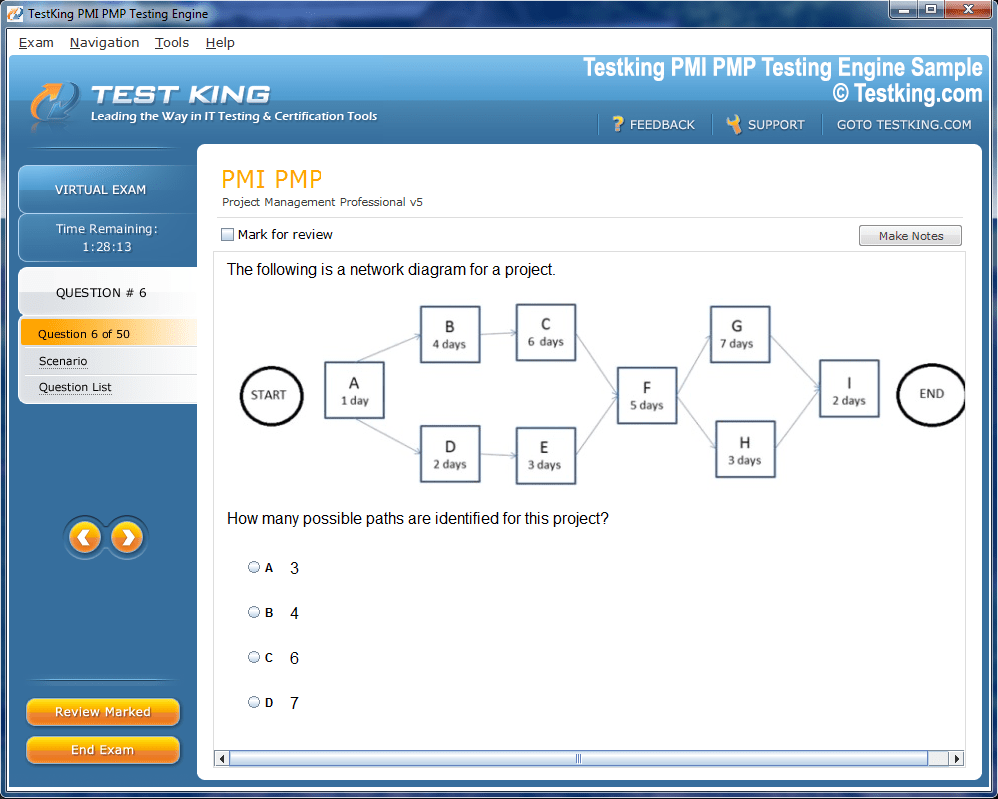




Frequently Asked Questions
Where can I download my products after I have completed the purchase?
Your products are available immediately after you have made the payment. You can download them from your Member's Area. Right after your purchase has been confirmed, the website will transfer you to Member's Area. All you will have to do is login and download the products you have purchased to your computer.
How long will my product be valid?
All Testking products are valid for 90 days from the date of purchase. These 90 days also cover updates that may come in during this time. This includes new questions, updates and changes by our editing team and more. These updates will be automatically downloaded to computer to make sure that you get the most updated version of your exam preparation materials.
How can I renew my products after the expiry date? Or do I need to purchase it again?
When your product expires after the 90 days, you don't need to purchase it again. Instead, you should head to your Member's Area, where there is an option of renewing your products with a 30% discount.
Please keep in mind that you need to renew your product to continue using it after the expiry date.
How many computers I can download Testking software on?
You can download your Testking products on the maximum number of 2 (two) computers/devices. To use the software on more than 2 machines, you need to purchase an additional subscription which can be easily done on the website. Please email support@testking.com if you need to use more than 5 (five) computers.
What operating systems are supported by your Testing Engine software?
Our NSK300 testing engine is supported by all modern Windows editions, Android and iPhone/iPad versions. Mac and IOS versions of the software are now being developed. Please stay tuned for updates if you're interested in Mac and IOS versions of Testking software.
Top Netskope Exams
The Complete Guide to Netskope NSK300 Cloud Security Architecture
In the evolving terrain of digital transformation, cloud computing has transcended its early promise of efficiency to become the very nucleus of global business operations. Organizations now conduct the majority of their critical functions within distributed, hybrid, and multi-cloud environments. As this paradigm becomes ubiquitous, the safeguarding of data, applications, and infrastructure has become more than a technical endeavor—it has become a defining factor in the resilience and trustworthiness of an enterprise. Within this intricate ecosystem, the NSK300 Netskope Certified Cloud Security Architect certification has emerged as an essential validation of mastery for professionals aspiring to design, govern, and protect cloud systems at scale.
Cloud environments provide scalability and flexibility previously unimaginable in on-premises infrastructures, yet they simultaneously introduce new vulnerabilities. These include exposure to misconfigurations, lateral movement attacks, and data leakage through sanctioned and unsanctioned cloud services. Security architects have thus transitioned from being technical specialists to strategic guardians of digital trust. The NSK300 certification encapsulates this responsibility, recognizing individuals who demonstrate proficiency in creating secure, compliant, and high-performing architectures using the Netskope Security Cloud Platform.
Modern businesses rely not only on innovation but on sustained assurance that their cloud infrastructures can withstand the turbulence of cyber threats. To navigate this complexity, organizations require professionals capable of integrating governance, risk management, data protection, and zero-trust strategies into cohesive frameworks. The NSK300 exam validates precisely these capabilities, confirming that certified individuals can translate principles into actionable, real-world protections.
The Shifting Context of Cloud Security in Enterprise Operations
The global shift toward cloud-first strategies has been transformative. Enterprises now employ combinations of Infrastructure-as-a-Service (IaaS), Platform-as-a-Service (PaaS), and Software-as-a-Service (SaaS) solutions to optimize performance and reduce operational burdens. Yet with this transformation comes a manifold expansion of the threat surface.
Cyber adversaries have adapted their methods, targeting API endpoints, exploiting configuration gaps, and infiltrating hybrid networks. Traditional perimeter-based defenses, once sufficient for centralized data centers, are inadequate in this new era of distributed computing. As workloads move fluidly across public and private clouds, the boundaries of security must adapt dynamically.
This evolution explains why cloud security architecture has become a core discipline. Security architects now need to visualize the interconnections between data flows, identity management systems, and network segmentation to ensure integrity and confidentiality. In this context, certifications such as the NSK300 hold distinctive value. They signal a professional’s ability to operationalize theoretical security frameworks and deploy practical mechanisms through tools like Netskope’s Cloud Access Security Broker, Secure Web Gateway, and Zero Trust Network Access components.
Organizations have learned through costly breaches that the absence of a structured security architecture invites disruption. Studies reveal that the average cost of a data breach exceeds several million dollars, not counting reputational harm or regulatory penalties. This financial dimension reinforces the necessity for specialized expertise in designing and maintaining secure architectures that align with compliance frameworks while remaining agile enough to support innovation.
The Emergence of the Cloud Security Architect Role
As enterprise infrastructures have expanded across multiple cloud providers, the role of the cloud security architect has crystallized into a pivotal position. This professional is responsible for designing the blueprint of digital defense—defining policies, aligning configurations with best practices, and orchestrating tools that safeguard every transaction and data exchange.
Unlike traditional security engineers, who focus primarily on specific controls or response actions, cloud security architects adopt a panoramic view. They must understand how identity systems, encryption mechanisms, and threat intelligence layers interoperate within vast ecosystems. Their mandate includes mapping data flows, analyzing risk exposure, and deploying scalable controls that preserve security without hindering performance.
The NSK300 certification was conceived to validate this synthesis of strategy and execution. It measures one’s aptitude in leveraging Netskope’s platform capabilities to implement modern security principles such as zero trust, data loss prevention, governance, risk compliance alignment. By earning this certification, professionals demonstrate not only familiarity with security technology but also the discernment to tailor these technologies to diverse enterprise environments.
A certified cloud security architect understands that the cloud is neither inherently secure nor insecure; it is malleable. Its security posture depends entirely on how policies, configurations, and continuous monitoring are orchestrated. The NSK300 reinforces this philosophy, ensuring candidates can apply concepts to real-world conditions rather than merely recalling definitions.
Understanding Why Cloud Security Is an Imperative
The increasing centrality of cloud computing in business operations has transformed security into an existential issue. Cloud security is not an abstract discipline; it is the essential bulwark that preserves the continuity of digital commerce. When organizations lose control over data integrity or confidentiality, the ripple effects extend beyond technical malfunction—they erode stakeholder confidence and disrupt entire business ecosystems.
Cloud security encompasses numerous disciplines: identity and access management, encryption, compliance, threat detection, and incident response. Yet its underlying principle remains consistent: trust must be verified, not presumed. In cloud systems, users, devices, and applications continuously request access to data that may reside across regions and platforms. Each of these interactions becomes a potential vector for exploitation if not meticulously governed.
Empirical evidence underscores this urgency. A substantial majority of organizations now operate in hybrid or multi-cloud environments, blurring traditional perimeters. Meanwhile, ransomware attacks and credential abuse incidents have risen dramatically, often leveraging the cloud’s connectivity to propagate at unprecedented speed. These patterns illustrate why organizations must cultivate a comprehensive security posture rooted in continuous verification and contextual awareness.
A qualified cloud security architect equipped with NSK300-level knowledge understands how to embed these principles throughout the lifecycle of cloud operations. From initial design to deployment and monitoring, each layer must adhere to the organization’s risk tolerance, regulatory obligations, and business goals. This synthesis of technical rigor and strategic foresight distinguishes cloud security architecture from ordinary infrastructure management.
The Framework of the NSK300 Certification
The NSK300 certification was designed with precision to reflect the realities of cloud security architecture in contemporary enterprises. It evaluates a professional’s capacity to interpret complex requirements, devise scalable solutions, and apply Netskope’s technologies to enforce security across distributed networks.
The exam covers multiple domains that collectively represent the breadth of cloud security architecture. Candidates must demonstrate comprehension of the Netskope Security Cloud architecture, encompassing its deployment patterns and integration methodologies. This includes inline deployments through clients or tunnels, as well as API-based configurations that provide out-of-band inspection for cloud services.
Beyond architecture, the exam measures proficiency in Data Loss Prevention. This domain assesses the candidate’s ability to craft and manage contextual policies that safeguard sensitive data across SaaS, IaaS, and web environments. An adept professional must know how to create rules that differentiate between benign and risky behavior, enforce regulatory compliance, and minimize operational disruption.
Governance, Risk, and Compliance represents another critical domain. Here, the exam examines an architect’s ability to align organizational policies with standards such as ISO/IEC 27001, NIST, GDPR, and HIPAA. This requires understanding both technical controls and procedural oversight.
Zero Trust architecture also forms a central component of the NSK300. Candidates must be capable of implementing identity-centric models where each access request is validated in real time, leveraging device posture, risk scoring, and contextual policies.
Threat protection, automation, and incident response complete the remaining domains, emphasizing how technology and orchestration converge to create adaptive defense mechanisms. By integrating these competencies, the NSK300 establishes a holistic assessment of cloud security expertise.
The Value of Professional Certification in Cloud Security
Professional certifications play a significant role in establishing trust within the cybersecurity community. They function as standardized attestations of capability, assuring employers and stakeholders that certified individuals possess verified skill sets. The NSK300 certification achieves this by combining theoretical understanding with demonstrable technical aptitude.
In the current market, organizations seek individuals who can bridge the gap between policy and execution. Many professionals can configure tools, but fewer possess the architectural foresight to align technology with organizational strategy. The NSK300 identifies those who can do both—architects capable of designing infrastructures that withstand evolving cyber threats while supporting agility and innovation.
Holding a recognized certification also contributes to career longevity. Cloud security continues to evolve at a rapid pace, driven by advances in automation, artificial intelligence, and regulatory reform. Professionals who demonstrate a structured understanding of these developments gain credibility and resilience in the employment market.
Furthermore, certification encourages disciplined learning. Preparing for the NSK300 exam requires a comprehensive exploration of topics ranging from DLP configuration to API-driven automation. This study not only enhances technical competence but also cultivates analytical thinking, enabling candidates to diagnose and resolve issues with greater acuity once they enter or advance within professional roles.
The Integration of Security into Business Strategy
Cloud security architecture extends beyond technological deployment—it shapes the strategic direction of enterprises. As digital transformation initiatives accelerate, security decisions increasingly influence how organizations innovate, deliver services, and maintain compliance.
A well-conceived security framework ensures that business growth does not come at the expense of data integrity or regulatory adherence. For instance, when enterprises integrate new SaaS applications or migrate workloads to public clouds, security architects must evaluate the ramifications for data classification, encryption, and user access. Without these assessments, innovation can inadvertently create vulnerability.
This interdependence between security and business outcomes highlights why certifications like the NSK300 are not merely technical qualifications but strategic assets. Certified architects understand how to harmonize business imperatives with protection mechanisms, enabling organizations to pursue digital initiatives without incurring unacceptable risk.
In many enterprises, the security architect collaborates closely with compliance officers, legal counsel, and executive leadership. Their insights influence procurement decisions, vendor selection, and policy formation. Through frameworks validated by certifications such as NSK300, organizations can ensure that these decisions rest on consistent, evidence-based methodologies rather than ad hoc reactions.
Netskope’s Role in Defining Modern Cloud Security
The evolution of Netskope has paralleled the transformation of enterprise security itself. As a pioneer in the Secure Access Service Edge model, Netskope has integrated multiple capabilities—CASB, SWG, ZTNA, Cloud Firewall—into a unified platform that secures data regardless of location or device.
The NSK300 certification reflects the complexity of this ecosystem. Candidates must not only understand each component but also how they interact to produce continuous visibility and adaptive control. For example, CASB enables granular governance over sanctioned and unsanctioned cloud usage, while ZTNA ensures that private applications remain inaccessible without authenticated and authorized access.
This confluence of technologies embodies the future of cloud security architecture. Rather than operating as isolated silos, security tools converge through shared intelligence and automation, forming an agile defensive fabric. Architects who master this integration can craft systems that are not only secure but also resilient, responsive, and efficient.
The Human Element in Cloud Security Mastery
While technology serves as the cornerstone of modern defense, the human element remains irreplaceable. Every sophisticated platform, from Netskope to other security solutions, depends on the expertise of architects who configure, interpret, and maintain it. Misconfigurations continue to be a leading cause of cloud breaches, underscoring that even advanced tools cannot compensate for inadequate understanding.
The NSK300 certification reinforces this principle by demanding not just memorization but applied reasoning. Candidates must analyze real-world scenarios, interpret logs, identify anomalies, and propose corrective actions. This situational emphasis ensures that certified professionals can operate effectively under the dynamic conditions typical of enterprise environments.
Security architects also play a pedagogical role within their organizations. They educate peers, guide teams, and instill a culture of vigilance. The discipline of preparing for and achieving certification cultivates the patience and precision necessary for this mentorship function.
Ultimately, the NSK300 certification embodies a holistic philosophy: that the mastery of cloud security requires an equilibrium between technological proficiency, analytical insight, and strategic empathy. Those who embrace this balance are equipped not merely to protect infrastructures but to fortify the digital trust that underpins modern civilization.
The Expanding Scope of Cloud Security in the Modern Enterprise
The digital revolution has brought forth an era defined by agility, scalability, and interconnectedness. Every organization, regardless of size or sector, relies on the cloud to enhance productivity, optimize resources, and drive innovation. Yet, as enterprises extend their operations into cloud-native environments, the surface area for potential compromise expands exponentially. Cloud security has evolved from an auxiliary consideration to a central pillar of corporate governance and risk management.
This transformation underscores the necessity for a sophisticated understanding of cloud architecture and its intricate defense mechanisms. The interplay between visibility, compliance, and control defines how organizations navigate the volatile cyber landscape. Within this context, the NSK300 Netskope Certified Cloud Security Architect certification represents a critical milestone for professionals tasked with fortifying cloud ecosystems. It formalizes expertise in designing and implementing defense structures that are both resilient and adaptive.
The cloud’s inherent elasticity allows organizations to deploy services rapidly and scale them as needed. However, this very flexibility introduces unique security challenges. Each new virtual machine, container, or SaaS application expands the web of interdependencies. Misconfigurations, insufficient identity governance, and inconsistent encryption practices often open fissures that adversaries can exploit. Addressing these challenges requires a blend of technical acuity and strategic foresight—qualities that the NSK300 certification aims to validate in every successful candidate.
Security architects trained under this framework understand that protection is not a static condition but an evolving discipline. Every architectural decision must account for data movement, threat vectors, and compliance mandates. This holistic mindset forms the foundation of modern cloud security architecture, where vigilance is continuous and innovation is inseparable from defense.
The Complex Fabric of Cloud Ecosystems
Cloud environments are dynamic organisms composed of diverse services, each with its own security implications. The intricate interplay between public, private, and hybrid models demands granular control over access, monitoring, and data management.
Public clouds offer scalability and cost efficiency, yet they rely on shared responsibility models that distribute accountability between provider and customer. Many breaches arise from misunderstandings of this boundary—where the provider secures the infrastructure but the customer must secure data, configurations, and identity layers.
Private clouds, while offering greater autonomy, introduce operational complexity. They require organizations to maintain their own security controls, patch management cycles, and monitoring systems. Hybrid clouds, which blend both models, magnify these challenges, creating multifaceted environments where security consistency becomes paramount.
To manage this complexity, cloud security architects must integrate a unified strategy that harmonizes policy enforcement across all environments. The NSK300 curriculum emphasizes this synthesis through its focus on the Netskope Security Cloud, a platform engineered to provide visibility, data protection, and adaptive policy enforcement regardless of where resources reside.
This convergence of controls ensures that security posture remains uniform even as workloads shift between clouds. It also aligns governance frameworks with operational realities, enabling organizations to pursue innovation without relinquishing control.
Evolving Threat Landscapes and the Necessity for Adaptation
The cyber threat environment has evolved into a constantly shifting battlefield. Threat actors employ automation, artificial intelligence, and social engineering to infiltrate cloud infrastructures and exfiltrate sensitive data. As enterprises rely increasingly on cloud-native applications and microservices, the attack surface becomes more distributed and opaque.
Among the most prevalent threats are ransomware, credential theft, supply chain attacks, and insider misuse. These incidents no longer target isolated endpoints but exploit the interconnectivity that defines cloud ecosystems. Attackers often move laterally within networks, leveraging weak authentication or misconfigured access controls to escalate privileges.
Modern defense, therefore, requires anticipatory awareness. Security cannot depend solely on perimeter firewalls or signature-based detection; it must evolve into a state of perpetual assessment and response. The Netskope Security Cloud provides such adaptability through advanced analytics, real-time threat intelligence, and integration with incident response workflows. The NSK300 certification evaluates an architect’s ability to employ these mechanisms cohesively, ensuring that each layer of protection complements the others.
A key aspect of contemporary cloud defense lies in behavioral analytics. By observing deviations from normal user or entity behavior, systems can detect anomalies indicative of compromise. This principle, embedded in technologies such as User and Entity Behavior Analytics, empowers architects to construct proactive defenses rather than reactive ones.
The NSK300 framework reinforces this philosophy. It expects candidates to grasp not only how threats manifest but how they propagate across distributed environments. A certified architect must anticipate vulnerabilities before exploitation occurs, implementing countermeasures that adapt to dynamic threat conditions.
Data Loss Prevention as the Pillar of Cloud Integrity
Data constitutes the lifeblood of modern enterprises, and its protection is paramount. The proliferation of cloud storage, collaboration tools, and data-sharing services has intensified the risk of inadvertent or malicious leakage. Data Loss Prevention, or DLP, stands as a cornerstone of cloud security architecture, ensuring that sensitive information remains confined within approved boundaries.
In practice, DLP encompasses more than the blocking of unauthorized transfers. It involves understanding data context, classification, and flow. An effective DLP strategy must distinguish between acceptable business activity and potentially hazardous behavior. For example, uploading confidential data to an external domain may violate compliance requirements even if the action appears benign.
The NSK300 certification dedicates substantial focus to DLP design and implementation. Candidates must demonstrate mastery in creating custom policies, leveraging predefined data profiles, and enforcing contextual rules. These policies must adapt seamlessly to diverse applications—ranging from Google Workspace to Microsoft Teams—while maintaining consistency across the enterprise.
Contextual intelligence plays a critical role in this process. DLP systems must analyze metadata, user identity, and device posture to determine whether an action aligns with security policy. Netskope’s platform, for instance, can evaluate such factors in real time, applying policies that correspond precisely to the organization’s risk appetite.
A proficient security architect will not simply enable DLP features; they will calibrate them meticulously. Overly restrictive rules can hinder productivity, while permissive ones can invite data exposure. Achieving equilibrium requires a deep understanding of business workflows and regulatory obligations. The NSK300 exam’s emphasis on DLP policy creation ensures that certified professionals can strike this balance effectively.
Governance, Risk, and Compliance as Strategic Imperatives
Governance, Risk, and Compliance—often abbreviated as GRC—form the strategic triad upon which sustainable security frameworks rest. While technology enforces protection, governance defines direction, risk quantifies exposure, and compliance ensures accountability. Together, they convert security from a reactive function into an institutional discipline.
Effective governance establishes clarity. It defines who owns what, how data is managed, and which controls are mandatory. In the context of cloud architecture, governance also extends to vendor relationships, identity federation, and data sovereignty. A robust governance model ensures that every configuration aligns with the organization’s policy framework and regulatory landscape.
Risk management complements governance by quantifying uncertainty. It compels organizations to identify potential failure points—whether technical, procedural, or human—and to allocate resources accordingly. Through risk assessment, security architects prioritize mitigation efforts, focusing on vulnerabilities that present the greatest operational threat.
Compliance serves as the final pillar, aligning internal practices with external mandates. Whether an organization must adhere to GDPR, HIPAA, or regional privacy regulations, compliance frameworks impose structure and accountability.
The NSK300 certification integrates GRC principles throughout its domains. It requires architects to understand not only the mechanics of Netskope’s controls but also how to embed them within larger governance and compliance strategies. This holistic perspective ensures that certified professionals can support executive decision-making and maintain alignment with evolving regulations.
Cloud environments introduce distinctive compliance challenges due to their distributed nature. Data may traverse multiple jurisdictions, each with different legal implications. Security architects must design frameworks that honor these constraints while sustaining operational agility. The NSK300’s focus on policy enforcement and data sovereignty equips professionals with the insight necessary to reconcile these competing demands.
Zero Trust and the Principle of Continuous Verification
In traditional networks, trust was often implicit—once a user or device entered the network, access to resources was largely unrestricted. This paradigm proved untenable in cloud-centric environments, where boundaries are fluid and threats can originate from within as easily as from outside. The Zero Trust model emerged as a response, grounded in the axiom that no entity should be trusted by default.
Zero Trust redefines access by making verification continuous. Each connection, regardless of origin, must authenticate identity, validate device integrity, and evaluate contextual risk before access is granted. In essence, Zero Trust transforms security from a gatekeeping mechanism into a living, adaptive framework.
The NSK300 certification examines this principle in depth, expecting candidates to understand how Netskope’s technologies operationalize Zero Trust across cloud infrastructures. This includes enforcing least privilege, integrating identity providers, and leveraging real-time analytics to assess trust dynamically.
Zero Trust extends beyond technology; it embodies a mindset. Implementing it requires cultural transformation within organizations, compelling employees and stakeholders to view access as a privilege contingent on verification rather than an entitlement. This philosophical shift strengthens security posture by reducing opportunities for lateral movement and credential abuse.
Architects trained under the NSK300 framework learn to weave Zero Trust principles into every architectural layer. By correlating user behavior with device signals and environmental context, they can create adaptive access controls that evolve alongside risk conditions. The result is an ecosystem where compromise becomes significantly harder to achieve, and detection occurs long before damage is inflicted.
Threat Intelligence and the Art of Anticipation
Threat intelligence forms the cognitive layer of cloud defense. It transforms raw data into actionable insight, enabling organizations to anticipate and neutralize emerging attacks. By analyzing indicators of compromise, malicious domains, and behavioral patterns, threat intelligence systems provide the foresight necessary to respond before incidents escalate.
In modern security architecture, threat intelligence does not exist in isolation. It integrates with every control—informing DLP policies, guiding Zero Trust access decisions, and enhancing incident response. Netskope’s threat intelligence engine epitomizes this integration, correlating telemetry from diverse sources to deliver precise, contextual insights.
Candidates pursuing the NSK300 certification must understand how to leverage threat intelligence effectively. This involves not only consuming reports but translating intelligence into tangible controls. For example, blocking malicious URLs or quarantining suspicious files based on threat indicators can prevent breaches from unfolding.
Moreover, threat intelligence facilitates collaboration. Within enterprises, shared intelligence enables coordinated defense across departments and geographies. Externally, it fosters collective resilience among industry peers confronting similar adversaries.
The cloud’s interconnected nature magnifies the importance of shared awareness. Each compromise can cascade through supply chains and partner networks, making proactive intelligence indispensable. Security architects must thus master both the interpretation and application of threat intelligence, ensuring that every decision reflects current realities rather than outdated assumptions.
The Foundations of Exam Readiness and Strategic Preparation
Embarking on the journey toward becoming a certified cloud security architect requires more than familiarity with technical concepts. It calls for structured preparation, an analytical mindset, and the discipline to integrate theory with practical experience. The NSK300 certification represents a rigorous validation of these competencies, demanding that candidates not only memorize details but also apply knowledge dynamically across complex scenarios.
Preparation for this certification begins with understanding its purpose. The exam was designed to measure mastery over Netskope’s security architecture, but it simultaneously tests the ability to think holistically about risk, governance, and operational resilience. A well-prepared candidate perceives the exam not as a theoretical exercise but as a simulation of real-world challenges.
Effective preparation, therefore, involves cultivating a balance between conceptual clarity and hands-on expertise. Those who approach the process strategically will find themselves not only prepared for assessment but also enriched with skills directly applicable to enterprise environments. Every policy configuration, incident analysis, and architectural decision made during preparation mirrors the decisions professionals confront daily in their roles as cloud security architects.
Comprehending the NSK300 Exam Framework
The structure of the NSK300 exam is deliberate. Each section corresponds to a domain that reflects essential facets of cloud security architecture. By mastering these domains, candidates ensure that their competence extends beyond isolated tasks into comprehensive system understanding.
The exam comprises approximately sixty to seventy-five questions within a ninety-minute period. Each question is scenario-based, requiring candidates to interpret contextual information, evaluate multiple outcomes, and determine the most effective approach. This format reflects how architects operate in practice—navigating ambiguity, prioritizing among competing objectives, and executing under pressure.
The domains cover a wide array of topics, including Netskope Security Cloud architecture, data loss prevention, governance and compliance, zero trust frameworks, threat protection, and automation. Candidates are evaluated on both technical accuracy and conceptual reasoning. The passing score, typically set at seventy-five percent, represents not mere adequacy but evidence of deep comprehension.
Understanding the exam’s design is an essential part of preparation. Each question challenges candidates to align principles with functionality. Knowing the relationships between Netskope’s components—how its Cloud Access Security Broker interacts with Data Loss Prevention or how Zero Trust Network Access integrates with identity management systems—becomes indispensable.
While memorization of specific terms is necessary, the true challenge lies in connecting these concepts to operational outcomes. Success requires recognizing how each mechanism strengthens the overall security fabric.
Establishing a Study Methodology Anchored in Realism
The most successful candidates approach exam preparation through a structured methodology rather than rote study. They begin by dissecting each domain into subtopics, mapping what they already know against what remains uncertain. This self-assessment forms the basis of a personalized study plan.
Reading documentation or training materials alone is insufficient. Practical experimentation must complement study sessions. Configuring Netskope environments, implementing DLP policies, and simulating governance controls create experiential memory far more resilient than theoretical recall. Each exercise reinforces procedural logic, enabling architects to reason intuitively when faced with scenario-based questions.
Time management is another critical element. Given the exam’s breadth, sustained and deliberate preparation is preferable to last-minute intensity. Candidates often dedicate several weeks or months to gradual immersion, alternating between study, lab work, and review. This iterative cycle fosters retention while preventing cognitive fatigue.
Collaborative learning can also enrich preparation. Discussing deployment models, risk assessment frameworks, or automation workflows with peers fosters diverse perspectives. These dialogues encourage analytical thinking, helping participants refine their understanding through articulation and critique.
A well-structured study plan should allocate equal attention to conceptual depth and practical dexterity. Revisiting each domain periodically ensures balance and prevents overemphasis on familiar areas at the expense of weaker ones.
Immersing in the Netskope Security Cloud Ecosystem
Central to exam readiness is intimate familiarity with the Netskope Security Cloud Platform. Understanding its architecture, functionalities, and deployment options equips candidates with the fluency necessary to interpret exam scenarios accurately.
Netskope’s ecosystem operates on principles of adaptive control and contextual intelligence. It provides visibility across applications, enforces policies in real time, and integrates seamlessly with third-party identity and threat management systems. A competent architect must grasp these mechanisms not in isolation but as an interconnected matrix.
Candidates should spend significant time exploring the platform’s console, learning how to navigate dashboards, interpret analytics, and configure controls. Deploying clients, establishing tunnels, and integrating identity providers are essential exercises. Additionally, comprehending how inline deployments differ from API-based models enhances strategic judgment when selecting architectures for diverse environments.
An often-overlooked aspect of preparation involves error resolution. Troubleshooting misconfigurations during practice sessions strengthens problem-solving agility. The ability to diagnose anomalies and restore compliance underpins the critical thinking demanded by the exam.
Candidates should also explore how Netskope’s platform scales within hybrid infrastructures. Understanding traffic steering, policy enforcement across regions, and interoperability with existing network systems helps illustrate real-world applications of theoretical knowledge. The exam’s scenario-driven format rewards those who can translate architectural insight into actionable decisions.
Mastering Data Loss Prevention and Its Application
Data Loss Prevention represents one of the most technically demanding and conceptually nuanced portions of the NSK300 certification. Candidates must not only understand DLP at a functional level but also appreciate its philosophical importance as the guardian of organizational integrity.
The study of DLP should begin with foundational principles: classification, pattern recognition, and contextual assessment. Candidates must learn how data is categorized according to sensitivity, how detection engines identify policy violations, and how contextual parameters refine enforcement. Netskope’s DLP engine excels at combining these dimensions, allowing for precision unmatched by generic filters.
To prepare effectively, candidates should practice creating custom DLP policies. They must understand when to apply built-in profiles such as those for personally identifiable information, payment card data, or protected health information, and when to define bespoke patterns that align with organizational requirements.
Equally important is comprehension of the operational workflow. Policies must progress logically from detection to enforcement, incorporating testing phases to minimize false positives. Candidates should simulate DLP alerts, review incident logs, and experiment with remediation options. These exercises not only prepare them for exam questions but also cultivate habits vital for professional practice.
Integration across applications forms another key topic. Candidates must demonstrate awareness of how DLP policies extend to cloud services such as Google Drive, Salesforce, and Microsoft Teams. This understanding ensures that protective measures follow data wherever it travels, reflecting the principle of persistent governance.
Proficiency in DLP extends beyond configuration. It demands insight into policy tuning, false positive reduction, and long-term maintenance. Exam readiness is achieved when a candidate can explain not only how to deploy DLP but why each rule exists within a broader security strategy.
Governance, Risk, and Compliance in Architectural Design
A distinguishing feature of the NSK300 certification is its integration of governance, risk, and compliance into every domain. Candidates must therefore internalize GRC as both a framework and a philosophy guiding all architectural decisions.
Governance begins with structure. It defines accountability for security outcomes, delineates roles, and establishes policy frameworks. In cloud environments, governance extends to service selection, configuration standards, and lifecycle management. Candidates must understand how to translate governance mandates into technical controls within the Netskope environment.
Risk management involves quantifying threats and prioritizing responses. Candidates should familiarize themselves with qualitative and quantitative risk assessment techniques, focusing on how these approaches inform architectural decisions. For instance, evaluating the potential impact of misconfigured access policies or unmonitored API activity guides, where controls must be most stringent.
Compliance completes the triad by aligning practices with external requirements. Exam questions often reference the intersection of compliance and technology—how specific configurations enable adherence to data privacy regulations or industry standards. Candidates must know how to employ Netskope’s Cloud Confidence Index and policy templates to maintain compliance dynamically.
Preparation for this domain requires a mindset that sees beyond technical mechanisms to organizational objectives. GRC principles ensure that technology functions as an instrument of strategy, not as an isolated silo. Candidates who master this integration demonstrate the maturity expected of certified architects, capable of aligning engineering precision with executive vision.
The Role of Zero Trust in Cloud Environments
Zero Trust has become synonymous with contemporary cloud defense. It reshapes conventional access paradigms, enforcing continuous authentication and contextual authorization. Candidates pursuing the NSK300 certification must develop an intuitive grasp of this framework, understanding both its philosophy and its implementation through Netskope technologies.
Zero Trust demands the verification of every user, device, and session, regardless of location or previous authentication. Within Netskope’s ecosystem, this principle manifests through integration with identity providers, device posture validation, and dynamic policy enforcement.
To prepare effectively, candidates should study how Zero Trust Network Access secures private applications. They must learn how policies adapt in real time based on risk scoring, device compliance, and environmental signals. Practical exercises configuring access rules, integrating with identity systems like Okta or Azure AD, and simulating policy decisions build confidence and competence.
Zero Trust also extends to network segmentation. Candidates should understand micro-segmentation concepts, the rationale behind limiting lateral movement, and how Netskope’s architecture supports granular access control. These insights illustrate how Zero Trust transcends identity to encompass data and network behavior.
The exam may present scenarios where applying Zero Trust principles mitigates complex threats. Candidates must evaluate variables holistically, balancing user experience against stringent security. Mastery lies in crafting architectures that are simultaneously secure and seamless, ensuring business operations remain fluid even under strict access control.
The Psychology of Exam Performance
Technical proficiency alone does not guarantee success. The psychology of preparation and performance often determines whether knowledge translates effectively under examination pressure. Candidates must cultivate composure, focus, and endurance.
Managing time during the exam is critical. Each question deserves attention, yet none should consume disproportionate minutes. Strategic pacing—allocating more time to complex scenarios while swiftly addressing straightforward ones—preserves balance. Practicing under timed conditions helps normalize this rhythm.
Confidence derives from familiarity. Repeated exposure to labs, policies, and case studies conditions the mind to recognize patterns, reducing hesitation. Simulating the testing environment, including its interface and pacing, diminishes anxiety and enhances adaptability.
Equally important is rest. Cognitive performance deteriorates without proper recovery. Candidates should approach exam day with mental clarity achieved through balanced study routines and deliberate breaks. Exhaustion compromises reasoning and accuracy, while calmness promotes analytical precision.
Finally, self-trust completes the preparation arc. Candidates who have studied systematically and practiced diligently possess the foundation for success. The exam rewards genuine understanding, not superficial memorization. Those who internalize this truth approach the test with composure, transforming potential stress into focused energy.
The Evolution of Professional Identity Through Certification
Certification transforms more than credentials; it reshapes professional identity. Attaining the NSK300 credential signifies entry into a community defined by expertise, discipline, and ethical responsibility. Certified architects embody the convergence of technical mastery and strategic insight that modern organizations depend upon.
Beyond recognition, the certification journey instills habits of continuous learning. The discipline required to prepare effectively fosters curiosity and precision—qualities indispensable in an ever-changing field. Professionals who pursue such credentials demonstrate commitment not merely to career progression but to the advancement of cybersecurity as a collective mission.
Moreover, certification influences perception within organizations. Leaders and peers alike view certified professionals as trusted advisors capable of bridging technical and business imperatives. Their insights often shape security policy, governance frameworks, and innovation strategy.
The NSK300 certification symbolizes the transition from practitioner to architect—an evolution marked by accountability, foresight, and mastery. It affirms not only what one knows but how one applies knowledge to safeguard digital ecosystems against the intricate threats of the modern age.
The Deep Structure of Threat Protection in Cloud Security Architecture
The safeguarding of cloud infrastructure demands a meticulous orchestration of policies, technologies, and analytical foresight. Within the evolving digital continuum, threats are no longer confined to external adversaries; they often emerge from within, concealed within routine workflows or unmonitored data exchanges. For a cloud security architect, the challenge lies not merely in responding to such threats but in anticipating them through the lens of intelligence, analytics, and automation.
In the context of the NSK300 certification, threat protection constitutes a fundamental pillar. It encapsulates how an organization defends its digital ecosystem against malicious entities while maintaining operational fluidity. Candidates must demonstrate an understanding that transcends reactive defense, focusing instead on proactive and predictive measures rooted in data-driven insight.
Threat protection is not a static discipline. It evolves in tandem with adversarial innovation. Attackers continuously adapt, exploiting gaps in integration, misconfigurations, or overlooked policy exceptions. Consequently, an architect must construct environments that adapt faster than they can be compromised. This requires a profound comprehension of the interdependencies between intelligence, user behavior analytics, and policy enforcement.
Understanding Netskope’s Threat Intelligence Framework
Netskope’s threat intelligence operates as an intricate network of continuous observation, correlation, and adaptation. It assimilates information from multiple vectors, from traffic telemetry to file analytics, translating patterns into actionable defense mechanisms. For certification candidates, this ecosystem exemplifies the sophistication required to manage modern threat landscapes.
The intelligence engine functions by identifying anomalies across cloud services, network gateways, and user activities. Its value lies in its capacity to correlate disparate events that, in isolation, may appear innocuous. When combined, however, they reveal the contours of an emerging threat.
A crucial aspect of the framework is the integration between threat intelligence and other core Netskope features such as Data Loss Prevention, Secure Web Gateway, and Zero Trust Network Access. Together, these components construct an interlocked shield that adapts dynamically to evolving conditions. Understanding how this cohesion operates is central to both exam success and practical competency.
Candidates preparing for certification must internalize how malicious domains, compromised credentials, and infected files are identified and mitigated. Netskope employs real-time classification systems capable of inspecting encrypted traffic without violating privacy principles. This capacity ensures that security remains both effective and ethically grounded.
Through this architecture, Netskope establishes an ecosystem of resilience—one that neither relies solely on predefined signatures nor static rules but instead evolves through behavioral inference and continuous learning.
Behavioral Analytics and the Role of UEBA
User and Entity Behavior Analytics, or UEBA, represents a transformative approach in modern cybersecurity strategy. Rather than depending exclusively on known threat indicators, UEBA interprets behavioral deviations to uncover hidden risks. Within the NSK300 framework, comprehension of UEBA’s design and operation is indispensable.
Behavioral analytics hinge upon the understanding that anomalies often precede compromise. Subtle changes in access patterns, data movement, or login frequency may suggest credential misuse or insider malfeasance. Netskope’s integration of UEBA amplifies this sensitivity, providing architects with a panoramic view of behavioral baselines and deviations.
For instance, an employee accessing cloud applications from an unfamiliar region within minutes of their last login may trigger a risk-based response. The system correlates this event with contextual data—device compliance, user role, and time of access—to determine whether the anomaly is benign or malicious.
The architect’s responsibility is to calibrate sensitivity, ensuring that alerts remain meaningful without overwhelming security teams. An overabundance of signals without contextual refinement erodes operational efficiency. Therefore, proficiency in UEBA involves not only configuration but the art of interpretation.
In exam scenarios, candidates may be challenged to determine appropriate responses to such behavioral irregularities. Understanding how UEBA integrates with automated policy enforcement, incident response, and access control forms the cornerstone of effective decision-making in both examination and practice.
Threat Containment Through Automation
Automation in threat protection represents an evolution from reactive management to orchestrated self-defense. Netskope’s architecture empowers administrators to construct automated workflows that identify, contain, and remediate threats with minimal human intervention.
This automation operates through a confluence of triggers and responses. When an anomaly or malicious activity is detected, predefined workflows initiate containment actions—revoking access, isolating endpoints, or escalating incidents to external systems. Candidates preparing for the NSK300 must comprehend how these automated sequences align with enterprise response strategies.
The practical benefit of automation extends beyond efficiency. It reduces the temporal window between detection and response, minimizing potential damage. In modern threat environments, this compression of reaction time is critical. Attackers often exploit milliseconds of latency to propagate infections or exfiltrate data. Automation transforms security from a passive observer into an active combatant capable of real-time intervention.
However, automation also introduces complexity. Candidates must understand dependency management, exception handling, and error resilience. Improperly configured workflows may inadvertently disrupt legitimate operations. Therefore, architects must balance automation with oversight, ensuring that human verification remains available when needed.
Mastery of Netskope’s API integrations and orchestration tools forms an essential aspect of this understanding. By interfacing with Security Information and Event Management (SIEM) and Security Orchestration, Automation, and Response (SOAR) platforms, Netskope extends its capabilities into a unified defensive framework that spans the entire organizational ecosystem.
The Anatomy of Incident Response and Forensics
An architect’s work does not end with prevention; it continues through detection, investigation, and recovery. Incident response in the cloud context requires agility and precision, demanding that teams identify not only the symptoms of compromise but its systemic origins.
Netskope’s incident management tools enable comprehensive tracing of activity across applications, users, and devices. These tools illuminate the timeline of events—what was accessed, by whom, and through which vectors. Candidates must be able to reconstruct such sequences, distinguishing between primary and secondary incidents.
Forensic analysis in cloud security introduces additional complexity. Traditional forensics often relies on direct access to hardware, while cloud environments operate across distributed systems. Therefore, an architect must leverage telemetry, logs, and analytics to piece together digital evidence. Understanding how to extract, interpret, and preserve such data without compromising the chain of custody is critical for both technical and regulatory integrity.
The NSK300 examination may present scenarios requiring judgment in prioritizing response actions. Candidates must determine whether to isolate users, revoke tokens, or engage in broader containment measures based on contextual severity. These decisions must balance rapid mitigation with the prevention of unnecessary disruption.
Ultimately, effective incident response embodies foresight. It is not a reaction to chaos but the execution of a premeditated plan. Candidates who internalize this philosophy approach challenges methodically, transforming uncertainty into structured recovery.
Integrating Zero Trust and Threat Defense Mechanisms
Zero Trust principles and threat protection operate as complementary forces within the Netskope ecosystem. Their integration ensures that no entity gains implicit access, while every activity undergoes continuous scrutiny.
Within this fusion, identity verification acts as the gatekeeper, and threat intelligence functions as the sentinel. Together, they construct a layered defense that evolves dynamically. Candidates must comprehend how these paradigms intersect, particularly in multi-cloud environments where boundaries are fluid.
An example of this synergy is the dynamic application of access policies based on real-time threat intelligence. If Netskope identifies a compromised endpoint, Zero Trust mechanisms restrict access instantaneously. Conversely, if behavioral analytics detect anomalies, the system enforces conditional policies that demand reauthentication or impose quarantine.
For exam preparation, understanding these interactions from a policy and architectural standpoint is indispensable. Candidates must be able to articulate how the integration of Zero Trust and threat intelligence ensures continuity of protection even as risk factors shift minute by minute.
This synthesis of principles illustrates the philosophical core of modern cloud security—trust nothing, verify everything, and adapt constantly. The NSK300 certification measures an individual’s capacity to embody this doctrine in design and execution.
Leveraging APIs for Continuous Threat Monitoring
Application Programming Interfaces serve as the connective tissue of the modern security ecosystem. Through APIs, Netskope extends its monitoring and enforcement capabilities into the broader network of enterprise systems.
Understanding how to employ APIs for threat management is an essential skill. Candidates should learn how to query incidents, extract analytics, and automate remediation workflows. For instance, a script may retrieve DLP violation data, cross-reference it with identity management logs, and trigger an automated incident in an external SIEM system.
Mastery of APIs signifies adaptability. As enterprises expand, manual intervention becomes untenable. APIs enable scalability through consistency, ensuring that every action taken by security systems aligns with global policy frameworks.
The examination may challenge candidates to conceptualize these integrations or recognize their value within specific scenarios. A strong grasp of RESTful architecture, authentication mechanisms, and response handling equips candidates to understand both the theoretical and applied aspects of automated security management.
In the operational world, these capabilities translate into resilience. By leveraging APIs, security teams can unify disparate data streams, detect correlations invisible to siloed systems, and act before damage escalates.
Architectural Resilience and Adaptive Defense
Resilience represents the ultimate aspiration of any cloud security framework. It is the assurance that even in the face of disruption, the system endures, adapts, and recovers. For an architect, this concept extends beyond defense—it embodies design philosophy.
Netskope’s infrastructure exemplifies adaptive resilience through its distributed design and intelligent policy enforcement. Candidates should study how redundancy, failover mechanisms, and global points of presence maintain performance even during incidents.
Exam questions may explore how architectural decisions influence resilience. For instance, choosing between inline and API-based deployment models affects latency, coverage, and fault tolerance. Candidates must understand how to align architecture with organizational risk tolerance and performance expectations.
Resilient architecture also encompasses data governance. Ensuring continuity of policy enforcement during outages or failovers reflects a mature design perspective. Candidates who can conceptualize such frameworks demonstrate the foresight characteristic of experienced security architects.
In essence, adaptive defense transforms architecture into a living organism—self-correcting, self-healing, and perpetually evolving. Netskope’s ecosystem embodies this vision, and mastering its intricacies prepares candidates not only for examination but for real-world stewardship of digital security.
The Convergence of Knowledge and Foresight
The journey toward mastering threat protection within the NSK300 certification is as much intellectual as it is technical. It demands synthesis—of intelligence and automation, of policy and behavior, of architecture and adaptability.
Candidates who grasp this convergence understand that cloud security is not an assemblage of tools but an ecosystem of interdependent dynamics. Each mechanism, from UEBA to threat intelligence, from Zero Trust to automation, functions as part of a greater whole.
In preparing for certification, individuals cultivate a mindset attuned to systems thinking. They perceive threats not as isolated events but as emergent phenomena arising from complex interactions. This perspective empowers them to design architectures that remain robust amid uncertainty.
Ultimately, the discipline of threat protection transcends examination. It embodies the art of constructing trust in a trustless environment—a pursuit that defines the essence of the modern cloud security architect.
Mastering Policy Enforcement and Access Control
Effective cloud security architecture is grounded in the consistent application of policy and the precise management of access. Policy enforcement is the bridge between conceptual security frameworks and operational reality, translating governance, risk, and compliance principles into actionable rules. The NSK300 certification emphasizes this proficiency, ensuring candidates understand not only how to configure policies but how to align them with organizational objectives and risk tolerance.
Access control is equally central. In modern cloud ecosystems, identities are fluid, and resources exist across hybrid environments. Architecting access requires a granular approach, one that combines identity verification, device posture assessment, and contextual awareness. Netskope’s capabilities allow for adaptive access decisions, enforcing policies that respond dynamically to the level of risk associated with a user, session, or device.
For certification preparation, candidates must gain practical experience creating, testing, and refining access policies. This includes simulating scenarios in which policies enforce least privilege, restrict unauthorized lateral movement, or dynamically respond to risk indicators. Mastery of policy enforcement reflects a deep understanding of how operational controls intersect with architecture and governance.
The strategic significance of access control extends beyond immediate security. Properly enforced policies reduce operational exposure, ensure regulatory compliance, and maintain the integrity of enterprise data flows. It also enables a culture of accountability, where every access decision is recorded, auditable, and aligned with established governance.
Designing Resilient Data Governance Structures
Data governance forms the backbone of responsible cloud usage. It defines how information is classified, stored, accessed, and transmitted, ensuring both security and compliance are embedded into daily operations. The NSK300 curriculum emphasizes that architects must not only implement governance tools but also understand the philosophy underpinning them.
Central to effective governance is data classification. Sensitive information must be identified and categorized according to regulatory mandates and organizational policies. Netskope’s classification engine allows for automated tagging and risk scoring, ensuring that policies are contextually applied. Candidates must understand how to integrate classification with access controls, data loss prevention, and auditing mechanisms.
The interplay between governance and compliance cannot be overstated. Governance structures operationalize compliance frameworks, translating abstract regulations into enforceable rules. This requires familiarity with global standards, including ISO/IEC 27001, NIST guidelines, and regional privacy regulations. Candidates must demonstrate the ability to implement controls that satisfy these standards without impeding legitimate business activity.
In practice, resilient governance involves continuous monitoring. Policies must adapt to changing workloads, new applications, and evolving user behavior. Automation plays a critical role in this process, allowing real-time adjustments to maintain alignment with organizational objectives and regulatory expectations.
Candidates preparing for the NSK300 exam should engage in hands-on exercises that involve designing governance workflows, simulating policy enforcement, and analyzing the effectiveness of these measures. This experiential approach ensures that knowledge is internalized and readily applicable in real-world scenarios.
Integrating Zero Trust Across Enterprise Environments
Zero Trust represents a paradigm shift in security philosophy, moving away from perimeter-based assumptions toward continuous verification. In cloud environments, where users, devices, and data exist in fluid states, Zero Trust provides a framework for managing risk with precision. The NSK300 certification underscores the importance of integrating Zero Trust principles into architectural design.
In practice, Zero Trust requires that every access request be authenticated, authorized, and evaluated for risk in real time. This evaluation considers factors such as device posture, user behavior, location, and threat intelligence signals. Netskope facilitates this approach through its integration with identity providers, contextual analytics, and adaptive policy enforcement.
Candidates must understand how to implement Zero Trust in multi-cloud and hybrid scenarios. This includes configuring conditional access policies, integrating endpoint verification, and combining Zero Trust with existing security controls such as DLP and SWG. The goal is to create an environment where trust is never assumed and every action is validated before execution.
Zero Trust also emphasizes the principle of least privilege. By granting access strictly on a need-to-know basis, architects reduce the attack surface and limit potential damage from compromised credentials. Certification candidates must demonstrate both conceptual understanding and practical capability in implementing these controls, ensuring policies are effective, enforceable, and minimally disruptive to legitimate operations.
Automation and Orchestration in Cloud Security
Automation has emerged as an essential pillar of cloud security, enabling organizations to respond to threats with speed, consistency, and accuracy. The NSK300 certification evaluates candidates on their ability to leverage Netskope’s automation and orchestration capabilities to enhance security operations.
Automated workflows streamline repetitive tasks, such as policy enforcement, alert triaging, and incident escalation. By integrating with APIs and orchestration platforms, Netskope allows architects to connect diverse security tools into a cohesive operational ecosystem. This integration reduces latency between detection and response, minimizing exposure to threats while freeing human operators to focus on strategic decision-making.
Candidates preparing for the exam should engage in hands-on exercises that simulate automated incident response. This may involve creating scripts to trigger policy adjustments in response to detected anomalies, configuring alerts to propagate across SIEM systems, or orchestrating remediation sequences that isolate compromised endpoints. Mastery of automation reflects both technical proficiency and strategic thinking, as architects must anticipate operational dependencies and potential failure points.
Orchestration extends beyond automation to the coordination of multiple tools and processes. In multi-cloud environments, where resources are distributed and diverse, orchestration ensures that policies are applied uniformly, incidents are managed holistically, and compliance requirements are continuously satisfied. Understanding this convergence of automation and orchestration is critical for effective cloud security architecture.
Threat Modeling and Risk Anticipation
Effective security architecture is proactive rather than reactive. Threat modeling and risk anticipation allow architects to visualize potential attack vectors, assess the likelihood and impact of compromise, and design mitigations before incidents occur. The NSK300 curriculum emphasizes this foresight, ensuring candidates can translate abstract risk into tangible architectural decisions.
Threat modeling begins with a comprehensive inventory of assets, including data, applications, endpoints, and user identities. Each asset is evaluated for criticality, exposure, and susceptibility to attack. Netskope provides tools to assess risk dynamically, integrating behavioral analytics, DLP policies, and network insights to prioritize focus areas.
Risk anticipation involves scenario-based planning. Architects consider how attackers might exploit vulnerabilities, how internal threats could manifest, and how system dependencies amplify potential damage. By simulating incidents in lab environments, candidates gain experiential knowledge that reinforces conceptual understanding.
In practical terms, threat modeling guides architectural choices such as network segmentation, access controls, and policy enforcement. It informs decisions regarding automation, orchestration, and incident response planning. Candidates who can integrate threat modeling into their daily workflow demonstrate a holistic understanding of security architecture that transcends reactive measures.
Incident Response and Recovery Strategies
Despite proactive measures, breaches can occur. Resilient cloud security architectures integrate comprehensive incident response and recovery strategies, ensuring that operations can continue while threats are contained and remediated. The NSK300 emphasizes both the technical and procedural aspects of this discipline.
Effective incident response begins with detection and prioritization. Architects must be able to interpret alerts, correlate events across systems, and assess severity. Netskope’s platform integrates threat intelligence, UEBA, and DLP analytics to provide a centralized view of incidents, enabling informed decision-making.
Once identified, containment measures are deployed. This may involve restricting user access, isolating applications, or temporarily suspending network connections. Automated workflows enhance speed and accuracy, while manual oversight ensures contextual judgment. Recovery processes focus on restoring services, validating integrity, and ensuring compliance with regulatory mandates.
Candidates preparing for the NSK300 must practice incident response in lab environments, simulating real-world scenarios that test both technical skills and strategic judgment. This experiential approach ensures that response plans are not only theoretical but executable under operational constraints.
Effective recovery also requires documentation and analysis. Lessons learned from each incident feed into governance and risk frameworks, refining policies, improving detection, and reducing future exposure. Certification candidates who internalize this continuous improvement cycle embody the mindset of a seasoned cloud security architect.
Advanced Use of Data Loss Prevention in Multi-Cloud Environments
Data Loss Prevention remains a cornerstone of cloud security, particularly in multi-cloud environments where data movement is frequent and complex. The NSK300 emphasizes advanced DLP strategies that extend across SaaS, IaaS, and hybrid infrastructures, ensuring consistent enforcement and visibility.
Candidates must understand how to configure policies that adapt dynamically to context, user roles, and regulatory requirements. Netskope’s DLP engine enables fine-grained controls, combining pattern recognition, behavior analysis, and contextual awareness. For example, policies can block uploads to unapproved domains or restrict data sharing based on geographic compliance constraints.
Advanced DLP strategies also involve integration with identity and access controls, threat intelligence, and automated remediation. Candidates should practice scenarios in which DLP interacts with other security mechanisms, reinforcing the interdependence of controls and the principle of persistent governance.
Understanding multi-cloud DLP ensures that sensitive data remains protected regardless of where it resides. This capability reflects not only technical expertise but also strategic foresight, as architects must anticipate data movement patterns, operational workflows, and emerging risks.
The Strategic Value of Netskope Certification
The NSK300 certification validates more than technical proficiency; it affirms the ability to design, implement, and maintain secure cloud ecosystems. Candidates who achieve this credential demonstrate mastery over a broad spectrum of disciplines, including policy enforcement, access control, threat protection, DLP, Zero Trust, automation, and incident response.
Certification also reinforces professional credibility. It signifies a commitment to industry best practices, continuous learning, and strategic thinking. In organizational contexts, certified architects become trusted advisors capable of bridging technology, governance, and operational execution.
From a career perspective, the knowledge and skills gained through preparation extend far beyond examination success. Candidates who engage deeply with the material develop a holistic understanding of cloud security architecture, enabling them to influence design decisions, implement robust policies, and anticipate evolving threats with precision.
Cultivating Continuous Learning and Adaptation
The field of cloud security is dynamic, driven by innovation, threat evolution, and regulatory change. Architects must cultivate a mindset of continuous learning, integrating new techniques, tools, and frameworks into their practice. Netskope’s platform evolves rapidly, as do threat landscapes and compliance requirements.
Continuous adaptation ensures that policies remain effective, architectures resilient, and incident response agile. For NSK300 candidates, this mindset begins in preparation, through iterative practice, exploration of lab environments, and engagement with real-world scenarios. It extends beyond certification into professional practice, forming the foundation of long-term expertise and influence in cloud security.
Mastery of cloud security architecture requires both technical skill and cognitive flexibility. Architects must think strategically, respond dynamically, and evaluate decisions within complex systems. The NSK300 certification formalizes this dual capability, producing professionals capable of navigating the challenges of modern cloud environments with competence, foresight, and resilience.
Conclusion
The journey to becoming a Netskope Certified Cloud Security Architect represents more than the attainment of a credential; it embodies the mastery of modern cloud security principles, operational foresight, and strategic thinking. In today’s digital landscape, where hybrid and multi-cloud environments dominate enterprise infrastructure, the ability to design, implement, and sustain secure architectures is indispensable. The NSK300 certification validates a professional’s capability to address these complexities, integrating Data Loss Prevention, Zero Trust principles, threat intelligence, policy enforcement, and automation into cohesive, resilient systems.
Certification reflects both technical proficiency and conceptual understanding. Candidates are required to synthesize knowledge across domains, applying it to real-world scenarios that challenge decision-making, prioritization, and risk assessment. Mastery of Netskope’s platform ensures that security measures are adaptive, contextually aware, and aligned with governance and compliance standards. Equally important is the cultivation of a mindset attuned to continuous learning, behavioral analysis, and anticipatory threat management.
Beyond examination success, achieving NSK300 certification strengthens professional credibility and expands career opportunities. Certified architects are equipped to influence enterprise security strategy, safeguard critical data, and maintain operational continuity in the face of evolving threats. They become trusted advisors capable of bridging technical execution with organizational objectives.
Ultimately, the value of this certification lies not in the title itself, but in the expertise it represents—the ability to secure digital transformation at scale, anticipate challenges before they emerge, and architect cloud ecosystems that are resilient, compliant, and future-ready. The NSK300 credential is a testament to disciplined study, hands-on experience, and the pursuit of excellence in cloud security.