

Certification: Dell Unity Deploy 2023
Certification Full Name: Dell Unity Deploy 2023
Certification Provider: Dell
Exam Code: D-UN-DY-23
Exam Name: Dell Unity Deploy 2023
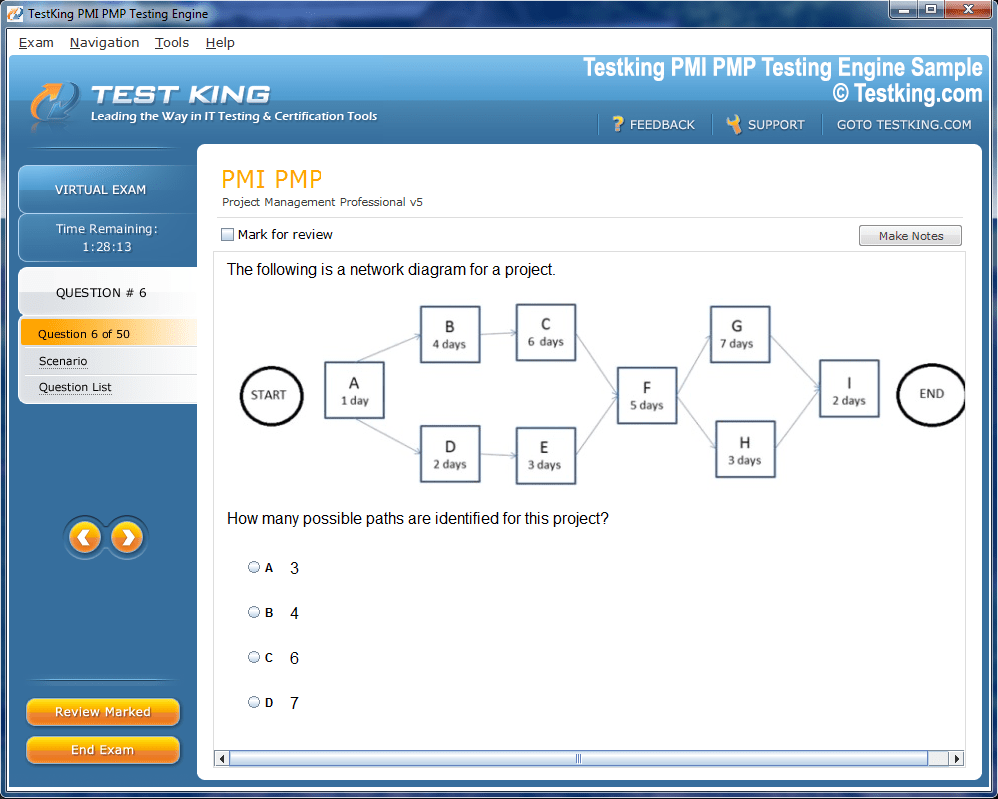
Product Screenshots
nop-1e =1
D-UN-DY-23: Comprehensive Preparation Strategy for Technologies Dell Unity Deploy 2023 Certification Success
The Dell Technologies Dell Unity Deploy 2023 certification represents a pivotal credential for storage professionals seeking to validate their expertise in implementing and managing enterprise-level storage solutions. The D-UN-DY-23 examination serves as a benchmark for professionals who aspire to demonstrate their proficiency in deploying Unity storage systems within complex organizational environments. This credential has emerged as an industry-recognized standard that distinguishes qualified practitioners from those lacking hands-on experience with Dell Technologies storage infrastructure.
Pursuing the Unity Deploy certification requires candidates to possess a comprehensive understanding of storage architecture, deployment methodologies, configuration protocols, and operational best practices. The examination framework evaluates technical competencies across multiple domains, ensuring that certified professionals can effectively design, implement, and maintain Unity storage environments that meet rigorous enterprise requirements. Organizations worldwide recognize this certification as evidence of an individual's capability to handle sophisticated storage deployment scenarios.
The certification pathway presents an opportunity for information technology professionals to elevate their career trajectories while contributing meaningfully to organizational storage initiatives. As businesses continue to generate exponential data volumes, the demand for skilled professionals who can architect and deploy efficient storage solutions has intensified dramatically. The D-UN-DY-23 credential positions certificants at the forefront of this technological evolution, equipping them with validated competencies that address contemporary storage challenges.
Achieving success on the Unity Deploy Dumps requires meticulous preparation, strategic study approaches, and comprehensive engagement with realistic practice materials. Candidates must immerse themselves in both theoretical concepts and practical applications to develop the multifaceted expertise demanded by the examination. The certification process tests not merely memorized information but the ability to apply knowledge in dynamic, real-world scenarios that mirror actual deployment environments.
Architectural Fundamentals of Dell Technologies Unity Storage Systems
Dell Technologies Unity storage platforms represent sophisticated convergence of hardware, software, and intelligent management capabilities designed to address diverse organizational storage needs. These systems incorporate unified storage architecture that seamlessly supports both block and file protocols, enabling organizations to consolidate their storage infrastructure while maintaining optimal performance characteristics. The architectural design emphasizes flexibility, scalability, and operational efficiency, allowing enterprises to adapt their storage resources as business requirements evolve.
The Unity Deploy PDF materials comprehensively examine the foundational components that constitute Unity storage systems, including storage processors, drive enclosures, connectivity infrastructure, and management interfaces. Storage processors function as the computational engines that execute storage operations, manage data placement, and coordinate system activities. These processors leverage multi-core architectures and substantial memory resources to deliver exceptional throughput while maintaining data integrity across diverse workload patterns.
Drive enclosures within Unity systems accommodate various storage media types, including solid-state drives, nearline serial attached SCSI drives, and traditional spinning disk mechanisms. This heterogeneous storage composition enables organizations to implement tiered storage strategies that balance performance requirements against cost considerations. Automated data movement algorithms intelligently relocate information between storage tiers based on access patterns, ensuring that frequently referenced data resides on high-performance media while archival content occupies cost-effective capacity drives.
Connectivity infrastructure encompasses the network pathways through which host systems communicate with Unity storage resources. The architecture supports multiple protocol options, including Fibre Channel, Internet Small Computer System Interface, and Network File System, providing flexibility to accommodate heterogeneous computing environments. Redundant connectivity paths enhance availability by eliminating single points of failure, while quality of service mechanisms ensure predictable performance for mission-critical applications.
Management interfaces provide administrators with comprehensive visibility into storage operations and simplified mechanisms for configuring system parameters. Web-based graphical interfaces offer intuitive navigation through configuration workflows, while command-line utilities enable automation through scripting capabilities. Application programming interfaces facilitate integration with broader management ecosystems, allowing Unity storage to participate seamlessly in orchestrated infrastructure management strategies.
Deployment Planning and Environmental Considerations
Successful Unity storage deployment begins with thorough environmental assessment and meticulous planning activities that establish the foundation for optimal system operation. Organizations must evaluate their existing infrastructure, application requirements, performance expectations, and growth projections to design storage solutions that align with business objectives. This preliminary analysis phase identifies technical constraints, compatibility requirements, and integration challenges that might influence deployment strategies.
Physical infrastructure considerations encompass rack space availability, power distribution capabilities, cooling capacity, and cabling pathways. Unity systems require adequate power provisioning to support storage processors, disk drives, and ancillary components while maintaining operational redundancy. Cooling infrastructure must dissipate heat generated by system components to prevent thermal throttling and ensure sustained performance. Proper cable management facilitates maintenance activities and prevents accidental disconnections that could impact storage availability.
Network infrastructure planning addresses connectivity requirements between Unity storage and host computing environments. Organizations must evaluate existing network bandwidth, identify potential bottlenecks, and implement appropriate switching infrastructure to support storage traffic volumes. Proper network segmentation isolates storage communications from general-purpose network traffic, reducing contention and enhancing performance predictability. Redundant network paths provide failover capabilities that maintain storage accessibility during network component failures.
Application compatibility assessment examines the interaction patterns between organizational workloads and Unity storage capabilities. Different application types exhibit distinct input-output characteristics, requiring tailored storage configurations to achieve optimal performance. Database systems typically demand low-latency block storage with consistent response times, while file-sharing applications benefit from protocols optimized for multi-user concurrent access. Understanding these application-specific requirements informs storage configuration decisions during deployment activities.
Capacity planning exercises project future storage requirements based on historical growth trends, anticipated business initiatives, and data retention policies. Organizations must provision sufficient storage capacity to accommodate immediate needs while maintaining headroom for organic growth. Overprovisioning storage resources incurs unnecessary capital expenditure, while underprovisioning creates operational challenges when available capacity becomes exhausted. Sophisticated capacity modeling techniques balance these competing considerations to optimize storage investments.
Initial System Configuration and Setup Procedures
The initial configuration phase establishes fundamental system parameters that govern Unity storage operation throughout its operational lifecycle. Deployment professionals must methodically execute configuration procedures following documented best practices to ensure optimal system behavior. The D-UN-DY-23 PDF examination extensively evaluates candidate knowledge of these configuration workflows, testing their ability to navigate complex setup scenarios while avoiding common pitfalls that could compromise system functionality.
System initialization commences with physical installation activities that position Unity components within data center infrastructure. Technicians mount storage processors and drive enclosures in designated rack positions, ensuring adequate clearance for airflow and maintenance access. Power cables connect system components to dedicated power distribution units that provide clean, conditioned electrical supply. Network cables establish connectivity between Unity management interfaces and organizational networks, enabling administrative access for configuration activities.
Management network configuration establishes the communication pathways through which administrators interact with Unity storage systems. This process involves assigning network addresses to management interfaces, configuring gateway parameters for routing capabilities, and establishing domain name system associations that enable hostname-based access. Proper management network configuration ensures that administrators can reliably access system interfaces regardless of their location within the organizational network topology.
Storage pool creation represents a foundational configuration activity that aggregates physical storage resources into logical containers from which storage capacity can be allocated. Administrators designate specific drives for inclusion in storage pools based on performance characteristics, reliability requirements, and capacity objectives. Redundancy mechanisms within storage pools protect data against drive failures through distributed parity calculations or mirrored data placement strategies, ensuring information availability even when individual drives experience malfunctions.
Service level objective definition allows organizations to specify performance, availability, and protection characteristics for different workload categories. Unity systems support multiple service levels that combine storage tier placement, replication policies, and quality of service parameters into cohesive configuration bundles. Applications with stringent performance requirements can be associated with premium service levels that guarantee rapid response times, while less critical workloads utilize standard service levels that balance performance against resource utilization efficiency.
Storage Provisioning Methodologies and Allocation Strategies
Storage provisioning encompasses the processes through which administrators allocate capacity from storage pools to host systems and applications. Unity Deploy Braindumps materials extensively cover provisioning methodologies, examining both block-based and file-based allocation approaches. Effective provisioning strategies optimize resource utilization while maintaining flexibility to accommodate changing application requirements without disruptive reconfiguration activities.
Block storage provisioning creates logical unit numbers that present as physical disk devices to host operating systems. These logical units provide raw storage capacity that host systems format with file systems or utilize for database storage. Block provisioning supports both thick and thin allocation models, each offering distinct advantages depending on organizational priorities. Thick provisioning reserves physical storage capacity at allocation time, guaranteeing availability but potentially underutilizing resources when allocated capacity exceeds actual consumption.
Thin provisioning allocates logical capacity that exceeds currently committed physical resources, enabling organizations to oversubscribe storage pools based on expected utilization patterns. This approach maximizes resource efficiency by allocating physical capacity only as applications write data, deferring capacity investments until actual consumption necessitates additional resources. However, thin provisioning introduces complexity in capacity monitoring, requiring vigilant oversight to prevent physical capacity exhaustion when aggregate consumption approaches provisioned limits.
File storage provisioning establishes network-accessible file systems that multiple client systems can access concurrently. Unity systems support both Network File System and Server Message Block protocols, enabling connectivity from diverse operating system platforms. File system provisioning includes configuration of access permissions, quota restrictions, and snapshot scheduling policies that govern data protection operations. Proper access control configuration prevents unauthorized data access while facilitating collaboration among authorized users.
Quality of service configuration establishes performance boundaries that prevent individual workloads from monopolizing storage system resources to the detriment of other applications. Administrators can define maximum input-output operation rates, bandwidth limits, and response time targets for specific storage objects. These constraints ensure equitable resource distribution across multiple workloads, preventing resource starvation scenarios where aggressive applications impact the performance of co-resident workloads sharing common storage infrastructure.
Data Protection Mechanisms and Backup Integration
Data protection represents a fundamental responsibility for storage administrators, encompassing strategies that safeguard information against loss, corruption, and unauthorized access. Unity storage systems incorporate multiple protection mechanisms that operate at different architectural layers, providing defense-in-depth capabilities that address diverse failure scenarios. The D-UN-DY-23 Questions PDF assessment evaluates candidate understanding of these protection technologies and their appropriate application in various operational contexts.
Snapshot technology creates point-in-time representations of storage objects that preserve data state at specific moments. These space-efficient copies utilize redirect-on-write algorithms that maintain original data blocks while directing subsequent modifications to alternative storage locations. Snapshots enable rapid recovery from logical corruption scenarios, allowing administrators to revert storage objects to previous consistent states without restoring data from backup archives. Organizations typically implement automated snapshot schedules that capture periodic checkpoints throughout daily operations.
Replication capabilities establish duplicate copies of storage objects on separate physical systems, providing disaster recovery capabilities that protect against site-level failures. Synchronous replication maintains identical copies at primary and secondary locations, guaranteeing zero data loss during failover scenarios but incurring performance overhead from coordination protocols. Asynchronous replication permits replication lag between sites, reducing performance impact while accepting potential data loss measured by the replication interval during catastrophic failures.
Integration with backup software enables organizations to implement comprehensive data protection strategies that combine snapshot technology with archival copies stored on dedicated backup infrastructure. Backup applications leverage snapshot capabilities to create consistent point-in-time copies that can be transferred to backup targets without disrupting production operations. This approach eliminates traditional backup windows that previously required application quiescence, enabling continuous availability for mission-critical systems while maintaining robust data protection.
Encryption capabilities protect data confidentiality by rendering information unintelligible without appropriate decryption credentials. Unity systems support data-at-rest encryption that secures information stored on physical media, preventing unauthorized data access if drives are physically removed from systems. Encryption key management infrastructure maintains the cryptographic keys necessary for encryption and decryption operations, implementing stringent access controls and audit logging to prevent unauthorized key disclosure.
Performance Optimization Techniques and Tuning Strategies
Storage performance optimization requires systematic analysis of workload characteristics, identification of performance bottlenecks, and implementation of targeted improvements that enhance system efficiency. Unity Deploy certification candidates must demonstrate proficiency in diagnosing performance issues and applying appropriate remediation strategies. The Dell Technologies D-UN-DY-23 VCE materials provide extensive coverage of performance analysis methodologies and optimization techniques applicable to diverse operational scenarios.
Workload characterization involves analyzing application input-output patterns to understand their performance requirements and resource consumption characteristics. Different application types exhibit distinct behavioral signatures that influence optimal storage configuration. Sequential workloads that access data in linear patterns benefit from large cache prefetching and optimized read-ahead algorithms. Random workloads that access dispersed data locations require low-latency media and efficient metadata management to achieve acceptable performance levels.
Cache utilization optimization enhances system performance by maintaining frequently accessed data in high-speed memory rather than retrieving it repeatedly from slower disk media. Unity storage processors incorporate substantial cache resources that buffer both read and write operations, reducing latency and increasing throughput. Cache algorithms predict access patterns and prefetch anticipated data, reducing wait times when applications request information. Write cache absorbs temporary bursts of write activity, allowing systems to acknowledge completion rapidly while asynchronously destaging data to persistent storage.
Storage tiering algorithms automatically migrate data between different performance tiers based on access frequency and recency. Hot data that experiences frequent access automatically promotes to high-performance solid-state storage, ensuring rapid response times for actively utilized information. Cold data that remains idle for extended periods automatically demotes to cost-effective capacity storage, freeing premium resources for more active workloads. These automated movement operations execute transparently during periods of reduced system activity, minimizing performance impact on production workloads.
Input-output scheduling mechanisms prioritize storage operations based on quality of service policies and workload importance. High-priority workloads receive preferential treatment that ensures consistent response times even during periods of resource contention. Background operations such as rebalancing, garbage collection, and maintenance activities execute at reduced priority levels, preventing infrastructure housekeeping from impacting application performance. Sophisticated scheduling algorithms balance fairness across workloads while respecting configured priority relationships.
High Availability Architecture and Failover Mechanisms
High availability design principles ensure that Unity storage systems maintain operational continuity despite component failures or maintenance activities. The architecture incorporates redundancy at multiple layers, eliminating single points of failure that could compromise storage accessibility. Unity Deploy Dumps preparation materials extensively examine availability mechanisms, testing candidate knowledge of redundancy configurations and failover procedures necessary for maintaining uninterrupted storage operations.
Dual storage processor architecture provides computational redundancy that enables continued operation if a single processor experiences failure. Each processor maintains awareness of its partner's operational state through dedicated heartbeat communications and shared access to storage media. When a processor detects partner failure, it automatically assumes responsibility for servicing input-output operations previously handled by the failed component. This transparent failover preserves storage accessibility from host perspectives, preventing application disruptions that would otherwise result from component failures.
Redundant power supply configuration protects against electrical component malfunctions by providing multiple independent power pathways to system components. Each storage processor and disk enclosure incorporates dual power supplies connected to separate power distribution circuits. This configuration ensures that single power supply failure or power distribution circuit interruption does not compromise system operation. Monitoring mechanisms detect power supply degradation and generate alerts that enable proactive replacement before complete failure occurs.
Multi-path input-output software on host systems establishes multiple concurrent pathways between servers and storage systems, providing both performance aggregation and availability enhancement. Path management algorithms distribute input-output operations across available pathways, increasing aggregate bandwidth while monitoring path health. When path failures occur, multi-path software automatically redirects operations through surviving pathways, maintaining storage connectivity despite network or adapter failures. Path failover executes rapidly, typically completing within seconds to minimize application impact.
Maintenance mode capabilities enable administrators to perform system upgrades and component replacements without disrupting storage accessibility. Systems transition into maintenance mode by redistributing workload responsibilities to healthy components while isolating elements undergoing maintenance. This controlled degradation maintains storage availability at potentially reduced performance levels during maintenance windows, avoiding complete service interruptions that would impact production operations. After maintenance completion, systems automatically return to full redundancy operation.
Monitoring, Alerting, and Proactive System Management
Comprehensive monitoring infrastructure provides administrators with continuous visibility into Unity storage system operations, enabling early detection of potential issues before they impact service delivery. Monitoring systems collect performance metrics, health indicators, and operational events that collectively describe system state and behavior. The Unity Deploy PDF certification materials examine monitoring capabilities and administrative best practices for maintaining optimal system health through proactive management approaches.
Performance metric collection captures quantitative measurements describing storage system activity and resource utilization. Key metrics include input-output operation rates, data transfer throughput, response time distributions, queue depths, and processor utilization percentages. These measurements provide objective indicators of system loading and performance characteristics. Historical metric retention enables trend analysis that identifies gradual performance degradation or capacity consumption patterns requiring administrative intervention.
Health monitoring subsystems continuously evaluate component operational status, detecting failures, degradations, and conditions predictive of impending malfunctions. Automated diagnostic routines periodically test hardware components, validating proper operation and identifying marginal components before complete failure occurs. Environmental sensors monitor temperature, voltage, and fan operation, alerting administrators to conditions that could precipitate hardware damage if left unaddressed. Health dashboards present comprehensive system status, enabling rapid assessment of operational state.
Alert notification mechanisms inform administrators of conditions requiring attention through various communication channels including electronic mail, simple network management protocol traps, and integration with enterprise monitoring platforms. Alert severity classification distinguishes critical conditions demanding immediate response from informational messages documenting routine events. Alert aggregation prevents notification storms during widespread issues, consolidating related alerts into cohesive incident representations that facilitate efficient troubleshooting.
Capacity trend analysis projects future storage consumption based on historical utilization patterns, enabling proactive capacity expansion before resource exhaustion impacts operations. Trending algorithms identify growth rates and seasonal variations, generating forecasts that inform capacity planning decisions. Early warning notifications provide sufficient lead time for procurement and installation of additional storage resources, preventing emergency capacity additions that incur premium costs and operational disruption.
Troubleshooting Methodologies and Problem Resolution Techniques
Effective troubleshooting requires systematic problem investigation approaches that efficiently identify root causes and implement appropriate corrective actions. Unity Deploy Braindumps materials extensively cover diagnostic techniques and resolution procedures applicable to common operational issues. Certification candidates must demonstrate proficiency in analyzing symptoms, formulating hypotheses, conducting targeted investigations, and implementing fixes that restore normal operation.
Problem identification begins with symptom collection from affected users, application owners, and monitoring systems. Comprehensive symptom documentation captures the manifestation of issues, affected workloads, timing characteristics, and environmental context surrounding problem occurrence. This information provides the foundation for subsequent investigation activities, enabling administrators to narrow the scope of potential causes and prioritize diagnostic efforts.
Log file analysis represents a fundamental troubleshooting technique that examines system-generated event records for clues indicating problem causes. Unity systems maintain extensive logs documenting configuration changes, operational events, error conditions, and performance anomalies. Administrators search logs for temporal correlations between symptoms and logged events, identifying candidate causes for further investigation. Advanced log analysis techniques employ pattern recognition and correlation algorithms that automatically identify anomalous sequences potentially related to observed issues.
Performance analysis during troubleshooting focuses on identifying resource bottlenecks or configuration issues that manifest as degraded application performance. Administrators examine performance metrics during problem periods, comparing observed values against baseline measurements captured during normal operation. Significant deviations indicate potential bottlenecks requiring remediation. Detailed performance profiling may reveal suboptimal configurations, inadequate resources, or workload characteristics incompatible with current system design.
Component testing validates proper operation of individual hardware and software elements, isolating defective components requiring replacement or reconfiguration. Built-in diagnostic utilities exercise components under controlled conditions, verifying functionality and identifying marginal operation. Component testing during troubleshooting systematically evaluates each element along affected data paths, progressively narrowing the failure domain until specific defective components are identified. This methodical approach efficiently isolates problems without unnecessarily replacing functional components.
Integration with Virtualization Platforms and Cloud Environments
Modern storage deployment increasingly involves integration with virtualized computing environments and hybrid cloud architectures. Unity systems provide specialized capabilities that optimize storage delivery for virtualized workloads while facilitating data mobility between on-premises infrastructure and cloud resources. The D-UN-DY-23 Questions PDF assessment evaluates candidate understanding of virtualization-specific storage features and cloud integration methodologies.
Virtual machine storage integration leverages APIs that enable virtualization platforms to programmatically provision and manage storage resources. Storage administrators configure Unity systems as storage providers within virtualization management interfaces, exposing storage capabilities to virtual infrastructure administrators. This integration streamlines storage operations by enabling self-service provisioning workflows that eliminate manual coordination between storage and virtualization teams. Policy-based automation ensures that provisioned storage meets organizational standards without requiring detailed storage expertise from virtualization administrators.
Virtual volume technology provides granular per-virtual-machine storage management capabilities that simplify operations in dense virtualization environments. Traditional approaches provision large data stores shared among multiple virtual machines, complicating capacity allocation and performance management. Virtual volumes establish individual storage objects for each virtual machine, enabling precise capacity tracking, individual snapshot management, and fine-grained quality of service enforcement. This granularity enhances operational efficiency while improving visibility into storage consumption patterns.
Cloud tiering capabilities extend storage capacity into public cloud object storage services, providing cost-effective capacity expansion for infrequently accessed data. Automated policies identify cold data candidates suitable for cloud migration based on access frequency and age characteristics. Transparent recall mechanisms retrieve cloud-resident data when access requests occur, maintaining the appearance of local storage while leveraging cloud economics for archival content. This hybrid approach balances performance requirements for active data against cost optimization for dormant information.
Disaster recovery integration with cloud-based recovery services enables organizations to replicate critical workloads to cloud infrastructure for business continuity purposes. Cloud-based recovery reduces infrastructure investments previously required for dedicated disaster recovery sites while providing geographic dispersion that protects against regional disasters. Automated failover capabilities enable rapid recovery time objectives that minimize business disruption during disaster scenarios. Regular recovery testing validates failover procedures and ensures recovery capability remains viable.
Security Hardening and Access Control Implementation
Storage security encompasses multiple layers of controls that collectively protect data confidentiality, integrity, and availability against diverse threat vectors. Unity Deploy certification candidates must demonstrate comprehensive understanding of security mechanisms and their proper implementation. The Dell Technologies D-UN-DY-23 VCE materials examine security architecture, authentication mechanisms, authorization models, and audit capabilities necessary for maintaining secure storage environments.
Authentication infrastructure validates the identity of users and systems attempting to access storage resources. Unity systems support multiple authentication mechanisms including local account databases, external directory services, and multi-factor authentication protocols. Integration with organizational identity management systems enables centralized credential management and consistent enforcement of password complexity policies. Authentication logging documents access attempts, providing audit trails useful for security investigations and compliance reporting.
Role-based access control models assign permissions based on administrative roles rather than individual user accounts. This approach simplifies permission management by allowing administrators to grant broad capabilities through role assignments rather than configuring numerous individual permissions. Organizations define roles aligned with functional responsibilities such as storage administrator, security auditor, and operations monitor. Users inherit permissions associated with assigned roles, ensuring appropriate access levels while facilitating efficient permission modifications as responsibilities change.
Network access control mechanisms restrict management interface connectivity to authorized network segments and administrator workstations. Firewall rules and access control lists permit management traffic exclusively from designated administrative networks, preventing unauthorized access attempts from untrusted sources. Secure communication protocols encrypt management traffic in transit, protecting credentials and sensitive configuration data from network eavesdropping. Certificate validation ensures that administrators connect to authentic management interfaces rather than impersonation attempts.
Audit logging captures comprehensive records of administrative activities, configuration modifications, and access events for security monitoring and compliance documentation. Logs include sufficient detail to reconstruct sequences of events during security investigations, documenting who performed actions, what changes occurred, when activities transpired, and which systems were affected. Tamper-resistant logging mechanisms protect audit records from unauthorized modification, maintaining their evidentiary value for investigations and compliance audits. Integration with security information and event management platforms enables centralized log analysis and correlation across enterprise infrastructure.
Capacity Management and Storage Efficiency Technologies
Effective capacity management is a cornerstone of modern data storage strategies, enabling organizations to maximize storage utilization while maintaining sufficient headroom for operational flexibility and performance stability. In contemporary enterprise environments, storage demands grow at exponential rates due to data proliferation from diverse sources including virtualized infrastructures, cloud applications, IoT devices, analytics platforms, and backup repositories. Without efficient capacity management, organizations risk either overprovisioning resources, leading to inflated costs, or underprovisioning, which can compromise system performance and availability.
Unity storage systems integrate advanced efficiency technologies that significantly reduce physical capacity requirements relative to logical consumption. Logical capacity refers to the apparent storage space allocated to applications and users, whereas physical capacity represents the actual hardware space consumed. Bridging the gap between logical and physical consumption is essential for optimizing storage investments, minimizing hardware footprint, and maintaining data availability. Unity systems deploy a combination of data deduplication, compression, thin provisioning, and proactive capacity forecasting mechanisms to achieve these objectives. These technologies collectively enable enterprises to store more data without proportional increases in physical storage, providing measurable cost savings and operational efficiency.
Deduplication: Reducing Redundant Data for Optimal Storage Utilization
Deduplication technology is one of the most impactful storage efficiency mechanisms, capable of reducing physical storage requirements by identifying and consolidating redundant data blocks. Many workloads, such as virtual desktop infrastructure (VDI) deployments, email archives, and backup repositories, contain substantial amounts of duplicate content. Deduplication engines operate by analyzing data block fingerprints, which are unique hash representations of each data segment. When duplicate blocks are detected, they are consolidated into a single physical instance while maintaining multiple logical references. This process preserves the integrity of the original data layout without requiring manual intervention, allowing read and write operations to occur seamlessly.
The efficiency of deduplication depends on the nature of the data and the frequency of redundancy. Environments with numerous copies of similar files or repetitive application data can achieve deduplication ratios as high as 20:1 or more. Deduplication not only reduces the physical storage footprint but also lowers associated operational costs, including power consumption, cooling requirements, and hardware maintenance. Additionally, deduplication simplifies backup operations and accelerates disaster recovery by reducing the volume of data that needs to be transferred or replicated across systems.
Compression: Optimizing Storage Through Data Encoding
Compression algorithms complement deduplication by further minimizing the physical storage consumed by data. Compression works by encoding information more efficiently than its raw representation, allowing more data to occupy less physical space. Most enterprise storage systems implement lossless compression techniques, which ensure that original data can be precisely reconstructed during decompression. This guarantees data integrity while enabling substantial space savings, a critical requirement for mission-critical workloads that cannot tolerate data loss or corruption.
The effectiveness of compression varies depending on the data type. Highly structured or repetitive data, such as text files, spreadsheets, and log files, tend to compress very efficiently. In contrast, pre-compressed formats like JPEG images, MP4 videos, and encrypted data offer limited opportunities for further compression. Advanced storage platforms incorporate automated compression assessment tools that evaluate candidate data blocks before committing processing resources. These predictive assessments help balance performance impact with storage savings, ensuring that compression operations deliver tangible efficiency benefits without introducing latency in I/O-intensive applications.
Thin Provisioning: Reclaiming and Optimizing Storage Allocation
Thin provisioning is another critical mechanism for optimizing storage efficiency. Unlike traditional thick-provisioned volumes, which allocate physical storage upfront regardless of actual usage, thin-provisioned volumes allocate capacity on-demand. This dynamic allocation approach ensures that physical storage is only consumed as data is written, maximizing utilization and reducing wasted space.
Thin provisioning optimization includes automated space reclamation processes that return unused capacity to the storage pool. When files are deleted or database records are purged, conventional storage systems continue to reserve the previously allocated space, resulting in underutilized capacity and potential fragmentation. Space reclamation operations identify these unused blocks and release them for reuse, maintaining a contiguous and efficient storage layout. Regular reclamation maintenance is crucial to prevent capacity fragmentation, which can lead to premature storage expansion even when substantial unutilized capacity exists within logical volumes. By implementing thin provisioning alongside reclamation practices, organizations achieve a dynamic, cost-effective, and highly scalable storage environment.
Capacity Forecasting: Proactive Planning for Future Growth
Accurate capacity forecasting is a vital aspect of storage management, enabling organizations to anticipate and plan for future storage demands. Modern enterprises generate complex and rapidly evolving data patterns, making historical consumption trends alone insufficient for effective planning. Capacity forecasting methodologies employ statistical models, predictive analytics, and trend analysis to project storage requirements over defined planning horizons. These projections consider seasonal variations, cyclical workloads, irregular fluctuations, and business growth initiatives, providing a comprehensive understanding of anticipated capacity needs.
Forecasting processes integrate multiple variables beyond pure historical data. For instance, anticipated application deployments, regulatory compliance requirements, and organizational expansion plans are factored into storage projections. Advanced forecasting models incorporate machine learning algorithms to improve prediction accuracy by continuously learning from historical usage patterns and adjusting for anomalies. By leveraging proactive capacity planning, organizations can optimize procurement cycles, align budgets, and mitigate the risk of under-provisioning or overprovisioning storage infrastructure. Effective forecasting ensures that storage is available when needed, without excessive capital expenditure on unused hardware.
Integrating Efficiency Technologies for Holistic Storage Management
While individual technologies like deduplication, compression, and thin provisioning deliver measurable benefits, the true power of modern storage systems lies in their integrated application. Unity systems, for example, orchestrate these efficiency mechanisms in concert, creating synergistic effects that maximize storage utilization and reduce operational overhead. Deduplicated and compressed data stored on thin-provisioned volumes can yield dramatic reductions in physical capacity consumption while preserving performance levels. Furthermore, automated monitoring and alerting systems track storage usage in real-time, enabling administrators to take proactive measures before capacity bottlenecks arise.
Storage efficiency is not limited to reducing physical capacity. Holistic capacity management encompasses performance optimization, data availability, and operational scalability. By leveraging metadata-driven architectures, storage platforms can reconstruct data layouts quickly, support rapid provisioning, and maintain high input/output operations per second (IOPS) even in highly consolidated environments. In addition, centralized reporting and analytics tools provide insights into storage trends, deduplication ratios, compression effectiveness, and thin provisioning utilization, empowering organizations to make data-driven decisions about storage investments.
Migration Planning and Data Mobility Strategies
Storage migration projects transfer data from legacy systems to Unity platforms, enabling organizations to realize benefits of modern storage technology. Successful migrations require meticulous planning, careful execution, and validation procedures that ensure data integrity throughout transition processes. The D-UN-DY-23 PDF examination evaluates candidate knowledge of migration methodologies, risk mitigation strategies, and validation techniques necessary for successful data migration initiatives.
Migration assessment activities evaluate source storage characteristics, application dependencies, and organizational constraints that influence migration approaches. Assessment teams inventory existing storage resources, documenting capacity utilization, performance characteristics, and host connectivity patterns. Application dependency mapping identifies relationships between applications and storage resources, revealing constraints on migration sequencing and timing. Organizational factors including change control procedures, maintenance windows, and resource availability influence migration planning and scheduling decisions.
Migration methodology selection balances competing objectives including migration speed, operational disruption, complexity, and risk tolerance. Host-based migration leverages software on application servers to copy data between storage systems while maintaining application accessibility. This approach provides flexibility and minimizes specialized infrastructure requirements but may impact application performance during migration. Array-based migration utilizes storage system capabilities to transfer data transparently, potentially achieving higher performance but requiring compatible functionality between source and target storage platforms.
Cutover planning establishes detailed procedures for transitioning production workloads from source to target storage systems. Cutover sequences document configuration changes, validation steps, and rollback procedures necessary for successful transitions. Rehearsal activities validate cutover procedures in non-production environments, identifying issues before production execution. Phased cutover approaches migrate workloads incrementally, limiting exposure to unforeseen issues and enabling learning from initial migrations to improve subsequent phases.
Validation procedures verify data integrity and application functionality following migration activities. Data integrity validation compares source and target content through checksum calculations or bit-for-bit comparisons, confirming accurate data transfer. Application validation executes functional tests that verify proper operation against migrated storage, ensuring that applications interact correctly with new storage platforms. Performance validation measures response times and throughput characteristics, confirming that migrated workloads achieve acceptable performance levels on target infrastructure.
Automation and Orchestration Capabilities
Automation transforms storage administration from manual, error-prone processes into efficient, repeatable procedures that enhance operational consistency and reduce administrative overhead. Unity systems provide comprehensive automation capabilities through scripting interfaces, orchestration integrations, and policy-based management frameworks. Unity Deploy Braindumps materials examine automation techniques and orchestration patterns applicable to diverse operational scenarios.
Command-line interface scripting enables administrators to automate routine tasks through programmatic execution of administrative commands. Scripts codify operational procedures, ensuring consistent execution while eliminating manual errors. Common automation candidates include provisioning workflows, configuration backups, health checks, and report generation. Script libraries accumulate organizational knowledge, enabling less experienced administrators to execute complex procedures reliably. Version control systems track script modifications, maintaining historical records and facilitating collaborative development.
Application programming interface integration connects Unity storage with broader orchestration frameworks and infrastructure automation platforms. REST APIs expose storage capabilities through standard communication protocols, enabling diverse tools and platforms to programmatically interact with storage systems. Orchestration workflows incorporate storage provisioning as integrated steps within comprehensive infrastructure deployment procedures. This integration eliminates manual coordination between infrastructure layers, accelerating deployment timelines while reducing errors from manual handoffs.
Policy-based automation establishes declarative rules that govern storage behavior without requiring explicit administrative intervention. Administrators define policies specifying desired outcomes and system behaviors rather than prescribing specific implementation steps. Automated engines continuously evaluate policies against current system state, implementing necessary actions to maintain compliance with policy specifications. This approach reduces reactive firefighting by proactively maintaining systems within desired operational parameters.
Event-driven automation triggers corrective actions automatically in response to detected conditions or events. Monitoring systems detect threshold violations, component failures, or security events, initiating predefined response procedures without waiting for administrator intervention. Automated responses may include failover initiation, alert escalation, resource reallocation, or diagnostic data collection. This reactive automation accelerates incident response while ensuring consistent handling of routine issues regardless of administrator availability.
Exam Preparation Strategies and Success Methodologies
Achieving certification success requires structured preparation approaches that systematically build knowledge and practical skills assessed by the D-UN-DY-23 Questions PDF examination. Effective preparation balances theoretical understanding with hands-on experience, ensuring candidates can both explain concepts and apply them in realistic scenarios. Comprehensive study plans incorporate multiple learning modalities that accommodate diverse learning preferences while reinforcing knowledge through varied engagement approaches.
Study plan development establishes organized frameworks for covering examination content domains systematically over available preparation timelines. Comprehensive study plans allocate time proportionally across content domains based on their examination weightings and candidate familiarity levels. Regular study sessions maintain consistent engagement with material, promoting retention through spaced repetition rather than ineffective cramming approaches. Milestone reviews assess progress against study plan objectives, enabling course corrections if preparation falls behind schedule.
Hands-on laboratory experience provides invaluable practical exposure that transforms abstract concepts into concrete understanding. Candidates should establish laboratory environments where they can safely experiment with Unity configurations, deployment procedures, and troubleshooting scenarios. Virtual laboratory platforms offer accessible alternatives to physical hardware, enabling home-based learning experiences that complement formal training. Deliberately creating failure scenarios and recovering from them builds troubleshooting confidence while deepening understanding of system behaviors.
Practice examination engagement familiarizes candidates with question formats, pacing requirements, and content domains emphasized in certification testing. Quality practice exams mirror actual examination characteristics including question styles, difficulty distributions, and time constraints. Regular practice testing identifies knowledge gaps requiring additional study while building test-taking confidence. Performance analysis across multiple practice attempts reveals improvement trajectories and remaining weaknesses demanding focused attention.
Study group participation facilitates collaborative learning that exposes candidates to diverse perspectives and approaches. Group discussions explore complex topics from multiple angles, deepening understanding beyond solitary study. Peer teaching opportunities reinforce knowledge by requiring articulation of concepts to others, revealing gaps in understanding that passive study might overlook. Study groups provide motivation and accountability, encouraging consistent preparation effort throughout extended study periods.
Understanding Examination Structure and Content Distribution
The Dell Technologies Dell Unity Deploy 2023 certification examination is meticulously structured to evaluate candidates across diverse knowledge domains, ensuring comprehensive assessment of both theoretical understanding and practical proficiency. A deep comprehension of the exam’s framework, including content distribution, cognitive expectations, and question formats, is pivotal for effective preparation. Candidates who grasp the intricacies of examination design can strategically allocate their study efforts, focusing more intensely on areas with higher weightings while ensuring no domain is overlooked.
The Dell Technologies D-UN-DY-23 examination blueprint serves as a crucial guide, detailing the distribution of content across various domains, cognitive complexity of the questions, and the types of tasks candidates will encounter. By analyzing the blueprint, aspirants gain clarity on which areas contribute most heavily to overall scores and which topics, though less emphasized, are indispensable for achieving certification success.
Cognitive Level Distribution: From Recall to Analysis
Examination questions are not solely based on memorization. The cognitive level distribution is designed to test a spectrum of intellectual abilities, ranging from simple recall to complex problem-solving. Remember-level questions evaluate the candidate’s ability to recognize or recall specific facts, terminology, and foundational concepts. These questions are often straightforward but require precise knowledge of technical definitions, commands, and system functionalities.
Apply-level questions elevate the challenge by placing candidates in practical contexts. These items require the application of knowledge to specific scenarios, testing the ability to implement procedures, configure systems correctly, or troubleshoot operational issues. For example, candidates may be asked to determine the appropriate deployment method for a Unity array given certain performance requirements or constraints. Success at this level demonstrates practical readiness for real-world system administration tasks.
Analyze-level questions demand higher-order thinking, requiring critical evaluation and diagnostic reasoning. Candidates must examine complex situations, identify potential issues, assess alternatives, and select the optimal solution. This level of questioning is essential to differentiate between aspirants who understand concepts superficially and those capable of applying knowledge strategically to resolve technical challenges in operational environments.
The D-UN-DY-23 examination employs a variety of question formats, each designed to assess different skill sets. Multiple-choice questions, featuring a single correct answer among distractors, test the candidate’s ability to discriminate between closely related options. This format assesses precision of knowledge, attention to detail, and the ability to eliminate implausible answers based on factual understanding.
Multiple-response questions, on the other hand, require candidates to select all correct answers from a set of possibilities. These questions demand comprehensive understanding, as partial knowledge is insufficient for success. Multiple-response items often integrate concepts from several domains, testing the candidate’s ability to synthesize information and identify relationships between different system components.
Simulation questions present a more immersive challenge by replicating real-world scenarios. Candidates may be required to configure a storage array, implement replication protocols, or resolve performance bottlenecks using a virtual interface. These exercises assess practical skills directly, ensuring candidates can translate theoretical knowledge into actionable tasks. The inclusion of simulations underscores the examination’s emphasis on applied proficiency rather than mere memorization.
Time Management and Examination Strategy
Effective time management is critical in the D-UN-DY-23 examination. While each question is allotted an average amount of time, the complexity of items varies. Simulation tasks typically require more extensive analysis and stepwise execution, whereas recall-based questions are faster to answer. Candidates must pace themselves to avoid spending excessive time on individual items, which could jeopardize completion of the entire exam.
A strategic approach involves an initial pass through the examination, answering straightforward questions quickly to secure those points and flagging challenging items for later review. After completing all accessible questions, candidates can revisit difficult items with remaining time, applying deeper analytical reasoning without the pressure of unfinished sections. This method maximizes scoring potential while mitigating the risk of time mismanagement.
Integration of Practical Knowledge and Theory
The Dell Unity Deploy certification emphasizes the fusion of theoretical understanding and practical expertise. Candidates are expected not only to know concepts but also to demonstrate the ability to implement them in real-world scenarios. For instance, understanding storage tiering policies is important, but knowing how to configure these policies in a Unity environment and optimize them for performance is equally critical. Similarly, grasping replication strategies conceptually must be complemented with hands-on skills to configure, monitor, and troubleshoot replication between arrays.
This integration ensures that certified professionals are equipped to handle operational responsibilities immediately upon certification. Exam questions frequently simulate these real-world challenges, compelling candidates to employ problem-solving skills, analytical thinking, and technical acumen simultaneously.
Strategic Preparation Techniques
Successful preparation for the Dell Unity Deploy 2023 examination requires more than passive reading. Candidates should employ a structured approach that combines theoretical study, practical exercises, and mock testing. Reviewing detailed blueprints helps in identifying high-weight domains, while hands-on practice in virtual labs consolidates applied knowledge. Simulation-based practice is particularly valuable, as it mirrors the examination’s real-world tasks, fostering confidence in executing complex procedures under timed conditions.
Time allocation during preparation should mirror the examination’s cognitive balance. Memorization-focused study sessions cater to remember-level questions, while scenario-based exercises target apply- and analyze-level challenges. Periodic self-assessment through practice exams highlights strengths and identifies areas needing further reinforcement, enabling candidates to refine their study plan dynamically.
Leveraging Exam Analytics for Optimal Results
Exam analytics, derived from detailed performance tracking during practice tests, offers actionable insights. By analyzing accuracy rates across domains and cognitive levels, candidates can identify patterns of misunderstanding or recurring mistakes. This targeted review ensures that study efforts are invested where they yield maximum return, reducing redundancy and improving overall efficiency. Additionally, reflecting on time spent per question type informs strategies for managing complex simulation tasks under actual exam conditions.
While structured study and practice are essential, professional experience significantly enhances examination readiness. Hands-on involvement in storage deployment, configuration, and troubleshooting provides contextual understanding that cannot be fully replicated through theoretical study alone. Exposure to diverse operational scenarios fosters intuitive problem-solving abilities, allowing candidates to navigate nuanced situations effectively during the examination.
Combining professional experience with structured preparation ensures that aspirants approach the exam with both confidence and competence, increasing the likelihood of success.
Conclusion
Capacity management and storage efficiency technologies are critical components of a robust data storage strategy. By integrating deduplication, compression, thin provisioning, and proactive forecasting, organizations can maximize storage utilization, reduce costs, and maintain operational agility. Holistic approaches that combine automated optimization, policy-based management, and advanced analytics ensure that storage systems meet current demands while preparing for future growth. In a rapidly evolving data landscape, effective capacity management is not just a technical requirement but a strategic enabler for business success.
Examination performance depends not solely on knowledge but also on effective test-taking strategies that maximize scoring potential. Strategic question approaches help candidates navigate examination challenges efficiently while minimizing errors from misinterpretation or hasty responses. Unity Deploy Dumps preparation should incorporate test-taking skill development alongside content mastery to optimize certification success probability.
Question stem analysis involves carefully reading questions to understand precisely what information is being requested. Candidates should identify key terms indicating whether questions seek best practices, troubleshooting steps, configuration procedures, or conceptual explanations. Attention to qualifiers such as most, least, best, or first provides crucial guidance about answer selection criteria. Misinterpretation of question intent leads to incorrect responses despite adequate knowledge, making careful reading essential for examination success.
Answer option evaluation systematically assesses each presented choice before selection. Eliminating obviously incorrect options narrows viable alternatives, improving selection probability when uncertainty exists. Comparing remaining options identifies distinguishing characteristics that enable discrimination based on scenario specifics. Reading all options before selection prevents premature commitment to initially appealing but ultimately suboptimal choices that might appear first in presentation sequences.
Scenario context utilization applies presented situational details to inform answer selection. Examination questions frequently embed scenarios providing context that influences appropriate responses. Organizational priorities, existing infrastructure characteristics, or stated constraints within scenarios guide answer selection toward contextually appropriate choices. Generic best practices may not represent optimal answers when specific scenario factors favor alternative approaches better suited to described circumstances.
Uncertainty management employs educated guessing strategies when definitive answers remain elusive despite careful analysis. Elimination of clearly incorrect options improves guessing odds compared to random selection. Leveraging partial knowledge to identify more probable options further enhances guess accuracy. Marking uncertain questions for review enables return if time permits, potentially triggering recall or enabling fresh perspective after addressing subsequent items.
Frequently Asked Questions
Where can I download my products after I have completed the purchase?
Your products are available immediately after you have made the payment. You can download them from your Member's Area. Right after your purchase has been confirmed, the website will transfer you to Member's Area. All you will have to do is login and download the products you have purchased to your computer.
How long will my product be valid?
All Testking products are valid for 90 days from the date of purchase. These 90 days also cover updates that may come in during this time. This includes new questions, updates and changes by our editing team and more. These updates will be automatically downloaded to computer to make sure that you get the most updated version of your exam preparation materials.
How can I renew my products after the expiry date? Or do I need to purchase it again?
When your product expires after the 90 days, you don't need to purchase it again. Instead, you should head to your Member's Area, where there is an option of renewing your products with a 30% discount.
Please keep in mind that you need to renew your product to continue using it after the expiry date.
How often do you update the questions?
Testking strives to provide you with the latest questions in every exam pool. Therefore, updates in our exams/questions will depend on the changes provided by original vendors. We update our products as soon as we know of the change introduced, and have it confirmed by our team of experts.
How many computers I can download Testking software on?
You can download your Testking products on the maximum number of 2 (two) computers/devices. To use the software on more than 2 machines, you need to purchase an additional subscription which can be easily done on the website. Please email support@testking.com if you need to use more than 5 (five) computers.
What operating systems are supported by your Testing Engine software?
Our testing engine is supported by all modern Windows editions, Android and iPhone/iPad versions. Mac and IOS versions of the software are now being developed. Please stay tuned for updates if you're interested in Mac and IOS versions of Testking software.