

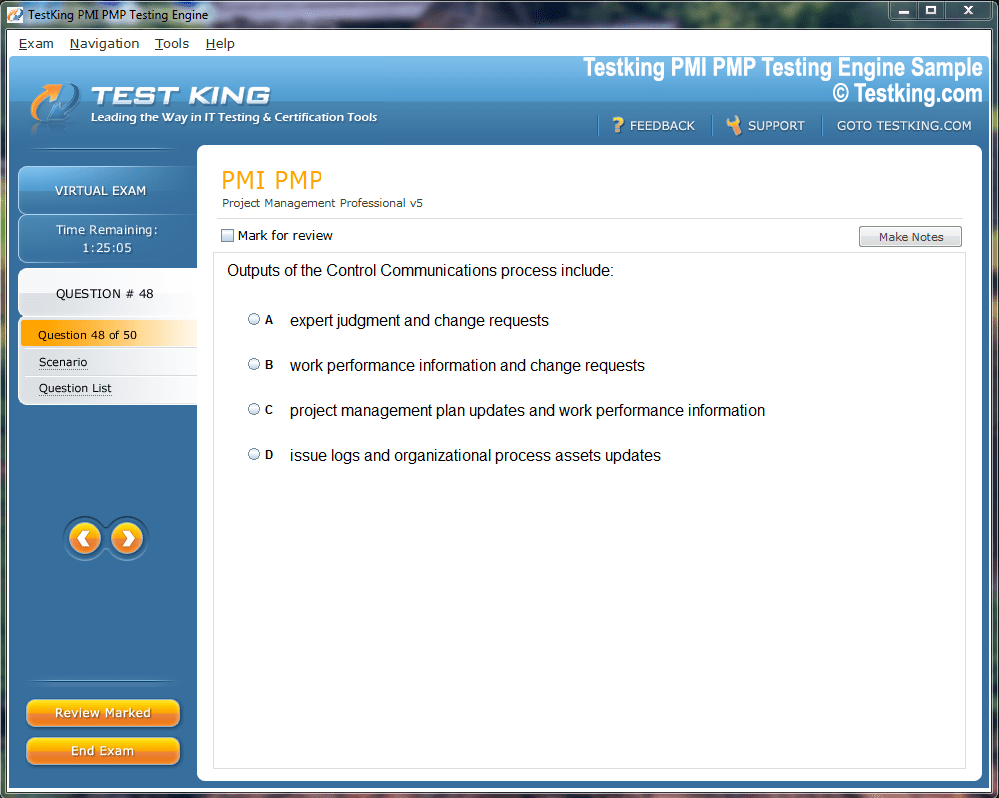
Product Screenshots

Frequently Asked Questions
Where can I download my products after I have completed the purchase?
Your products are available immediately after you have made the payment. You can download them from your Member's Area. Right after your purchase has been confirmed, the website will transfer you to Member's Area. All you will have to do is login and download the products you have purchased to your computer.
How long will my product be valid?
All Testking products are valid for 90 days from the date of purchase. These 90 days also cover updates that may come in during this time. This includes new questions, updates and changes by our editing team and more. These updates will be automatically downloaded to computer to make sure that you get the most updated version of your exam preparation materials.
How can I renew my products after the expiry date? Or do I need to purchase it again?
When your product expires after the 90 days, you don't need to purchase it again. Instead, you should head to your Member's Area, where there is an option of renewing your products with a 30% discount.
Please keep in mind that you need to renew your product to continue using it after the expiry date.
How many computers I can download Testking software on?
You can download your Testking products on the maximum number of 2 (two) computers/devices. To use the software on more than 2 machines, you need to purchase an additional subscription which can be easily done on the website. Please email support@testking.com if you need to use more than 5 (five) computers.
What operating systems are supported by your Testing Engine software?
Our ASCS testing engine is supported by all modern Windows editions, Android and iPhone/iPad versions. Mac and IOS versions of the software are now being developed. Please stay tuned for updates if you're interested in Mac and IOS versions of Testking software.
Top NADCA Exams
NADCA ASCS Certified Technicians Shaping the Future of HVAC
The Air Systems Cleaning Specialist certification, widely recognized across the globe, stands as a benchmark of excellence in the HVAC cleaning industry. Professionals who pursue this designation demonstrate a sophisticated understanding of air system hygiene and restoration techniques that extend well beyond basic maintenance. With the ever-increasing demand for clean, efficient, and safe HVAC systems, the importance of having skilled personnel who possess specialized knowledge cannot be overstated. The ASCS credential provides a framework for technicians to cultivate expertise, ensuring they can navigate the complex challenges that arise when maintaining or restoring indoor air quality in both residential and commercial settings.
Obtaining the ASCS certification involves more than simply passing a test; it requires an intricate comprehension of mechanical systems, airflow dynamics, and the principles underlying effective contamination control. Air systems, by nature, accumulate particulates over time, including dust, pollen, mold spores, and other airborne contaminants that can compromise both system efficiency and occupant health. An ASCS-certified technician is equipped to evaluate these risks systematically and implement cleaning strategies that adhere to rigorous industry standards. Such proficiency is invaluable, as modern building codes and commercial contracts frequently stipulate that certified professionals must oversee cleaning projects to ensure compliance with health and safety regulations.
The global recognition of ASCS certification also elevates the professional stature of technicians in a competitive industry. Air duct cleaning is a sector that includes a wide spectrum of skill levels, from casual maintenance personnel to highly trained specialists. Certification distinguishes an individual by signaling a commitment to quality, consistency, and technical precision. Organizations and customers alike respond favorably to credentials that denote verifiable expertise. Companies that employ ASCS-certified technicians benefit from increased credibility, making them more attractive to prospective clients and more competitive in bidding for contracts, particularly those of significant scope or regulatory complexity.
In addition to enhancing career prospects for individuals, the ASCS credential plays a strategic role in organizational growth. Air duct cleaning businesses with certified staff can meet stringent bid specifications, particularly for large-scale commercial or government projects where oversight by a certified professional is mandated. This capability not only broadens the potential customer base but also enhances operational reliability by fostering adherence to standardized practices and protocols. By integrating ASCS-certified technicians into their teams, companies can optimize workflow efficiency, reduce the risk of costly errors, and bolster client confidence in their services.
The Path to Certification
The journey toward ASCS certification begins with a commitment to rigorous study and practical understanding. NADCA has developed a comprehensive candidate guide that outlines the scope of knowledge required, including mechanical systems, indoor air quality principles, safety protocols, and field applications. This guide serves as an essential tool for prospective candidates, offering a structured roadmap to mastery of both theoretical concepts and hands-on practices. The preparation process encourages aspirants to delve into specialized literature, attend workshops, and engage in observational learning under the supervision of experienced professionals.
Candidates for the ASCS certification are expected to attain a level of proficiency that encompasses not only the mechanics of HVAC systems but also the scientific principles that govern indoor air quality. Effective cleaning and restoration depend upon understanding particulate behavior, moisture control, and potential microbial proliferation within ductwork and air handling units. For example, mold contamination requires careful assessment, isolation of affected zones, and methodical removal techniques to prevent cross-contamination. Certified technicians are trained to apply best practices that minimize risk, maintain system integrity, and ensure compliance with established standards. This depth of knowledge is what differentiates a certified professional from a technician with basic operational familiarity.
In addition to technical acumen, preparation for ASCS certification emphasizes problem-solving, analytical reasoning, and practical judgment. Field scenarios are rarely uniform; ductwork configurations, building layouts, and HVAC system models vary widely. A certified technician must be adept at evaluating each situation, determining the most effective approach, and executing a plan that balances thorough cleaning with operational efficiency. The ability to make informed decisions in real time is a hallmark of ASCS-trained professionals and a critical component of the certification process.
Exam Structure and Content
The certification examination itself is designed to comprehensively evaluate a candidate’s mastery of industry standards and technical competencies. It comprises 150 multiple-choice questions, with a time allocation of three and a half hours. The content spans several critical domains: indoor air quality, safety procedures, mechanical system understanding, practical field experience, and applied technical knowledge. Each question is intended to simulate the types of decisions and assessments a technician would encounter in professional practice, ensuring that successful candidates are well-prepared to manage real-world challenges.
A significant portion of the exam focuses on indoor air quality, a subject that intertwines scientific principles with practical application. Candidates must understand how airflow patterns, filtration systems, and contaminant sources interact within a building environment. This includes evaluating the effectiveness of air filters, identifying zones of stagnation or contamination, and implementing corrective strategies to improve overall air quality. Safety is another crucial component, as HVAC cleaning involves exposure to potential hazards such as electrical components, chemical agents, and biologically active particulates. The exam tests knowledge of protective measures, proper use of personal protective equipment, and protocols for mitigating occupational risk.
Mechanical expertise is equally important. Air systems consist of interconnected components, including fans, coils, ductwork, and dampers, all of which influence system performance. Candidates are assessed on their ability to diagnose mechanical issues, understand airflow mechanics, and apply cleaning techniques that preserve system function while achieving thorough decontamination. Field experience questions evaluate practical competence, requiring candidates to demonstrate familiarity with common cleaning tools, inspection methods, and restoration practices. By covering this comprehensive spectrum, the ASCS exam ensures that certified technicians possess both the theoretical grounding and the applied skills necessary for professional excellence.
Preparing Effectively for the Exam
Successful preparation requires a methodical approach that combines study, practice, and technical immersion. The ASCS Candidate Guide provides a structured outline of the topics included in the examination, offering a recommended reading list and study plan. Candidates are encouraged to review these materials thoroughly, integrating both conceptual understanding and practical examples. In addition to self-study, participation in structured training programs enhances comprehension and retention. NADCA offers a variety of educational formats, including online courses, in-person workshops, and event-based seminars that cover technical knowledge relevant to HVAC system cleaning and restoration.
Training programs serve multiple purposes: they provide exposure to industry standards, illustrate proper cleaning techniques, and offer hands-on demonstrations that reinforce theoretical knowledge. Even when the instruction is not directly aligned with the exam questions, technical training deepens understanding of system components, operational principles, and effective cleaning methodologies. Candidates who engage in these programs are more likely to perform successfully on the exam, as they have had the opportunity to apply knowledge in practical scenarios and develop confidence in decision-making processes.
For companies with multiple technicians seeking certification, customized training sessions can be arranged. NADCA instructors may conduct on-site sessions for groups of ten or more participants, delivering instruction tailored to the organization’s operational context. These sessions often include an optional certification exam, allowing technicians to complete both training and testing within a cohesive schedule. This approach not only maximizes efficiency but also ensures that staff are uniformly prepared to meet industry standards and contractual requirements.
Strategic Benefits for Companies
Employing ASCS-certified technicians confers tangible advantages to businesses in the air duct cleaning and restoration sector. One primary benefit is the ability to meet bid specifications for commercial or government contracts. Many project tenders explicitly require oversight by a certified professional, and having such personnel on staff allows companies to qualify for more lucrative opportunities. Additionally, certification enhances client confidence, as customers recognize that certified technicians possess verified expertise, follow standardized protocols, and prioritize safety and system integrity.
Beyond immediate business advantages, certification contributes to long-term operational excellence. ASCS-trained technicians bring a disciplined approach to workflow management, documentation, and quality control. Standardized practices reduce variability in performance, ensuring consistent results across multiple projects. This consistency not only improves customer satisfaction but also minimizes the risk of errors that could lead to system inefficiencies, liability issues, or reputational harm. The integration of certified staff supports a culture of professionalism, where attention to detail, adherence to guidelines, and continual skill development are valued.
In addition, ASCS certification aligns with broader industry trends emphasizing accountability, sustainability, and health-conscious practices. Indoor air quality has emerged as a critical factor in building management, influencing occupant well-being, productivity, and regulatory compliance. Certified technicians are trained to address these concerns proactively, applying evidence-based techniques to assess contamination, implement cleaning solutions, and verify outcomes. By doing so, they contribute to healthier indoor environments while enhancing the credibility and market positioning of their employer.
Comprehensive Preparation Strategies for ASCS Certification
Achieving the Air Systems Cleaning Specialist designation requires more than familiarity with HVAC systems; it demands methodical preparation, disciplined study, and immersive practical experience. Candidates who embark on this path must approach it with an understanding that the certification is designed to assess both theoretical knowledge and applied skills. The process is intentionally rigorous, reflecting the complexity of real-world HVAC cleaning and restoration, where attention to detail, adherence to safety protocols, and the ability to navigate mechanical intricacies are critical to effective outcomes.
The initial stage of preparation involves an in-depth review of the ASCS Candidate Guide. This guide, provided by NADCA, outlines the examination’s scope, recommended study materials, and key competencies required of certified professionals. It emphasizes several domains essential to HVAC cleaning, including mechanical systems, indoor air quality principles, contamination control, and safety standards. The guide serves as a structured roadmap for candidates, allowing them to identify areas of strength and those requiring additional focus. A systematic study plan built around this guide enhances retention and ensures comprehensive coverage of the material assessed in the certification exam.
Beyond the guide, candidates are encouraged to engage with a variety of study materials, encompassing both theoretical and practical content. Recommended resources include technical manuals, industry standards, training videos, and case studies documenting real-world cleaning scenarios. Exposure to diverse resources reinforces understanding of complex concepts such as airflow dynamics, particulate behavior, and microbial proliferation within duct systems. For example, understanding how moisture accumulation can lead to mold growth requires both theoretical knowledge and practical insight into system operation and environmental factors. Certified professionals are expected to synthesize this information, applying it to field scenarios with precision and judgment.
Structured Learning and Training Opportunities
Participation in structured training programs enhances the preparation process by providing technical instruction and hands-on experience. NADCA offers multiple avenues for learning, including online courses, in-person workshops, and seminars held during major association events. These programs cover essential topics, such as mechanical systems, indoor air quality, restoration practices, and safety protocols, while also offering practical demonstrations of cleaning techniques and inspection methods. Candidates benefit from interactive sessions that allow for questions, real-time feedback, and engagement with experienced instructors, deepening understanding and building confidence before the exam.
Online training provides flexibility for candidates to study at their own pace, revisiting complex topics as needed. These courses often include multimedia content, such as diagrams, simulations, and instructional videos, which illustrate system components and cleaning techniques. In-person workshops offer the advantage of hands-on practice, allowing participants to observe and replicate cleaning procedures under expert supervision. Engagement in both formats increases the likelihood of success on the ASCS exam, as candidates develop both conceptual understanding and practical proficiency.
Companies seeking certification for multiple employees may take advantage of customized training sessions. NADCA-certified instructors can conduct on-site programs for groups of ten or more participants. These sessions can include practical demonstrations and offer the option to administer the certification exam on-site, providing a seamless transition from instruction to assessment. Tailored training ensures that participants gain knowledge specific to their operational environment, enabling technicians to apply learned techniques effectively to their workplace systems.
Understanding the ASCS Examination
The ASCS exam is structured to evaluate a candidate’s mastery of technical knowledge and practical application. Comprising 150 multiple-choice questions, the test covers mechanical systems, indoor air quality, safety practices, field experience, and applied problem-solving. Candidates are allocated three and a half hours to complete the exam, requiring focused concentration and efficient time management. The breadth of topics reflects the multifaceted nature of HVAC cleaning, where a single project may involve assessment of system mechanics, detection of contamination, implementation of cleaning protocols, and adherence to regulatory standards.
Indoor air quality is a core component of the examination, encompassing concepts such as contaminant behavior, airflow patterns, filtration efficiency, and environmental influences on ductwork cleanliness. Candidates must demonstrate the ability to assess the impact of contaminants, including dust, pollen, microbial agents, and chemical residues, on both system performance and occupant health. Questions may address mitigation strategies, such as proper filtration, targeted cleaning techniques, and inspection methods to ensure that all sections of a system meet hygienic standards. An understanding of indoor air quality is not only crucial for exam success but also for real-world applications, where system performance directly influences building safety and occupant well-being.
Mechanical knowledge is equally emphasized, with questions exploring the operation and maintenance of HVAC components such as fans, coils, dampers, and ductwork. Candidates are expected to diagnose mechanical issues, determine appropriate cleaning methods, and recognize potential risks associated with improper procedures. Mastery of mechanical systems ensures that certified technicians can execute cleaning projects without compromising equipment functionality, system efficiency, or structural integrity. Field experience questions simulate practical scenarios, testing the ability to apply knowledge in real-world conditions. This includes decision-making, problem-solving, and the use of specialized tools and equipment to achieve effective cleaning and restoration outcomes.
Effective Study Techniques
Successful candidates employ multiple study strategies to optimize comprehension and retention. A common approach involves dividing study sessions into focused modules based on the ASCS Candidate Guide, allowing for systematic coverage of mechanical principles, contamination control, safety procedures, and indoor air quality. Repetition and reinforcement of key concepts are critical, particularly in areas such as microbial contamination, where a nuanced understanding of environmental conditions and cleaning techniques is essential. Study groups can also enhance preparation, providing opportunities for collaborative learning, discussion of case scenarios, and knowledge sharing among peers.
Practical exercises complement theoretical study by providing hands-on exposure to HVAC system components. Candidates may observe cleaning procedures, practice inspection techniques, or engage in simulated restoration projects under supervision. This experiential learning reinforces understanding of technical content and develops the dexterity and judgment necessary for effective field performance. By integrating theory and practice, candidates cultivate the analytical skills required to assess system conditions, determine appropriate cleaning strategies, and implement solutions that meet industry standards.
Time management is another essential factor in exam preparation. Allocating sufficient time for review, practical exercises, and practice assessments ensures balanced preparation across all domains. Mock exams and sample questions help candidates familiarize themselves with the test format, question phrasing, and time constraints. These exercises also highlight areas requiring additional study, enabling candidates to refine their knowledge and address potential weaknesses before sitting for the certification exam.
Exam Day Considerations
On the day of the exam, candidates should approach the assessment with both confidence and strategic planning. Proper rest, nutrition, and mental preparation contribute to optimal performance. Reviewing key concepts in the hours leading up to the exam can reinforce retention and promote focus. Candidates are encouraged to carefully read each question, consider all answer choices, and apply logical reasoning grounded in technical knowledge. Time management during the test is critical, ensuring that all questions receive adequate attention while minimizing the risk of rushed or incomplete responses.
Exam logistics may vary depending on location. Paper-based tests administered at events typically require processing of results, with candidates receiving pass/fail notifications within several weeks. Computer-based testing at authorized centers provides immediate score reporting, enabling candidates to receive timely feedback on performance. For those who do not achieve a passing score on their initial attempt, NADCA provides guidance and support for retesting, including reduced fees and scheduling assistance. This approach underscores the association’s commitment to professional development and ensures candidates have the opportunity to demonstrate mastery through repeated attempts if necessary.
Integration of Certification into Professional Practice
The value of ASCS certification extends far beyond examination success. Certified technicians bring a disciplined, methodical approach to all aspects of HVAC cleaning and restoration. Their training emphasizes adherence to industry standards, systematic documentation, and consistent application of best practices. This approach not only enhances system cleanliness and efficiency but also minimizes potential hazards associated with improper cleaning procedures, mechanical damage, or cross-contamination.
Certified professionals are also equipped to provide advisory services, guiding building managers and clients on optimal maintenance schedules, inspection protocols, and strategies for maintaining high indoor air quality. Their expertise supports evidence-based decision-making, ensuring that cleaning projects are executed effectively, economically, and in compliance with applicable guidelines. By integrating certification knowledge into daily operations, technicians enhance organizational capability and contribute to long-term business success.
Continuing Education and Skills Enhancement
Certification preparation is only the beginning of a career-long journey. Maintaining proficiency requires ongoing engagement with emerging technologies, evolving industry standards, and new contamination control methods. NADCA emphasizes continuing education as a cornerstone of professional growth, ensuring that ASCS-certified technicians remain current in their knowledge and maintain the skills necessary to address changing HVAC system challenges. Continuing education credits can be earned through seminars, workshops, online courses, and participation in industry events, reinforcing the practical application of certification knowledge in real-world settings.
Regular engagement with new techniques and guidelines allows technicians to refine their approaches, adopt innovative solutions, and anticipate future challenges in HVAC system cleaning. This proactive commitment to professional development enhances both individual expertise and organizational capability, reinforcing the value of ASCS certification as a marker of excellence, reliability, and technical sophistication.
Navigating the ASCS Exam and Certification Maintenance
Achieving the Air Systems Cleaning Specialist certification is a multi-faceted process, combining technical mastery, practical application, and procedural awareness. Beyond preparation and training, candidates must navigate the logistical aspects of the examination, understand the scoring system, and plan for long-term maintenance of their credential. Each phase of the certification process reinforces the core principles of HVAC system cleaning and restoration, ensuring that certified professionals can execute tasks with precision, consistency, and adherence to industry standards.
Exam Logistics and Testing Environment
Candidates for ASCS certification may take the examination at various locations, including NADCA events, testing centers, and specially arranged on-site company sessions. Understanding the environment in which the exam will be administered is critical for optimizing performance. Paper-based exams, typically offered at association events, require careful management of time and focus, with results processed and communicated to candidates within a few weeks. In contrast, computer-based tests at approved testing centers offer immediate score reporting, allowing candidates to receive instant feedback and plan next steps accordingly.
For companies hosting groups of ten or more participants, NADCA-certified instructors can deliver tailored on-site training, often coupled with an optional examination session. This arrangement allows for efficient consolidation of instruction, practice, and assessment, minimizing downtime and facilitating coordinated preparation. Candidates benefit from a familiar environment, direct access to instructors for last-minute clarifications, and reduced logistical barriers associated with travel or scheduling conflicts. Such structured settings reinforce the importance of methodical preparation and offer a controlled environment conducive to concentrated focus.
Exam Content and Structure
The ASCS exam comprises 150 multiple-choice questions, with candidates allotted three and a half hours to complete the assessment. Questions span multiple domains, including indoor air quality, mechanical systems, safety protocols, field experience, and applied problem-solving. Each item is designed to reflect scenarios encountered in professional practice, emphasizing both theoretical understanding and practical decision-making. The exam evaluates the candidate’s ability to analyze system conditions, identify contaminants, select appropriate cleaning methods, and ensure compliance with regulatory and industry standards.
Indoor air quality remains a central focus, with questions addressing the behavior of particulates, microbial agents, and chemical residues within ductwork and air handling units. Candidates must demonstrate the capacity to assess contamination levels, determine appropriate remediation strategies, and evaluate the effectiveness of cleaning interventions. Mechanical knowledge is equally critical, covering system components such as fans, coils, dampers, and ductwork configurations. Candidates are expected to apply diagnostic skills, recognize mechanical risks, and implement cleaning strategies that preserve system functionality while achieving thorough decontamination.
Field experience questions simulate real-world challenges, testing the ability to integrate knowledge into practical execution. This includes selecting appropriate cleaning tools, applying industry standards for contaminant removal, and documenting processes in accordance with professional guidelines. By incorporating both theory and practice, the ASCS exam ensures that certified professionals possess the comprehensive skill set required to operate effectively in diverse HVAC system environments.
Scoring and Results
Exam scoring is structured to provide clear, actionable outcomes for candidates. For paper-based exams administered at events, results typically require up to four weeks for processing, after which pass/fail notifications are communicated via email. This delay allows for careful verification of responses, ensuring accuracy and fairness in assessment. Candidates who achieve a passing score are formally recognized as ASCS-certified, receiving documentation that reflects their technical proficiency and adherence to industry standards.
For computer-based testing centers, score reporting is immediate, allowing candidates to quickly ascertain performance and take subsequent steps. In instances where a candidate does not pass the exam, NADCA provides detailed guidance for retesting, including scheduling assistance, fee reduction, and recommendations for further study or training. This structured support reflects the organization’s commitment to professional development and ensures that motivated candidates have the opportunity to achieve certification through repeated attempts if necessary.
Post-Exam Considerations
Once certified, the focus shifts from exam performance to ongoing maintenance of the credential. Certification is not a static achievement; it requires continual engagement with emerging industry standards, evolving technologies, and changing HVAC system practices. Maintaining ASCS certification involves meeting annual requirements, including the accumulation of Continuing Education Credits (CECs), which serve as a measure of sustained professional development. These credits ensure that certified technicians remain current in both theoretical knowledge and practical application, safeguarding the integrity and value of the credential over time.
NADCA mandates that ASCS-certified professionals renew their credentials annually by June 30. To be eligible for renewal, individuals must earn six CECs each year. These credits can be obtained through a variety of activities, including attending seminars, participating in training sessions, completing online renewal quizzes, or engaging in industry-specific educational programs. The requirement encourages continuous learning and ensures that technicians adapt to advances in system design, contamination mitigation strategies, and operational best practices.
Failure to meet renewal deadlines necessitates retaking the full certification exam. This policy underscores the importance of proactive management of professional credentials and reinforces the commitment required to maintain technical proficiency. Certified individuals are responsible for monitoring their progress, tracking CEC completion, and submitting renewal applications promptly. This responsibility reflects the broader professional ethos of accountability, diligence, and sustained engagement with the field of HVAC cleaning and restoration.
Practical Application of ASCS Skills
ASCS-certified technicians are equipped to integrate their knowledge into practical applications across a wide range of HVAC systems. The ability to evaluate system design, identify contamination risks, and implement cleaning protocols is critical for maintaining operational efficiency, ensuring indoor air quality, and minimizing potential health hazards. Certified professionals apply a systematic approach to project assessment, combining observational skills, technical judgment, and adherence to standardized procedures to achieve optimal outcomes.
Contamination assessment requires attention to detail, as air systems may harbor dust, pollen, microbial agents, and other particulate matter that can impact both system performance and occupant well-being. Certified technicians employ inspection tools, airflow measurement devices, and microbial sampling techniques to quantify contamination levels and determine the most effective cleaning strategy. By integrating scientific principles with practical techniques, ASCS professionals ensure that cleaning interventions are both effective and sustainable.
Mechanical proficiency is equally essential, as HVAC systems comprise interconnected components that influence airflow, temperature control, and overall system efficiency. Certified technicians are trained to recognize mechanical issues, apply corrective measures, and implement cleaning protocols without compromising structural integrity or operational performance. Field application of ASCS knowledge requires adaptability, as systems vary widely in configuration, age, and environmental conditions. Successful technicians are capable of analyzing each scenario, devising appropriate strategies, and executing interventions that meet both technical and regulatory standards.
Communication and Documentation
Effective communication is a critical component of professional practice for ASCS-certified technicians. Documenting findings, reporting system conditions, and providing recommendations to clients are integral to successful project execution. Clear, precise communication ensures that stakeholders understand the nature of contamination, the methods employed for remediation, and the expected outcomes. Certified technicians are trained to produce comprehensive documentation that supports operational transparency, client confidence, and regulatory compliance.
This emphasis on communication extends to collaboration with colleagues, facility managers, and regulatory authorities. Technicians may be required to guide maintenance schedules, contamination prevention strategies, and system optimization. By articulating complex technical information in accessible language, ASCS professionals facilitate informed decision-making and contribute to the overall effectiveness of HVAC management programs.
Continuing Education and Professional Development
Sustained engagement with continuing education is a cornerstone of ASCS certification. The requirement to earn six CECs annually ensures that certified professionals remain abreast of evolving best practices, technological innovations, and regulatory updates. Participation in workshops, seminars, online courses, and industry events provides opportunities to explore new cleaning techniques, system designs, and emerging contaminants. This continuous learning process reinforces foundational knowledge, enhances practical skills, and cultivates adaptability in a dynamic field.
Continuing education also fosters a culture of professional growth and innovation. Technicians who regularly engage with new methodologies, tools, and standards develop expertise that extends beyond basic operational competence. They are positioned to implement advanced cleaning strategies, mentor colleagues, and contribute to organizational knowledge. This ongoing development enhances both individual career trajectories and the operational effectiveness of companies that employ certified staff.
Advanced Technical Concepts and Project Management in HVAC Cleaning
The Air Systems Cleaning Specialist certification encompasses not only foundational knowledge but also advanced technical concepts that are critical for executing complex HVAC cleaning and restoration projects. Certified technicians are trained to evaluate and address diverse challenges, from intricate ductwork systems to multifaceted contamination issues, all while adhering to rigorous industry standards. This level of expertise enables professionals to manage projects efficiently, ensure system integrity, and maintain optimal indoor air quality for building occupants.
Understanding Complex HVAC Systems
Modern HVAC systems are intricate networks of ducts, fans, coils, and dampers that influence airflow, temperature regulation, and energy efficiency. Advanced knowledge of these components is essential for ASCS-certified technicians, as even minor system anomalies can impact overall performance. For instance, improper cleaning of coils can reduce heat exchange efficiency, while inadequate attention to fan operation may lead to uneven airflow distribution. Certified professionals are trained to recognize these interdependencies and apply targeted cleaning strategies that preserve system functionality.
Air distribution within complex systems often varies according to building design, occupancy patterns, and environmental factors. Technicians must understand the implications of airflow dynamics on contaminant accumulation and removal. This includes recognizing areas prone to stagnation, identifying potential microbial growth zones, and assessing filtration effectiveness. By integrating mechanical understanding with environmental observation, ASCS-certified professionals can prioritize cleaning interventions to maximize efficiency and safety.
Contamination Assessment and Mitigation
A central component of advanced HVAC cleaning is contamination assessment. Systems can harbor a wide range of particulates, including dust, pollen, chemical residues, and biological agents such as mold spores and bacteria. Certified technicians employ both qualitative and quantitative methods to evaluate contamination levels. Visual inspection, particle measurement, microbial sampling, and airflow analysis are among the tools used to develop a comprehensive understanding of system conditions.
Once contamination is assessed, mitigation strategies must be applied with precision. Certified professionals select cleaning methods appropriate to the type, location, and severity of contamination. High-efficiency vacuuming, coil brushing, chemical cleaning, and antimicrobial application are examples of techniques applied in accordance with industry standards. Mitigation strategies are designed not only to remove contaminants but also to prevent cross-contamination and ensure that cleaned areas remain free from reintroduction of debris.
Understanding the chemical and biological properties of contaminants is essential for effective intervention. For example, mold remediation requires awareness of moisture dynamics, spore viability, and containment procedures. Certified technicians integrate scientific principles with hands-on techniques to neutralize risks while maintaining system integrity. Advanced contamination management is an intersection of science, engineering, and procedural discipline, demanding critical thinking and precise execution.
Project Planning and Workflow Management
Advanced HVAC cleaning projects necessitate careful planning and workflow management. ASCS-certified technicians are trained to develop comprehensive project plans that outline objectives, assess risks, allocate resources, and define timelines. Planning includes pre-assessment of the system, identification of critical areas, scheduling of cleaning operations, and coordination with other stakeholders such as building managers and contractors. Effective planning minimizes downtime, reduces operational risk, and ensures that cleaning interventions are performed efficiently and safely.
Workflow management in complex projects often involves sequential operations, particularly when multiple systems or components are being addressed simultaneously. Certified professionals apply principles of project sequencing, task prioritization, and resource allocation to optimize productivity. This includes coordinating access to mechanical rooms, scheduling equipment shutdowns, and managing the flow of personnel and materials. By applying structured workflow management, technicians can maintain a high standard of quality while meeting deadlines and minimizing disruptions to building operations.
Safety Protocols and Risk Management
Safety is a cornerstone of advanced HVAC cleaning practices. ASCS-certified technicians are trained to implement comprehensive safety protocols that protect both personnel and building occupants. This includes the proper use of personal protective equipment, adherence to electrical safety procedures, and precautions when handling chemicals or biologically active contaminants. Certified professionals also develop contingency plans to address unforeseen hazards, ensuring that risk is minimized throughout the project lifecycle.
Risk management extends to mechanical integrity and system preservation. Technicians are trained to assess the potential impact of cleaning interventions on system components, ensuring that operations do not compromise functionality. For instance, improper handling of coils, dampers, or fan assemblies can lead to inefficiencies, increased energy consumption, or mechanical failure. Certified professionals integrate risk assessment into project planning, balancing the need for thorough cleaning with the imperative to maintain system performance and longevity.
Specialized Applications of ASCS Expertise
ASCS certification equips technicians to handle specialized HVAC cleaning scenarios that require advanced technical acumen. For example, historical buildings, laboratories, hospitals, and data centers often present unique challenges due to sensitive equipment, stringent environmental requirements, or unconventional system configurations. Certified technicians apply their expertise to design cleaning protocols that address these challenges while adhering to safety and performance standards.
In healthcare facilities, maintaining sterile or semi-sterile environments is critical. Certified professionals implement targeted cleaning strategies, monitor air quality parameters, and document compliance with regulatory guidelines. Similarly, in data centers or laboratories, air handling systems must be maintained without introducing particulate contamination that could compromise operations. ASCS-certified technicians leverage their knowledge of airflow dynamics, filtration efficacy, and contaminant behavior to implement precise cleaning interventions that preserve system integrity and operational reliability.
Documentation and Quality Assurance
Advanced projects require rigorous documentation and quality assurance procedures. ASCS-certified technicians maintain detailed records of cleaning operations, contamination assessments, equipment used, and outcomes achieved. Documentation serves multiple purposes: it provides evidence of compliance with industry standards, supports client reporting requirements, and establishes a basis for future maintenance and monitoring activities.
Quality assurance protocols ensure that cleaning operations achieve intended outcomes. Certified professionals apply inspection and verification methods to confirm that all areas have been addressed, contaminants removed, and systems returned to operational status. This systematic approach enhances client confidence, minimizes the risk of post-cleaning issues, and reinforces the credibility of the technician and the organization.
Continuous Improvement and Technical Innovation
ASCS-certified technicians engage in continuous improvement by evaluating project outcomes, identifying areas for enhancement, and adopting new technologies or methodologies. Advances in HVAC cleaning tools, filtration systems, and monitoring devices are incorporated into practice to increase efficiency, effectiveness, and safety. Continuous improvement also involves staying abreast of emerging contaminants, evolving regulations, and updated industry standards, ensuring that cleaning practices remain current and effective.
Innovation in HVAC cleaning can include the use of robotics for duct inspection, advanced particle measurement instruments, or environmentally safe chemical agents. Certified professionals evaluate the suitability and efficacy of such innovations, integrating them into established workflows when appropriate. By embracing technical advancement, ASCS-certified technicians enhance operational outcomes and maintain leadership in the field.
Team Leadership and Mentorship
In larger projects, ASCS-certified technicians often assume leadership roles, overseeing teams of technicians, coordinating operations, and ensuring adherence to best practices. Leadership requires both technical expertise and interpersonal skills, including the ability to train staff, communicate procedures clearly, and monitor performance. Mentorship is an important aspect of this role, fostering skill development among less experienced personnel and promoting consistency in cleaning practices across the organization.
Leadership also involves strategic decision-making, such as prioritizing areas for cleaning based on risk assessment, allocating resources effectively, and responding to unforeseen challenges during project execution. Certified professionals are trained to balance operational demands with safety, quality, and efficiency considerations, ensuring that both the team and the project succeed.
Client Communication and Stakeholder Engagement
Advanced HVAC cleaning projects often involve multiple stakeholders, including building managers, facility engineers, regulatory inspectors, and clients. Effective communication is critical for ensuring alignment of expectations, providing progress updates, and conveying technical findings. ASCS-certified technicians are skilled in translating complex technical concepts into clear, actionable information for non-technical stakeholders.
Engagement with clients includes providing recommendations for system maintenance, reporting on air quality improvements, and explaining the rationale behind cleaning methodologies. By maintaining transparent communication, certified professionals strengthen client trust, facilitate informed decision-making, and reinforce the value of certification as a marker of expertise and reliability.
Ongoing Professional Growth and Strategic Value of ASCS Certification
The Air Systems Cleaning Specialist certification represents not only a professional credential but also a commitment to continuous growth, advanced problem-solving, and leadership within the HVAC cleaning and restoration industry. ASCS-certified technicians are distinguished by their ability to integrate deep technical knowledge with practical skills, operational oversight, and strategic thinking. The certification serves as a foundation for career development, organizational improvement, and the long-term advancement of industry standards.
Advanced Troubleshooting and Problem-Solving
One of the defining competencies of ASCS-certified professionals is advanced troubleshooting. HVAC systems are complex, comprising multiple interconnected components such as ducts, coils, fans, and dampers. Over time, these systems may develop issues that reduce efficiency, compromise air quality, or introduce potential health risks. Certified technicians are trained to analyze system anomalies, identify root causes, and implement corrective measures that restore optimal function while maintaining compliance with industry standards.
Troubleshooting begins with a comprehensive system assessment. Technicians use diagnostic tools and observational techniques to evaluate airflow, temperature distribution, contaminant accumulation, and mechanical integrity. They consider environmental factors, occupancy patterns, and historical maintenance data to form a holistic understanding of system behavior. This analytical approach enables technicians to differentiate between minor operational deviations and significant contamination or mechanical issues requiring intervention.
Advanced problem-solving involves selecting appropriate remediation strategies based on assessment findings. Certified professionals are adept at applying evidence-based techniques for contaminant removal, including high-efficiency vacuuming, coil cleaning, and antimicrobial treatments. They also consider potential system vulnerabilities, ensuring that interventions do not inadvertently compromise mechanical components or airflow efficiency. By combining scientific principles, technical expertise, and practical judgment, ASCS-certified technicians achieve results that are both effective and sustainable.
Integration of Technology and Innovation
The field of HVAC cleaning continues to evolve with technological advancements that enhance efficiency, safety, and accuracy. ASCS-certified professionals leverage these innovations to improve project outcomes and streamline operational workflows. Examples include robotic inspection tools, particle monitoring devices, and advanced filtration systems. These technologies allow technicians to conduct more precise assessments, identify hidden contamination, and verify the effectiveness of cleaning interventions.
Integration of technology requires both familiarity and adaptability. Certified technicians evaluate the suitability of new tools for specific projects, considering factors such as system configuration, contaminant type, and operational constraints. They are also trained to balance technological solutions with established best practices, ensuring that innovation enhances rather than disrupts operational consistency. This capacity to integrate emerging technologies underscores the strategic value of ASCS certification, enabling professionals to maintain a competitive edge in a rapidly advancing industry.
Leadership and Mentorship
ASCS certification extends beyond technical proficiency, encompassing leadership and mentorship responsibilities within organizations. Certified professionals often assume supervisory roles, guiding teams of technicians, coordinating project operations, and ensuring adherence to industry standards. Leadership involves both strategic oversight and hands-on guidance, with certified technicians serving as role models for quality, safety, and professional conduct.
Mentorship is a critical aspect of cultivating organizational capability. Experienced ASCS-certified technicians provide instruction, feedback, and practical demonstrations to less experienced colleagues, fostering skill development and operational consistency. By embedding a culture of mentorship, organizations enhance knowledge transfer, reduce variability in project outcomes, and strengthen internal capacity for handling complex HVAC cleaning scenarios. Leadership and mentorship not only benefit individual technicians but also elevate the overall quality of services provided by the organization.
Strategic Planning and Organizational Impact
The presence of ASCS-certified personnel within a company contributes to long-term strategic planning and operational effectiveness. Certified technicians provide expert input into project estimation, risk assessment, workflow design, and resource allocation. Their insight supports informed decision-making, ensuring that projects are executed efficiently, safely, and in alignment with client expectations.
Strategic contributions extend to organizational reputation and market positioning. Companies with certified staff are better equipped to meet bid requirements for large-scale commercial and government contracts, as certified oversight is often a prerequisite. This capability enhances credibility, expands opportunities for business growth, and differentiates the organization from competitors. ASCS certification thus serves as a strategic asset, contributing both to operational excellence and organizational advancement.
Continuing Education and Professional Development
Sustained professional growth is integral to maintaining ASCS certification. NADCA requires certified professionals to earn six Continuing Education Credits (CECs) annually, reinforcing ongoing engagement with industry advancements, updated cleaning methodologies, and evolving regulatory requirements. Continuing education includes seminars, workshops, online courses, and participation in industry events, allowing technicians to enhance their knowledge and refine practical skills.
Continual professional development fosters adaptability, ensuring that certified technicians can respond effectively to emerging challenges such as novel contaminants, system upgrades, or changes in environmental standards. By integrating new knowledge into operational practice, ASCS-certified professionals maintain high levels of performance, safety, and efficiency. This commitment to ongoing learning reinforces the credibility and long-term value of the certification, positioning technicians and their organizations as leaders in the field.
Quality Assurance and Compliance
ASCS-certified professionals play a critical role in establishing and maintaining quality assurance protocols. Systematic documentation, inspection, and verification procedures are essential for ensuring that cleaning projects meet established standards and regulatory requirements. Certified technicians develop comprehensive quality control plans, monitor progress, and verify outcomes, providing evidence of compliance and operational integrity.
Quality assurance extends to client interactions, with certified professionals offering detailed reports, recommendations for maintenance, and guidance on best practices. Clear documentation supports transparency, facilitates informed decision-making, and builds client confidence in the organization’s services. By integrating rigorous quality assurance measures, ASCS-certified technicians contribute to operational reliability, safety, and long-term client satisfaction.
Specialized Applications and Environmental Considerations
ASCS-certified professionals frequently encounter specialized cleaning scenarios that require advanced knowledge of system design, environmental factors, and contamination risks. Facilities such as hospitals, laboratories, data centers, and historical buildings present unique challenges, including sensitive equipment, strict environmental requirements, and unconventional HVAC configurations. Certified technicians apply their expertise to design targeted cleaning protocols that address these complexities while maintaining safety, efficiency, and system integrity.
Environmental considerations play a central role in advanced HVAC cleaning. Certified professionals are trained to evaluate the impact of contaminants on indoor air quality, assess risks to building occupants, and implement measures that reduce exposure. This includes addressing microbial proliferation, chemical residues, and particulate accumulation in a manner that prioritizes health, regulatory compliance, and sustainability. By integrating environmental awareness into operational practice, ASCS-certified technicians ensure that cleaning interventions are both effective and responsible.
Long-Term Career and Industry Impact
ASCS certification provides a foundation for long-term career growth and professional influence. Certified technicians are recognized for their expertise, reliability, and ability to manage complex cleaning projects. These qualifications open doors to leadership positions, specialized roles, and opportunities to contribute to industry standards and guidelines. The certification also signals a commitment to professionalism, ethical practice, and continual skill enhancement, qualities that are valued across the HVAC cleaning and restoration sector.
At an industry level, ASCS-certified professionals drive improvements in standards, safety, and operational effectiveness. Their work contributes to the development and adoption of best practices, influences regulatory compliance, and enhances public perception of HVAC cleaning services. By demonstrating technical excellence and adherence to rigorous protocols, certified technicians elevate the reputation and credibility of the profession as a whole.
Networking and Professional Engagement
Certification facilitates engagement with a community of professionals who share a commitment to excellence in HVAC cleaning. NADCA-sponsored events, conferences, and workshops provide opportunities for networking, knowledge exchange, and collaboration. Certified technicians benefit from exposure to emerging trends, peer experiences, and technical innovations, strengthening both individual competency and organizational capability.
Professional engagement also fosters collaborative problem-solving, allowing certified technicians to learn from complex case studies, discuss novel solutions, and adopt strategies that have been validated by industry experts. Participation in this network enhances continuous learning, supports mentorship opportunities, and reinforces the value of maintaining certification as a means of staying current and competitive.
Sustaining Operational Excellence
The long-term strategic value of ASCS certification lies in sustaining operational excellence. Certified professionals ensure that cleaning projects are executed with precision, efficiency, and adherence to standards. Their expertise reduces the risk of system damage, contamination recurrence, and regulatory noncompliance. Operational excellence is reinforced through the integration of standardized protocols, systematic documentation, and continuous performance evaluation.
Certified technicians also contribute to organizational efficiency by mentoring colleagues, optimizing workflows, and implementing innovative cleaning strategies. Their presence elevates the technical capacity of the organization, enhances client trust, and strengthens the company’s position in competitive markets. Over time, ASCS certification becomes a central pillar of organizational quality, reliability, and strategic growth.
Conclusion
The Air Systems Cleaning Specialist certification stands as a hallmark of expertise, professionalism, and commitment within the HVAC cleaning and restoration industry. Spanning foundational knowledge, advanced technical skills, and strategic application, the certification equips technicians to navigate complex HVAC systems, assess and mitigate contamination, and maintain optimal indoor air quality. Through rigorous preparation, practical training, and ongoing continuing education, ASCS-certified professionals cultivate proficiency in mechanical systems, contamination control, safety protocols, and project management. Beyond individual competence, certification enhances organizational capability, enabling companies to meet bid requirements, implement standardized procedures, and uphold operational excellence. Certified technicians also contribute to leadership, mentorship, and innovation, fostering a culture of continuous improvement. Ultimately, ASCS certification delivers tangible benefits to both professionals and organizations, promoting safer, healthier, and more efficient indoor environments while advancing industry standards and ensuring sustainable growth in a competitive, evolving HVAC sector.