

Exam Code: Slack Certified Admin
Exam Name: Slack Certified Admin
Corresponding Certification: Slack Certified Admin
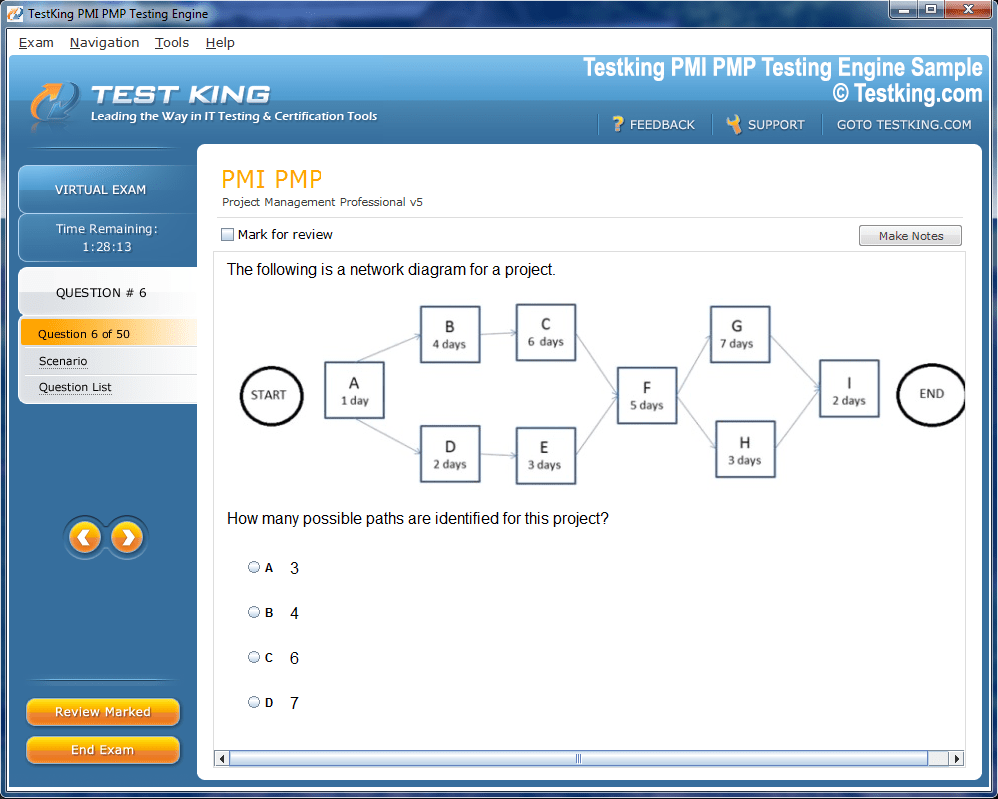
Product Screenshots
Product Reviews
Lucky enough to get the testking.com guide
"It was merely an accident that I bought my Slack Certified Admin certification guide from testking.com. and my friend got it from one of its competitors. He failed the exam despite saying he has good preparation for the Slack Certified Admin exam, and I passed. Now I think it was just because of the well-prepared study material I got from this site. Otherwise I would be standing right where my friend is.
Victor Holt"
I simply love it!
"That's true - I'm in real love with TestKing! I used TestKing Slack Certified Admin exam module for my certification exam preparatory and I still can't believe how much cool my prep process and exam passing was! The exam engine is created in a way that you will simple like studying through it! Plus, the information in the course is very interesting, easy to remember, the topics are explained absolutely great so that you will remember and understand them in just a while! As to results, I passed my exam with 989 from 1000 which shows how cool does TestKing work! Love it!
Amanda sanchez"
Use TestKing and be on a top!
"If you wanna be the best and always be on a top than try TestKing exam prep tools which will make any of your exams an easy and nice game you would like to play! I bought TestKing Slack Certified Admin exam module for my Slack Certified Admin exam passing and I run it very quickly and with 90% marks! Results are totally great, the certification getting is really easy task to do! So I advice everyone who need to complete any specialist exam to purchase TestKing products for that - you would be pleased with your results!
Nataly Johansson"
Best exam prep tools!
"I believed that online prep packs can be that much cool! I changed my mind rapidly after trying TestKing Slack Certified Admin exam module for my Slack Certified Admin exam preparatory. The material that has this great exam engine in is absolutely fantastic: so many new things you won't be able to find anywhere. I think that's why the study with TestKing turns into a holiday and interesting game: you can check up your knowledge as many times as you wanna. I liked it much!
Ron Finn"
TestKing is totally best!
"I know that there are lots of different online resources which has nearly or maybe even same exam prep tools like TestKing has, but for me only TestKing is the best! Following my friends advice I purchased TestKing Slack Certified Admin exam module for my Slack Certified Admin exam preparation and I'm very satisfied with both - course itself and results I have got. I was able to complete my exam quickly and with 94% marks which is absolute luck! Thanks TestKing for that very much! They are the best!
John Jason"
My luck with TestKing
"I'm a lucky person coz I have completed my Slack Certified Admin exam without any problems, very easily and with nice results. Of course, I must say thanks to TestKing for that! I bought TestKing Slack Certified Admin exam module when I decided to take my exam and I do not regret: I like everything in there and I know that the material contained in the course is really valuable, and I will be able to use it always in my professional life!
Mike Fisher"
Frequently Asked Questions
Where can I download my products after I have completed the purchase?
Your products are available immediately after you have made the payment. You can download them from your Member's Area. Right after your purchase has been confirmed, the website will transfer you to Member's Area. All you will have to do is login and download the products you have purchased to your computer.
How long will my product be valid?
All Testking products are valid for 90 days from the date of purchase. These 90 days also cover updates that may come in during this time. This includes new questions, updates and changes by our editing team and more. These updates will be automatically downloaded to computer to make sure that you get the most updated version of your exam preparation materials.
How can I renew my products after the expiry date? Or do I need to purchase it again?
When your product expires after the 90 days, you don't need to purchase it again. Instead, you should head to your Member's Area, where there is an option of renewing your products with a 30% discount.
Please keep in mind that you need to renew your product to continue using it after the expiry date.
How many computers I can download Testking software on?
You can download your Testking products on the maximum number of 2 (two) computers/devices. To use the software on more than 2 machines, you need to purchase an additional subscription which can be easily done on the website. Please email support@testking.com if you need to use more than 5 (five) computers.
What operating systems are supported by your Testing Engine software?
Our Slack Certified Admin testing engine is supported by all modern Windows editions, Android and iPhone/iPad versions. Mac and IOS versions of the software are now being developed. Please stay tuned for updates if you're interested in Mac and IOS versions of Testking software.
A Comprehensive Study Path for Aspiring Slack Certified Admins
Slack has become an indispensable tool for modern businesses, serving as a central hub for communication, collaboration, and operational workflow. Its rise in popularity is not accidental; organizations increasingly rely on Slack to streamline messaging, manage projects, and facilitate remote and hybrid work environments. As businesses adopt Slack on a broader scale, the role of a competent Slack administrator has grown exponentially. Administering a workspace requires a sophisticated understanding of configuration, security, workflow automation, and user management. Slack Certified Administrator certification is a formal acknowledgment of these skills, validating proficiency in overseeing complex Slack environments.
The need for formal Slack administration credentials is tied to the platform's ubiquity and the growing complexity of organizational structures that rely on it. Larger teams, distributed workforces, and enterprises often necessitate granular permissions, integrations with external services, and automated workflows that increase efficiency while minimizing errors. By pursuing certification, professionals demonstrate the ability to maintain secure, organized, and optimized Slack workspaces, reinforcing trust among IT teams, managers, and users alike.
Understanding the structure of Slack workspaces is fundamental for any aspiring administrator. A workspace functions as a virtual ecosystem where channels, users, apps, and integrations converge to facilitate collaboration. Administrators must be adept at configuring these environments, assigning appropriate roles, and managing both permissions and access control. This ensures smooth communication across teams while protecting sensitive data and maintaining compliance with organizational policies. The Slack Certified Administrator program is tailored to these responsibilities, providing an organized path for acquiring and validating essential skills.
Administrative duties are not limited to basic setup or user management. Security is a cornerstone of Slack administration. Administrators must understand authentication mechanisms such as single sign-on, multi-factor authentication, and enterprise key management. They must implement robust policies for data retention, monitoring, and compliance to prevent unauthorized access or data breaches. Certification ensures that professionals possess both theoretical knowledge and practical skills to enforce these security measures efficiently.
In addition to security, workflow optimization forms a significant part of an administrator’s responsibilities. Slack offers numerous integration options and automation tools, including Workflow Builder and APIs, which enable administrators to automate repetitive tasks, streamline operations, and reduce manual intervention. Understanding these tools allows administrators to create sophisticated workflows, connect third-party applications, and extend Slack’s capabilities to meet the unique needs of their organization. Certification provides a structured framework for mastering these functionalities, ensuring administrators can leverage Slack effectively.
A key benefit of Slack certification is its emphasis on troubleshooting and analytical skills. Administrators frequently encounter issues ranging from connection disruptions and notification errors to more complex problems such as integration failures or permissions conflicts. Being able to diagnose and resolve these issues promptly minimizes downtime and ensures a seamless user experience. Moreover, administrators are responsible for monitoring workspace analytics, interpreting usage patterns, and generating reports that inform decisions about user engagement, productivity, and workspace efficiency. Certification prepares professionals to approach these tasks methodically, equipping them with the knowledge to maintain high operational standards.
The Slack Certified Administrator exam evaluates candidates across several domains, each focusing on a critical aspect of administration. The first domain encompasses workspace configuration and user management, covering topics such as user provisioning, roles and permissions, and channel administration. Proficiency in this area ensures that administrators can effectively onboard and manage users while maintaining an organized workspace environment.
The second domain emphasizes security and compliance, addressing authentication methods, data retention, and monitoring practices. A certified administrator must be capable of implementing policies that safeguard organizational data and ensure regulatory compliance. This requires not only technical expertise but also a keen understanding of organizational requirements and risk management principles.
The third domain focuses on integrations and automation, highlighting the practical application of Slack’s tools to optimize workflows. Administrators are expected to deploy and manage approved applications, utilize workflow automation tools, and implement custom integrations that enhance productivity. Mastery of this domain allows organizations to reduce repetitive manual work and maintain a cohesive digital ecosystem.
Finally, the exam assesses troubleshooting and analytics competencies. Administrators must demonstrate the ability to resolve common Slack issues, monitor workspace performance, and extract actionable insights from analytics data. This capability ensures that workspace operations remain efficient and responsive to user needs.
Preparation for Slack certification requires a combination of theoretical learning and hands-on practice. Studying official Slack resources, including guides and documentation, provides foundational knowledge. Equally important is practical experience in a test environment, where aspiring administrators can experiment with user management, security configurations, and workflow automation. This experiential learning reinforces understanding and builds confidence in applying knowledge to real-world scenarios.
Practice tests are another critical component of preparation. By simulating exam conditions, candidates can familiarize themselves with question formats, identify knowledge gaps, and refine time management skills. Engaging with Slack communities, forums, and discussion groups offers additional perspectives and insights, helping candidates understand common challenges and effective administrative strategies.
Exam day requires focus, precision, and a methodical approach. Candidates must carefully read each question, as many are scenario-based and require practical application of knowledge rather than rote memorization. Time management is essential, as the exam comprises multiple-choice questions with limited time. Flagging difficult questions and reviewing them before submission ensures that all answers are thoughtfully considered.
Upon obtaining Slack Certified Administrator certification, professionals gain recognition for their expertise and enhance their career prospects. Certification signals to employers, colleagues, and clients that the holder possesses the knowledge and skills required to manage Slack workspaces effectively. Beyond validation, certification also opens opportunities for exploring advanced Slack functionalities, developing custom integrations, and taking on more complex administrative responsibilities.
The certification path also encourages continuous learning. Slack frequently updates its platform with new features, security enhancements, and integration options. Certified administrators are well-positioned to adapt to these changes, leveraging updated tools and best practices to maintain optimal workspace performance. The combination of certification and ongoing experience ensures that administrators remain at the forefront of collaboration technology.
Slack administration extends beyond technical expertise to include organizational and strategic thinking. Administrators must consider the needs of diverse teams, anticipate challenges, and implement solutions that balance productivity with security. Effective communication and training of end users are equally important, as they ensure that team members understand workspace functionality, adhere to policies, and make the most of available tools. Certification equips administrators with the knowledge and confidence to execute these responsibilities effectively.
The increasing adoption of Slack across industries underscores the value of certified administrators. Organizations recognize that a well-managed Slack workspace enhances collaboration, reduces friction in communication, and supports operational efficiency. Certification provides a standardized measure of competency, helping organizations identify qualified professionals capable of maintaining high-performance workspaces.
Administrators who achieve certification often become resources for their organizations, sharing expertise, mentoring other users, and driving adoption of best practices. Their role is pivotal in fostering a productive digital environment, minimizing downtime, and ensuring that collaboration tools support organizational goals. By validating their skills through certification, administrators reinforce their credibility and contribute meaningfully to the success of their teams.
Slack Administrator Exam Domains and Security Essentials
The role of a Slack administrator extends far beyond managing channels or inviting users. It demands a holistic understanding of workspace architecture, security protocols, compliance mandates, workflow optimization, and analytical practices. The Slack Certified Administrator program divides this broad knowledge into specific domains, each designed to assess a candidate’s ability to manage, secure, and optimize a workspace in a structured, effective manner. Mastery of these domains ensures that administrators can navigate complex organizational requirements while maintaining an environment that is both productive and secure.
Workspace Configuration and User Management
Workspace configuration forms the foundation of effective Slack administration. Administrators must understand how users, channels, and permissions interact within the workspace ecosystem. Configuring a workspace involves more than selecting a name or setting a URL; it requires establishing a structured environment that accommodates current teams and anticipates future expansion. Proper workspace design promotes clarity, reduces clutter, and ensures that teams can collaborate efficiently without friction.
User management is an equally critical component. Administrators handle tasks such as onboarding and offboarding users, assigning appropriate roles, and monitoring activity to maintain an organized environment. Techniques for user provisioning include manual invitations, automated processes using System for Cross-domain Identity Management (SCIM), and Single Sign-On (SSO) integration. Each approach has its advantages: manual invites provide granular control, SCIM ensures automation for large teams, and SSO simplifies authentication while enhancing security.
Assigning roles is another nuanced responsibility. Slack differentiates between workspace owners, administrators, members, and guests, each with distinct permissions. Workspace owners retain ultimate control over settings and compliance policies, while administrators manage day-to-day operations. Members and guests interact with channels and resources according to permissions, ensuring that sensitive information is protected. An adept administrator can navigate these role hierarchies to create a balanced environment that maintains productivity while safeguarding data.
Channel management is a sophisticated aspect of workspace configuration. Administrators oversee public, private, shared, and multi-workspace channels, each serving unique purposes. Public channels facilitate open communication across teams, while private channels protect sensitive discussions. Shared channels allow collaboration with external partners, and multi-workspace channels connect different organizational units seamlessly. Administrators must configure these channels with precision, maintaining order, preventing redundancy, and aligning channel structures with organizational objectives.
Security and Compliance
Security is the linchpin of Slack administration. Administrators are responsible for implementing measures that prevent unauthorized access, protect sensitive information, and maintain compliance with industry standards. Authentication mechanisms are central to security protocols. Single Sign-On, multi-factor authentication, and enterprise key management are tools that ensure only authorized users gain access to the workspace. Understanding these systems is essential, as misconfigurations can expose organizations to risk.
Data retention policies further enhance security. Administrators define how long messages and files are retained, implementing deletion schedules to comply with regulatory mandates. This process involves a delicate balance: retaining enough data for operational and compliance purposes while ensuring outdated or unnecessary information does not accumulate. Compliance exports and Data Loss Prevention measures complement retention policies by providing administrators with tools to monitor activity and safeguard information.
Audit logs are critical for accountability and monitoring. They capture user activity, system changes, and administrative actions, creating a comprehensive record for analysis. Administrators leverage these logs to identify suspicious activity, troubleshoot issues, and demonstrate compliance during internal or external audits. The ability to interpret audit logs effectively is a hallmark of a proficient Slack administrator.
Compliance is not limited to technical implementation; it requires strategic awareness. Administrators must align Slack settings with organizational policies, regulatory frameworks, and contractual obligations. This may include ensuring that external collaborators have restricted access, sensitive discussions occur in controlled channels, and all users follow established security protocols. Certification validates an administrator’s capability to integrate security measures seamlessly into the operational framework of a workspace.
Integrations and Workflow Automation
Optimizing Slack for productivity involves leveraging integrations and automation tools. Workflow Builder, Slack’s native automation platform, allows administrators to design repetitive processes without coding. Examples include routing messages for approval, notifying teams of updates, or automating recurring announcements. Automation reduces the potential for human error and streamlines operations, freeing team members to focus on strategic tasks.
Beyond native automation, administrators must manage third-party integrations. Slack’s App Directory offers numerous applications that extend functionality, from project management to file sharing. Administrators are responsible for vetting these applications, ensuring they align with security policies, and integrating them without disrupting existing workflows. Custom APIs and bots further enhance Slack’s capabilities, allowing organizations to create tailored solutions that meet unique operational needs. Webhooks and CLI tools provide additional avenues for administrators to implement complex integrations and monitor their effectiveness.
Understanding the balance between automation and user control is essential. Excessive automation can overwhelm users or reduce transparency, while insufficient automation can leave teams burdened with repetitive tasks. Certified administrators are trained to assess workflows, identify opportunities for efficiency, and implement solutions that harmonize with user habits and organizational goals.
Troubleshooting and Analytics
No workspace operates perfectly without occasional issues. Administrators must be equipped to diagnose and resolve technical problems promptly. Common challenges include connectivity disruptions, notification failures, and integration conflicts. Troubleshooting requires a systematic approach: identifying the root cause, testing potential solutions, and implementing corrective actions. Strong troubleshooting skills minimize downtime, enhance user satisfaction, and maintain operational continuity.
Analytics is a complementary domain that informs administrative decision-making. Slack provides tools to monitor workspace activity, track engagement metrics, and identify trends. Administrators can assess active user counts, message volumes, and channel usage patterns, translating this data into actionable insights. For example, low engagement in specific channels may indicate the need for structural adjustments or targeted user training. Data-driven decision-making ensures that administrators can optimize workspace performance while anticipating future needs.
Generating reports is another critical function. Compliance reports, usage summaries, and audit logs provide organizations with transparency and accountability. Certified administrators are trained to extract relevant data, interpret it accurately, and communicate findings to stakeholders. This ability enhances the strategic value of the Slack administrator role, positioning it as a bridge between technical oversight and organizational insight.
Preparing for Exam Domains
Success in Slack certification requires both theoretical understanding and practical experience. Administrators must familiarize themselves with each domain through structured study materials, hands-on experimentation, and scenario-based exercises. Working in a test workspace provides a safe environment to explore user management, security configurations, integrations, and workflow automation. By simulating real-world challenges, administrators build confidence and develop problem-solving strategies that mirror exam conditions.
Practice questions reinforce learning by familiarizing candidates with the exam format. Scenario-based questions test the ability to apply knowledge rather than memorize facts. Time management becomes critical, as the exam requires a balance between careful consideration and timely completion. Regular practice not only improves accuracy but also enhances familiarity with complex, interrelated administrative tasks.
Community engagement further enriches preparation. Forums, discussion groups, and peer networks provide insights into best practices, common pitfalls, and innovative solutions. Administrators can exchange strategies for managing large workspaces, implementing integrations, or resolving technical issues, fostering a deeper understanding of practical challenges beyond textbook knowledge.
Exam Day Strategy
Approaching the exam with a methodical strategy increases the likelihood of success. Reading questions carefully is paramount, as many scenarios involve nuanced details or conditional instructions. Flagging challenging questions allows candidates to prioritize time effectively, ensuring that simpler questions are answered first while returning to complex items later. Maintaining composure under time constraints is equally important, as stress can lead to oversight or misinterpretation.
Preparation extends to the mental and physical state of the candidate. Adequate rest, focused attention, and clear organization of study materials contribute to optimal performance. Visualization techniques, such as mentally walking through workspace configurations or simulating troubleshooting steps, can reinforce knowledge retention and improve confidence.
Post-Certification Applications
Achieving Slack Certified Administrator status unlocks a range of professional advantages. Administrators gain recognition for their expertise, establishing credibility within their organizations. This credential can enhance career progression, positioning administrators for advanced roles that involve strategic oversight, complex integrations, or enterprise-level management.
Certification also encourages continuous learning. Slack regularly updates its platform, introducing new features, security enhancements, and automation tools. Certified administrators are well-positioned to adopt these changes efficiently, ensuring that workspaces remain optimized and compliant. By integrating updated knowledge into daily operations, administrators sustain workspace productivity and security over time.
Beyond personal growth, certified administrators contribute significantly to organizational efficiency. They mentor other users, design effective workflows, and implement security policies that protect sensitive information. Their role is pivotal in fostering a collaborative environment that aligns with organizational goals and regulatory requirements.
Advanced Considerations
Experienced administrators often explore advanced concepts beyond the exam domains. This includes enterprise-level workspace management, multi-workspace coordination, and sophisticated API integrations. Understanding the nuances of scalability, performance optimization, and cross-functional collaboration is essential in large organizations. Administrators may also engage in proactive risk assessment, monitoring emerging threats, and implementing preemptive security measures to safeguard organizational assets.
Slack administration, therefore, requires a combination of technical proficiency, analytical reasoning, and strategic foresight. Certified administrators are trained to balance these elements, creating workspaces that are secure, efficient, and adaptable. Their expertise ensures that communication flows seamlessly, data integrity is maintained, and organizational objectives are supported by technological infrastructure.
Preparing for Slack Certification and Practical Administration
Earning the Slack Certified Administrator credential demands more than theoretical knowledge; it requires deliberate preparation, hands-on practice, and a methodical approach to applying administrative principles in real-world scenarios. Administrators must develop a deep understanding of workspace management, security configurations, workflow optimization, and troubleshooting methodologies. Preparing effectively ensures both success on the exam and practical competence in overseeing Slack environments that are complex, secure, and highly functional.
Building a Foundation with Official Resources
Preparation begins with familiarizing oneself with official Slack documentation and guides. The Slack Help Center offers detailed instructions on administrative functions, including user provisioning, channel management, and security protocols. Understanding these materials provides a conceptual framework for workspace administration, highlighting best practices and potential pitfalls.
Beyond basic guides, Slack provides a dedicated Admin Certification Study Guide after registration. This resource outlines exam domains, key concepts, and example scenarios, allowing candidates to focus on the areas most relevant to the certification. Reviewing these materials methodically ensures that candidates grasp both fundamental and nuanced administrative responsibilities, from setting up authentication methods to managing multi-workspace integrations.
Additionally, Slack’s API documentation is invaluable for understanding integrations and automation. Even administrators who do not develop custom applications directly benefit from familiarity with API capabilities, as this knowledge aids in configuring prebuilt apps, managing bots, and implementing workflow automation. Awareness of available APIs allows administrators to expand workspace functionality while adhering to organizational policies and security standards.
Hands-On Practice in Test Environments
Conceptual understanding alone is insufficient; practical experience is essential. Administrators should set up test workspaces that simulate real organizational environments. These workspaces allow experimentation with user roles, channel structures, security settings, and automation tools without risking operational disruption.
User management exercises are particularly instructive. Administrators can practice onboarding and offboarding processes, configuring role hierarchies, and testing permission boundaries. Simulating different scenarios, such as revoking access for a guest or adjusting permissions for a multi-team project, reinforces the practical application of theoretical knowledge. These exercises cultivate an intuitive understanding of workspace behavior and highlight potential administrative challenges.
Security configurations also benefit from practical testing. Administrators can enable single sign-on, multi-factor authentication, and enterprise key management in a controlled environment, observing how changes impact access and user experience. They can also test retention policies, data deletion protocols, and audit log analysis, ensuring readiness to manage security effectively in production environments.
Workflow Builder offers another dimension for experimentation. Administrators can create automations for tasks such as routing approval requests, sending recurring notifications, or triggering alerts for critical events. Hands-on experience with these tools builds confidence in designing efficient processes and integrating them seamlessly into workspace operations.
Leveraging Practice Questions and Mock Exams
In addition to practical exercises, practice questions, and mock exams provide critical preparation. These tools simulate the format and structure of the Slack Certified Administrator exam, exposing candidates to scenario-based questions that test applied knowledge rather than memorization.
Engaging with practice questions allows candidates to identify areas of strength and weakness. Repeated exposure to complex scenarios, such as configuring compliance settings for an external collaboration channel or troubleshooting a failed integration, hones problem-solving skills and ensures familiarity with exam expectations. Mock exams also help candidates develop time management strategies, as the certification test requires answering multiple-choice questions efficiently within a fixed timeframe.
It is important to approach practice exams strategically. Candidates should review explanations for correct and incorrect answers, analyze the reasoning behind each scenario, and identify patterns in question types. This analytical approach reinforces learning and increases the likelihood of success on the actual exam.
Community Engagement and Peer Learning
Learning from others is a powerful method for enhancing preparation. Engaging with Slack communities, forums, and discussion groups provides access to insights, tips, and real-world experiences from administrators who have navigated similar challenges. These interactions offer perspectives that extend beyond official documentation, including practical advice on troubleshooting, automation, and user training.
Peer discussions can also highlight uncommon scenarios or edge cases that may appear on the exam or occur in professional environments. Sharing experiences fosters collaborative learning and exposes candidates to strategies they might not have considered independently. Community engagement encourages continuous growth, as administrators remain connected to evolving best practices and emerging trends in Slack administration.
Exam Day Strategies
On exam day, preparation must extend beyond knowledge to include focus, composure, and strategic thinking. The Slack Certified Administrator exam is timed, scenario-based, and requires careful application of knowledge. Reading questions thoroughly is essential, as subtle nuances can alter the appropriate solution. Many questions present hypothetical situations, requiring candidates to determine the best course of action based on workspace context, user roles, and security requirements.
Time management is critical. Candidates should allocate roughly one minute per question, ensuring that all items receive attention while leaving time to review flagged questions. Flagging allows for prioritization of challenging questions, enabling candidates to answer more straightforward items first and return to complex scenarios with a clearer perspective.
Maintaining mental clarity and focus is equally important. Adequate rest, a calm environment, and a structured approach to question analysis reduce the likelihood of errors caused by fatigue or stress. Visualization techniques, such as mentally walking through workspace configurations, security adjustments, or automation workflows, can reinforce knowledge and improve recall under exam conditions.
Troubleshooting Skills and Practical Scenarios
Troubleshooting is a critical competency that spans all domains of Slack administration. Administrators must diagnose and resolve issues ranging from minor user errors to complex technical problems. Scenario-based practice prepares candidates to approach troubleshooting systematically: identifying the issue, isolating potential causes, testing solutions, and implementing corrective actions.
Common challenges include connection disruptions, notification failures, and integration errors. Administrators must understand how to navigate these problems while maintaining user trust and minimizing workspace disruption. For example, troubleshooting a failed single sign-on configuration may involve reviewing authentication logs, validating user permissions, and adjusting policy settings. Certified administrators develop the analytical mindset and procedural knowledge to resolve such issues efficiently.
Advanced Workflow and Automation Techniques
As administrators become more experienced, they can explore advanced workflow and automation techniques. Workflow Builder provides opportunities to design multi-step automations that streamline complex operations. For instance, a workflow might automatically notify a project team when a task is updated, route approvals to designated managers, and log activity for compliance purposes.
Administrators may also leverage APIs and custom integrations to extend Slack functionality. By connecting external applications, they can automate data flows, synchronize project management tools, and implement sophisticated alert systems. Proficiency in these areas distinguishes highly effective administrators, enabling them to design workspaces that enhance productivity, reduce manual labor, and support organizational goals.
Managing Compliance and Data Retention
Compliance and data retention remain central to Slack administration. Administrators must configure settings that align with organizational policies and legal requirements, including message retention, file deletion, and audit reporting. Practicing these configurations in test environments allows administrators to understand how retention rules interact with workspace activity, user permissions, and third-party integrations.
Data exports and compliance reports provide additional layers of oversight. Administrators learn to generate comprehensive reports, analyze activity logs, and verify adherence to established protocols. This preparation ensures that certified administrators can respond to audits, address regulatory inquiries, and maintain operational transparency.
User Training and Support
Effective administration extends beyond configuration and troubleshooting to include user training and support. Administrators often serve as the primary point of contact for workspace guidance, assisting team members with role-specific functionalities, channel management, and workflow processes. Preparing for this responsibility involves developing communication strategies, creating training materials, and anticipating common user challenges.
Hands-on exercises in test environments allow administrators to simulate support interactions, practice step-by-step guidance, and develop troubleshooting scripts for recurring issues. By combining technical knowledge with interpersonal skills, administrators ensure that users can navigate Slack effectively, adhere to security policies, and maximize collaboration potential.
Post-Certification Skills Development
Certification marks a significant milestone but is only part of an administrator’s ongoing development. Slack regularly introduces new features, security enhancements, and automation tools, requiring administrators to remain current. Continuous learning ensures that certified professionals maintain workspace efficiency, enforce updated security protocols, and leverage new capabilities effectively.
Advanced skill development includes enterprise-level management, multi-workspace coordination, and cross-functional integration strategies. Administrators may explore custom APIs, bot development, and complex workflow orchestration, expanding their ability to design highly efficient and secure environments. This ongoing refinement transforms certified administrators into strategic contributors who shape organizational communication infrastructure.
Advanced Slack Administration and Enterprise Management
Slack administration extends beyond the basics of workspace configuration and user management, encompassing advanced integrations, analytics, enterprise-scale coordination, and strategic oversight. Professionals who achieve Slack Certified Administrator status are expected to leverage these competencies to optimize collaboration, enhance security, and ensure operational efficiency in increasingly complex organizational environments.
Advanced Integrations and API Utilization
A key differentiator between basic and advanced Slack administration is the ability to integrate external applications and utilize APIs effectively. Slack’s ecosystem supports a wide range of integrations, including project management platforms, cloud storage services, communication tools, and custom bots. Administrators must understand how to evaluate, install, configure, and manage these integrations without compromising workspace security or operational efficiency.
When implementing integrations, administrators first assess the security and compliance implications. Each external application introduces potential vulnerabilities, requiring careful consideration of permissions, data access, and organizational policies. Best practices involve restricting application access to only necessary channels or user groups, monitoring activity, and regularly reviewing integrations to ensure they remain relevant and safe.
APIs provide administrators with the ability to create custom solutions, automate processes, and extend Slack functionality. For instance, organizations can develop bots that track project milestones, notify teams of critical updates, or aggregate data from multiple sources for analysis. Webhooks, a form of API communication, allow real-time notifications and task automation. Understanding these tools enables administrators to design workflows that reduce manual labor, improve accuracy, and enhance productivity.
Advanced integration also involves creating multi-step workflows that connect Slack to external systems. For example, a workflow might automatically log incoming customer inquiries into a CRM system, notify relevant teams, and trigger a status update in a project management tool. This level of automation ensures consistent task execution while freeing administrators and team members from repetitive work.
Enterprise-Level Workspace Management
Managing enterprise-level Slack workspaces requires sophisticated organizational and strategic capabilities. Large organizations often operate multiple interconnected workspaces, each serving different teams, departments, or geographic regions. Administrators must coordinate these workspaces to ensure uniform policies, streamlined communication, and seamless collaboration.
Role management becomes increasingly complex in enterprise environments. Administrators must assign permissions across multiple workspaces, maintain consistency in access controls, and ensure that sensitive information is compartmentalized appropriately. Workspace owners and administrators collaborate to define organizational hierarchies, delegation strategies, and escalation procedures that align with corporate policies.
Shared channels and multi-workspace communication are critical for enterprise collaboration. Administrators facilitate cross-functional projects, partner communications, and global team coordination by managing shared access, permissions, and channel visibility. This requires careful planning to balance openness with security, ensuring that sensitive discussions remain protected while enabling efficient collaboration.
Enterprise administrators also handle onboarding and offboarding at scale. Automated provisioning systems, such as SCIM and SSO integration, become essential for managing hundreds or thousands of users efficiently. By automating routine processes and monitoring compliance with retention policies, administrators maintain operational consistency while reducing the risk of human error.
Analytics and Performance Monitoring
Data-driven decision-making is a hallmark of advanced Slack administration. Administrators use analytics to monitor workspace activity, evaluate user engagement, and assess workflow effectiveness. Metrics such as active user counts, message volumes, channel participation, and app utilization provide insights into workspace efficiency and collaboration patterns.
Performance monitoring allows administrators to identify areas for improvement and optimize resource allocation. For instance, underutilized channels may indicate the need for structural adjustments or additional training, while high activity in certain integrations could suggest expanding automation workflows. By analyzing trends over time, administrators can make informed decisions that enhance productivity, reduce friction, and align with organizational goals.
Audit logs play a complementary role in analytics. These logs capture administrative actions, user activity, and system changes, offering a comprehensive view of workspace operations. Administrators use this information for compliance reporting, troubleshooting, and identifying potential security risks. Effective interpretation of audit data ensures accountability and transparency, which are critical for enterprise environments subject to regulatory scrutiny.
Advanced analytics also extends to integration performance. Administrators track API interactions, bot activity, and workflow execution to identify bottlenecks or inefficiencies. Continuous monitoring allows for iterative improvements, ensuring that automated processes remain reliable, accurate, and aligned with business objectives.
Troubleshooting Complex Scenarios
As workspaces grow in complexity, troubleshooting demands become more intricate. Advanced administrators encounter multi-faceted issues that involve integrations, workflows, security configurations, and user permissions simultaneously. Solving these problems requires a methodical approach, combining analytical thinking with practical experience.
For example, a multi-step workflow may fail due to a misconfigured API integration, a permission conflict, or a user error. Administrators must isolate each component, identify the root cause, test potential solutions, and implement corrective measures. Proficiency in troubleshooting complex scenarios reduces downtime, preserves productivity, and enhances user confidence in Slack as a collaboration tool.
Scenario-based troubleshooting also reinforces preparedness for the Slack Certified Administrator exam. Many exam questions reflect these multi-layered challenges, requiring candidates to synthesize knowledge across domains and apply problem-solving skills under time constraints. Practicing these scenarios in test environments equips administrators with both technical and analytical capabilities essential for real-world administration.
Workflow Optimization for Enterprise Productivity
Workflow optimization is a critical aspect of enterprise Slack administration. Administrators design, implement, and refine processes that improve operational efficiency, reduce manual labor, and ensure consistency across teams. Effective workflows can automate notifications, streamline approvals, aggregate information, and trigger alerts for key activities.
Optimization begins with understanding organizational needs. Administrators analyze common tasks, identify repetitive or error-prone processes, and map dependencies between teams and channels. Using Slack’s Workflow Builder, administrators create automations that reflect these requirements, testing and iterating until workflows operate seamlessly within the broader workspace ecosystem.
Integration with external tools further enhances workflow efficiency. Automating data flows between Slack and project management systems, CRMs, or cloud storage platforms minimizes redundancy and accelerates information sharing. By continuously evaluating workflow performance, administrators can make incremental improvements that increase productivity while reducing administrative overhead.
Security and Compliance at Scale
Enterprise-level workspaces introduce unique security and compliance challenges. Administrators must ensure that security protocols remain robust, consistent, and adaptable across multiple workspaces. Implementing standardized authentication methods, enforcing multi-factor authentication, and managing access controls become critical for safeguarding sensitive data.
Data retention policies and compliance measures must be applied consistently. Administrators configure automated retention schedules, monitor audit logs, and conduct regular compliance checks to meet organizational and regulatory requirements. In large organizations, failure to maintain consistent policies can result in operational inefficiencies, data breaches, or noncompliance penalties.
Advanced administrators also anticipate potential security risks proactively. This includes monitoring for unusual activity, identifying potential integration vulnerabilities, and implementing preventive measures before issues arise. By staying ahead of security threats, administrators protect organizational assets while ensuring that collaboration remains uninterrupted.
Post-Certification Professional Growth
Certification is a milestone, but it is also a foundation for ongoing professional development. Slack continues to evolve, introducing new features, automation tools, and security protocols. Certified administrators are expected to stay informed about these updates, adapting their workspaces to leverage enhanced functionality while maintaining compliance and operational efficiency.
Post-certification, administrators often explore complementary areas such as enterprise grid management, advanced API development, and cross-platform integration strategies. Mastery of these topics enables administrators to design highly scalable and secure environments, supporting collaboration across multiple departments, regions, or partner organizations.
Professional growth also includes mentoring and knowledge sharing. Experienced administrators train new users, guide teams through workflow adoption, and document best practices. By fostering a culture of collaboration and continuous improvement, certified administrators amplify the impact of their expertise across the organization.
Strategic Decision-Making and Organizational Impact
Advanced Slack administrators play a strategic role in shaping organizational communication infrastructure. By integrating analytics, workflow optimization, and security insights, administrators inform decisions about workspace structure, process efficiency, and user engagement. Their work influences productivity, compliance, and operational resilience, positioning them as critical contributors to organizational success.
The ability to translate technical proficiency into strategic impact differentiates highly effective administrators. They anticipate organizational needs, implement solutions proactively, and measure outcomes to refine workspace practices continually. Certification provides a framework for this expertise, validating the administrator’s ability to manage complexity while delivering tangible business value.
Challenges and Best Practices
Managing enterprise-scale Slack workspaces presents several challenges, including coordinating multiple workspaces, maintaining security across diverse teams, and integrating external tools effectively. Administrators must prioritize clarity, consistency, and proactive monitoring to address these challenges successfully.
Best practices include documenting configurations, maintaining clear communication channels with stakeholders, regularly auditing security settings, and continuously evaluating workflow performance. Administrators also benefit from establishing escalation procedures, standardizing automation protocols, and fostering user adoption through targeted training. By adhering to these practices, administrators ensure that Slack workspaces remain secure, efficient, and scalable.
Mastering Slack Administration: Exam Strategies and Career Growth
Achieving Slack Certified Administrator status marks the culmination of preparation, hands-on experience, and practical knowledge. Beyond certification, administrators are expected to apply their skills strategically, ensuring workspaces are secure, productive, and aligned with organizational goals.
Strategic Exam Preparation
Effective preparation for the Slack Certified Administrator exam involves both comprehension and application. The exam tests knowledge across multiple domains, including workspace configuration, user management, security, compliance, integrations, workflow automation, troubleshooting, and analytics. Candidates must internalize key concepts while developing the ability to apply them in scenario-based questions.
A structured study plan is crucial. Administrators should allocate time to review official Slack guides, certification study materials, and API documentation. Breaking down each domain into manageable segments helps candidates focus on areas of weakness, reinforcing their understanding of complex topics such as multi-workspace coordination, data retention policies, or workflow automation.
Hands-on practice is indispensable. Creating a test workspace allows candidates to simulate real-world scenarios without disrupting active teams. Practical exercises include provisioning and deprovisioning users, configuring channel permissions, establishing security settings, implementing workflow automations, and analyzing workspace analytics. Experimenting with these functions builds familiarity and confidence, ensuring candidates can apply theoretical knowledge under exam conditions.
Scenario-based practice questions further enhance readiness. Candidates should approach each question analytically, identifying key details, evaluating options, and determining the most effective administrative action. Reviewing explanations for correct and incorrect answers reinforces understanding and exposes candidates to variations in problem-solving approaches. Mock exams simulate the pressure and timing of the real test, improving time management and test-taking endurance.
Maintaining mental clarity and focus is essential. Adequate rest, structured study breaks, and visualization techniques enhance retention and performance. Visualization involves mentally walking through workflows, troubleshooting steps, and administrative processes, reinforcing knowledge and preparing candidates to recall information efficiently during the exam.
Exam Day Execution
On the day of the exam, a methodical approach can make the difference between success and uncertainty. Reading questions carefully is paramount; many scenarios include subtle conditions or dependencies that affect the correct solution. Candidates should flag challenging questions, answering simpler items first to manage time effectively.
Time management strategies help ensure that all questions are addressed. Allocating roughly one minute per question provides sufficient time for careful consideration while leaving room for review. Maintaining composure under time constraints minimizes errors caused by stress or rushed decision-making.
Candidates should also approach problem-solving strategically. In complex scenarios, breaking down the question into its components, analyzing dependencies, and considering security, compliance, and operational implications leads to accurate answers. Scenario-based questions often reflect challenges administrators encounter in practice, so leveraging hands-on experience and practical knowledge is critical.
Post-Certification Career Opportunities
Obtaining Slack Certified Administrator status opens numerous professional pathways. Administrators gain recognition for their technical expertise and operational proficiency, establishing credibility within their organizations and the broader technology community. Certification enhances career prospects, positioning professionals for advanced roles in IT administration, workspace management, enterprise operations, and strategic collaboration oversight.
Certified administrators often transition into leadership roles, managing larger teams, coordinating multiple workspaces, or overseeing enterprise-scale deployments. Their expertise in configuring secure environments, optimizing workflows, and integrating external applications makes them indispensable for organizations that rely heavily on Slack as a central communication platform.
Beyond internal organizational roles, certification also benefits consultants and managed service providers who offer Slack administration services. Credentialed professionals can provide advisory, implementation, and troubleshooting support, helping clients maximize the platform’s capabilities while maintaining security and compliance standards.
Continuous Learning and Skill Enhancement
Slack administration is an evolving discipline. The platform regularly introduces new features, security enhancements, workflow tools, and integrations. Certified administrators must engage in continuous learning to maintain expertise and adapt to these changes. Staying informed ensures that workspaces remain efficient, secure, and aligned with organizational objectives.
Continuous learning can involve exploring advanced integrations, developing custom workflows, leveraging Slack APIs, or implementing enterprise grid management. Administrators may also experiment with automation, bots, and multi-step workflows that connect Slack to other enterprise tools. These initiatives not only improve productivity but also expand the administrator’s skill set, creating opportunities for innovation and strategic contributions.
Participating in community forums, professional networks, and peer discussions provides additional learning avenues. Sharing experiences, troubleshooting strategies, and best practices fosters professional growth and exposes administrators to novel approaches for solving challenges in diverse environments.
Mastering Workflow Automation
Workflow automation remains a cornerstone of advanced Slack administration. Certified administrators leverage Workflow Builder to create multi-step processes that reduce manual intervention, enhance efficiency, and standardize operations across teams. Examples include automating approval processes, routing notifications to relevant channels, and integrating tasks with external applications.
Optimizing workflows requires a deep understanding of organizational processes, dependencies, and team needs. Administrators analyze repetitive tasks, identify bottlenecks, and design automated solutions that align with business objectives. This approach ensures that Slack functions as a cohesive hub for collaboration, streamlining communication and reducing operational friction.
API utilization enhances workflow capabilities further. Custom integrations and bots can automate complex tasks, aggregate data, and connect Slack to other platforms seamlessly. Administrators skilled in API usage can design solutions that extend beyond native Slack functionalities, creating bespoke systems tailored to specific organizational requirements.
Advanced Security and Compliance Management
As organizations scale, security and compliance considerations become increasingly complex. Certified administrators are responsible for implementing robust authentication methods, enforcing multi-factor authentication, managing access controls, and monitoring workspace activity. These measures protect sensitive data and ensure that operational processes adhere to organizational policies and regulatory frameworks.
Compliance management involves configuring retention policies, generating audit reports, and monitoring user activity. Administrators ensure that data is stored appropriately, sensitive discussions are controlled, and external collaborators have restricted access where necessary. Mastery of these functions reinforces organizational trust and mitigates risks associated with data breaches or regulatory noncompliance.
Proactive monitoring is also crucial. Administrators track potential security threats, unusual activity, and integration vulnerabilities. By identifying issues early and implementing preventive measures, administrators maintain workspace integrity while minimizing disruption to collaborative processes.
Troubleshooting and Problem-Solving at Scale
Effective troubleshooting is a defining skill for certified administrators. Real-world Slack environments are dynamic, with evolving integrations, workflows, and user behaviors. Administrators must diagnose and resolve issues efficiently, applying analytical reasoning, technical knowledge, and practical experience.
Common challenges include failed integrations, permission conflicts, notification errors, and workflow disruptions. Advanced administrators use a methodical approach: isolating components, testing potential causes, and implementing corrective measures. Scenario-based preparation equips administrators to tackle these challenges with confidence, reducing downtime and ensuring seamless workspace operations.
Strategic Contributions to Organizational Efficiency
Slack administrators do more than manage technical aspects; they play a strategic role in enhancing organizational efficiency. By analyzing usage patterns, optimizing workflows, and implementing best practices, administrators ensure that collaboration tools support productivity and decision-making. Their insights inform organizational policies, guide communication strategies, and facilitate cross-functional coordination.
Certified administrators often advise leadership on workspace structuring, security policies, automation strategies, and integration opportunities. Their contributions influence operational efficiency, resource allocation, and organizational agility, demonstrating the broader value of skilled Slack administration.
Mentoring and Knowledge Sharing
Post-certification, administrators frequently serve as mentors and knowledge resources. They guide new users, provide training, document best practices, and develop support materials that facilitate adoption and engagement. By sharing expertise, administrators enhance overall workspace proficiency, foster collaboration, and ensure that teams leverage Slack effectively.
Mentoring also reinforces the administrator’s own understanding. Explaining concepts, troubleshooting approaches, and workflow optimizations to others deepens comprehension, highlights potential gaps, and encourages continuous skill refinement.
Long-Term Professional Growth
Slack certification is both a milestone and a foundation for long-term career growth. Administrators can pursue advanced certifications, explore related collaboration platforms, and expand into enterprise-level management roles. Proficiency in Slack administration positions professionals for leadership opportunities, strategic IT roles, and consulting positions where expertise in digital collaboration infrastructure is highly valued.
Continual skill development ensures that administrators remain competitive and adaptable. Engaging with emerging trends, new features, and cross-platform integration strategies allows professionals to evolve alongside technology, maintaining relevance and impact within their organizations.
Conclusion
Slack administration has evolved into a multifaceted discipline that combines technical expertise, strategic insight, and practical problem-solving. From configuring workspaces and managing user roles to implementing security protocols, automating workflows, and analyzing workspace performance, effective administrators ensure seamless collaboration across organizations. The Slack Certified Administrator credential validates this expertise, demonstrating proficiency in managing complex environments, troubleshooting issues, and optimizing operations. Certification not only enhances career opportunities but also equips professionals to contribute strategically to organizational efficiency and security. Beyond the exam, continuous learning, hands-on practice, and engagement with evolving features enable administrators to stay ahead in a dynamic digital landscape. By mastering integrations, enterprise-level management, and workflow optimization, certified administrators transform Slack from a communication platform into a powerful organizational asset, fostering productivity, compliance, and collaboration across teams. Their role is integral to modern, agile, and secure workplace communication.