

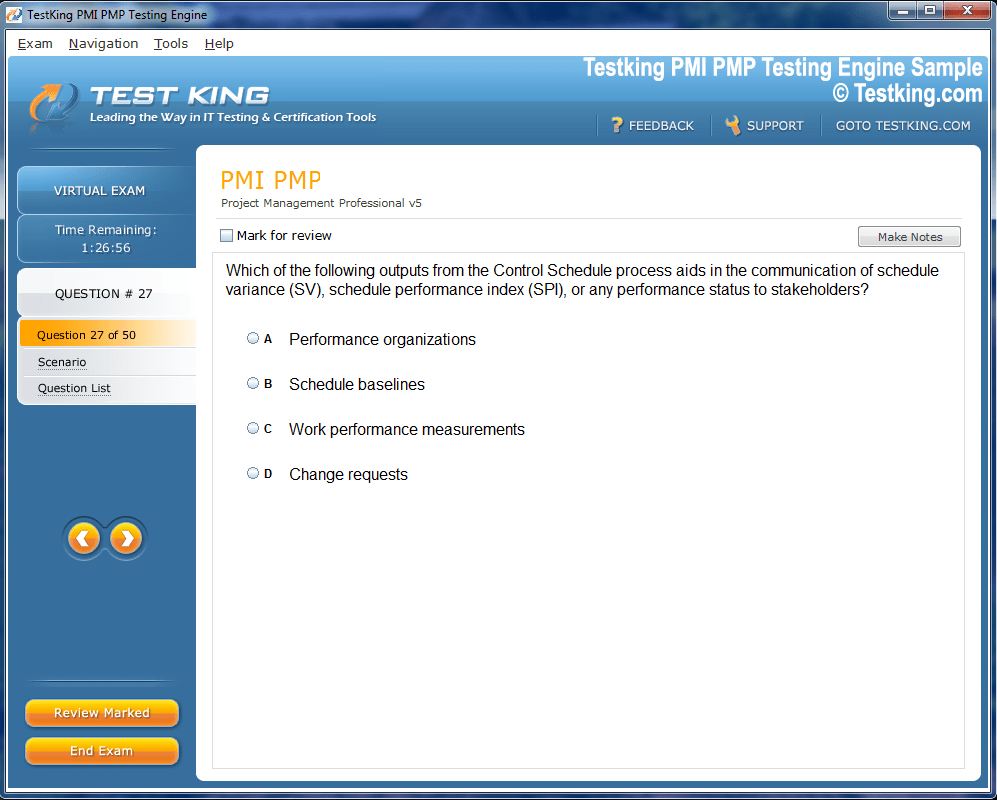
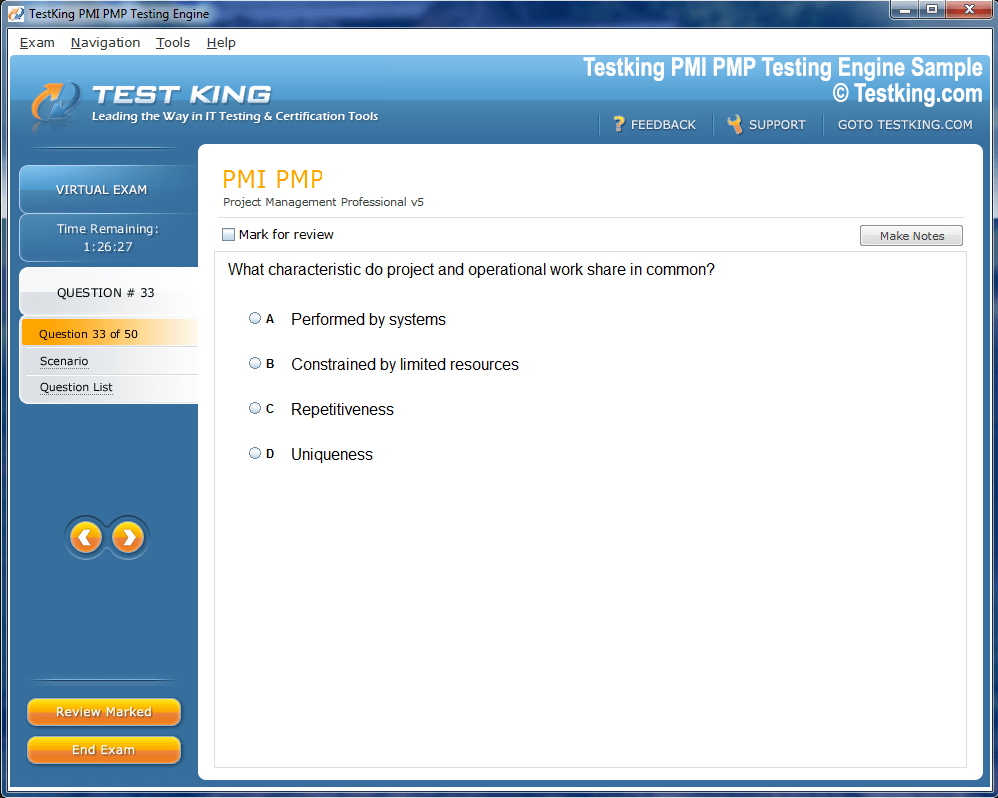
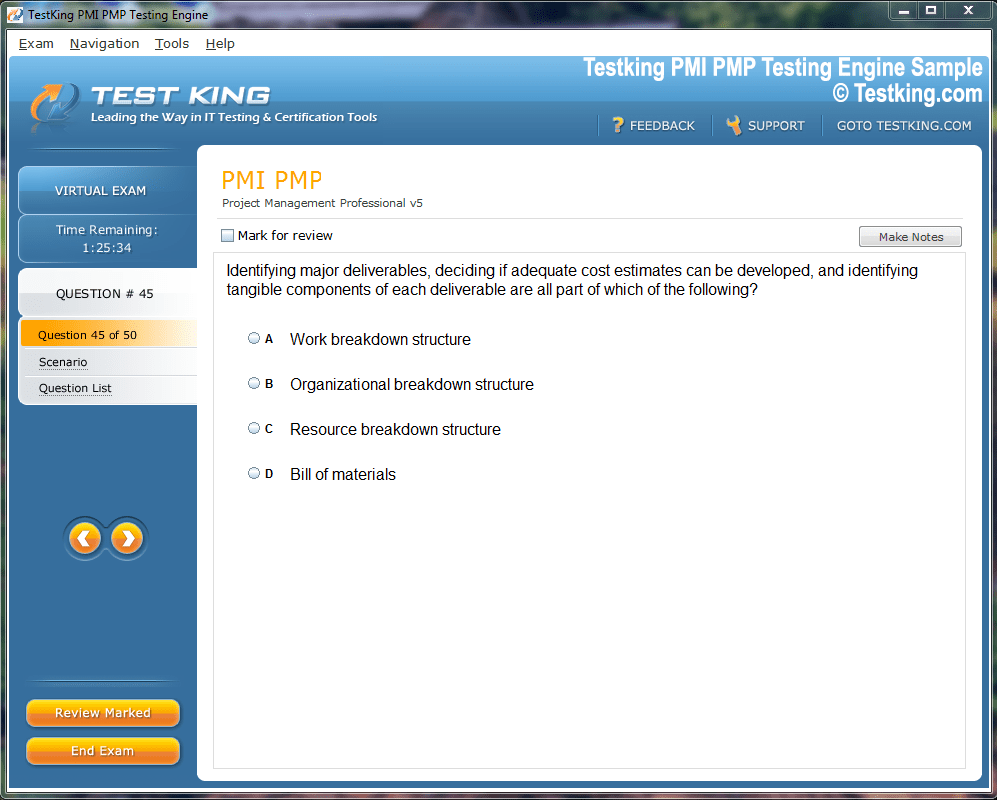
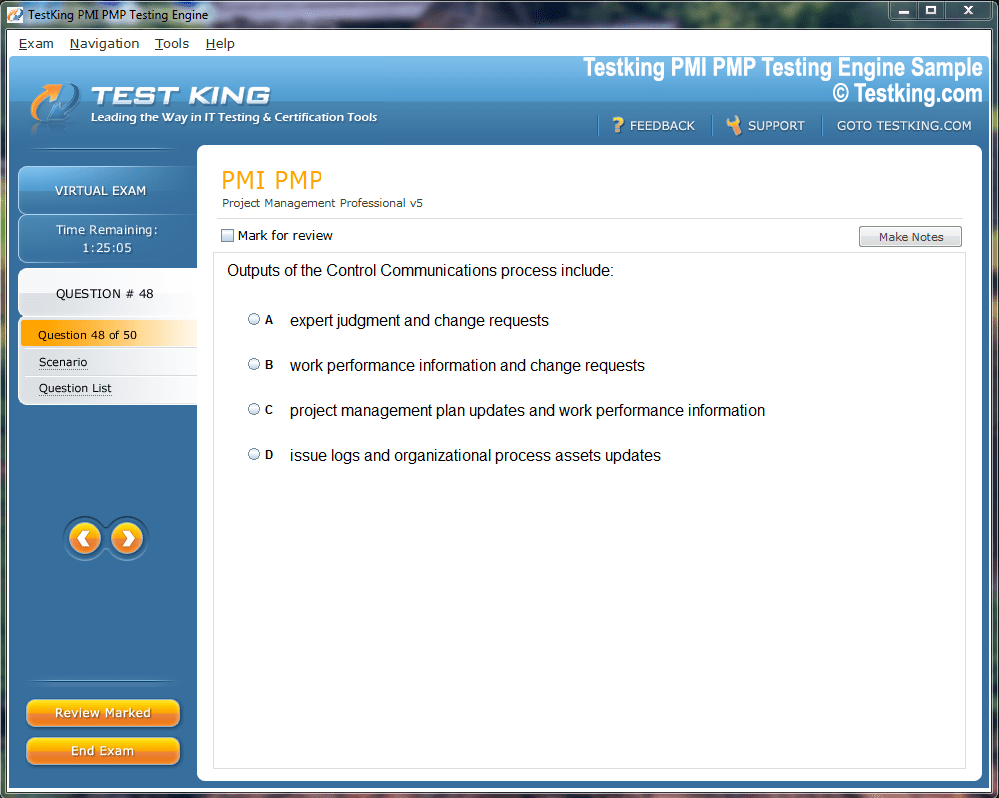
Product Screenshots


Frequently Asked Questions
Where can I download my products after I have completed the purchase?
Your products are available immediately after you have made the payment. You can download them from your Member's Area. Right after your purchase has been confirmed, the website will transfer you to Member's Area. All you will have to do is login and download the products you have purchased to your computer.
How long will my product be valid?
All Testking products are valid for 90 days from the date of purchase. These 90 days also cover updates that may come in during this time. This includes new questions, updates and changes by our editing team and more. These updates will be automatically downloaded to computer to make sure that you get the most updated version of your exam preparation materials.
How can I renew my products after the expiry date? Or do I need to purchase it again?
When your product expires after the 90 days, you don't need to purchase it again. Instead, you should head to your Member's Area, where there is an option of renewing your products with a 30% discount.
Please keep in mind that you need to renew your product to continue using it after the expiry date.
How many computers I can download Testking software on?
You can download your Testking products on the maximum number of 2 (two) computers/devices. To use the software on more than 2 machines, you need to purchase an additional subscription which can be easily done on the website. Please email support@testking.com if you need to use more than 5 (five) computers.
What operating systems are supported by your Testing Engine software?
Our TB0-124 testing engine is supported by all modern Windows editions, Android and iPhone/iPad versions. Mac and IOS versions of the software are now being developed. Please stay tuned for updates if you're interested in Mac and IOS versions of Testking software.
Mastering the TB0-124: Your Ultimate Guide to TIBCO MDM 8 Certification
In the contemporary landscape of enterprise data management, organizations are increasingly confronted with the labyrinthine task of consolidating, harmonizing, and governing their multifarious datasets. Mastery over these processes is no longer a mere advantage; it has evolved into a quintessential skillset for professionals in data-intensive industries. TIBCO Master Data Management (MDM) 8 emerges as a formidable solution in this realm, offering a sophisticated platform that enables organizations to orchestrate their critical data assets with precision and agility. Acquiring the TB0-124 certification is a significant milestone for professionals seeking to validate their competence in leveraging TIBCO MDM 8 to streamline and fortify enterprise data ecosystems.
Understanding the Core of TIBCO MDM 8
TIBCO MDM 8 is a comprehensive master data management platform designed to facilitate the creation of a single, reliable source of truth across diverse datasets. At its essence, the platform provides a mechanism to ingest, cleanse, enrich, and synchronize data from heterogeneous sources, ensuring consistency and accuracy across business processes. Unlike rudimentary data management tools, TIBCO MDM 8 emphasizes flexibility and scalability, allowing organizations to tailor the solution to their unique operational paradigms. Its architecture is meticulously crafted to accommodate complex hierarchies, intricate relationships, and dynamic data structures, rendering it indispensable for enterprises with voluminous and variegated data.
The platform’s architecture is characterized by a hub-and-spoke model that centralizes the management of master data while enabling seamless integration with peripheral systems. This configuration ensures that data governance policies are uniformly enforced and that the dissemination of data to downstream applications maintains integrity and coherence. Furthermore, TIBCO MDM 8 incorporates a robust metadata management framework, allowing administrators to define and govern data attributes, relationships, and rules with remarkable granularity. This level of configurability empowers organizations to tailor the platform’s functionality to their precise needs, bridging the chasm between operational exigencies and strategic data imperatives.
The Significance of the TB0-124 Certification
The TB0-124 certification is an authoritative credential that attests to a professional’s proficiency in deploying, configuring, and managing TIBCO MDM 8 environments. Beyond mere technical acumen, the certification underscores a practitioner’s ability to apply best practices, optimize workflows, and troubleshoot complex scenarios inherent to enterprise data management. In an era where data is regarded as the lifeblood of organizational decision-making, possessing demonstrable expertise in TIBCO MDM 8 confers a competitive advantage, enhancing employability and positioning professionals for roles that demand strategic data stewardship.
Obtaining the TB0-124 certification requires a nuanced understanding of both theoretical concepts and practical implementation. The examination evaluates knowledge across multiple domains, including data modeling, workflow orchestration, business rules configuration, system integration, and performance optimization. Successful candidates demonstrate not only familiarity with platform features but also the capacity to apply this knowledge to resolve real-world challenges. The certification thus serves as a litmus test for both competence and critical thinking, reflecting a candidate’s readiness to navigate the complexities of contemporary data landscapes.
Exam Objectives and Competency Areas
The TB0-124 examination is meticulously structured to assess competencies across several pivotal areas of TIBCO MDM 8. One of the foremost objectives is to gauge proficiency in data modeling and metadata management. Candidates are expected to understand entity definitions, attribute classifications, relationship hierarchies, and the ramifications of these structures on operational workflows. The examination also evaluates familiarity with data quality processes, encompassing validation, cleansing, and enrichment methodologies that ensure the fidelity of master data.
Workflow orchestration constitutes another critical competency area. TIBCO MDM 8 empowers organizations to define complex workflows that govern data processing, approval chains, and automated triggers. Candidates are expected to exhibit an understanding of how to configure workflows, define conditional logic, and implement notifications to streamline business processes. This domain requires an appreciation for both technical nuances and organizational requirements, as workflows must balance operational efficiency with governance imperatives.
Integration with external systems is equally pivotal. The platform’s design accommodates seamless interfacing with ERP, CRM, BI, and other enterprise applications, necessitating familiarity with connectors, adapters, and API-driven interactions. Candidates must demonstrate the ability to configure data flows, map entities, and ensure consistency across disparate systems. Complementing this is the domain of performance optimization, where candidates are assessed on their capability to identify bottlenecks, configure caching mechanisms, and optimize queries to maintain system responsiveness under substantial data loads.
Architectural Overview and Components
TIBCO MDM 8’s architecture is an exemplar of modularity and robustness. The platform consists of multiple interrelated components that collectively facilitate comprehensive data management. Central to this architecture is the hub server, which functions as the nucleus of data governance, orchestrating data ingestion, processing, and synchronization. Peripheral to the hub are domain servers, which manage specific subject areas or business entities, ensuring segregation and specialization without compromising the overarching integrity of the data ecosystem.
Metadata repositories underpin the entire platform, capturing definitions of entities, attributes, hierarchies, and relationships. These repositories are pivotal in ensuring that data conforms to predefined standards and that any transformation or validation adheres to organizational policies. Business rules engines complement metadata management, enabling dynamic enforcement of validation logic, conditional transformations, and operational triggers. By integrating these engines within the workflow framework, TIBCO MDM 8 affords organizations the ability to automate complex decision-making processes with minimal manual intervention.
Security and access control are meticulously embedded throughout the architecture. Role-based permissions, audit trails, and authentication mechanisms safeguard sensitive data while providing granular visibility into user actions. This emphasis on security not only ensures regulatory compliance but also fortifies the organization against inadvertent or malicious data breaches. Collectively, the platform’s architecture embodies a delicate equilibrium of flexibility, control, and resilience, making it a cornerstone of modern data governance strategies.
Preparing for the TB0-124 Examination
Preparation for the TB0-124 examination demands a structured and methodical approach. Familiarity with the platform’s interface and core functionality is a prerequisite, but mastery extends beyond superficial navigation. Candidates must cultivate a deep comprehension of data modeling principles, workflow intricacies, and system integration paradigms. A holistic preparation strategy encompasses both theoretical study and hands-on practice, fostering an intuitive understanding of how concepts manifest in operational scenarios.
Practical experience is indispensable in bridging the gap between conceptual knowledge and real-world application. Engaging with sandbox environments, configuring workflows, defining entities, and simulating integration scenarios provides invaluable insights that mere rote memorization cannot offer. Candidates benefit from iterative experimentation, observing the ramifications of modifications, troubleshooting errors, and refining configurations. This experiential learning not only solidifies understanding but also builds the confidence required to navigate complex exam scenarios with composure.
Complementing hands-on practice is rigorous conceptual study. Understanding the rationale behind design choices, the implications of data governance principles, and the interplay between platform components equips candidates to tackle analytical and scenario-based questions. Conceptual clarity enhances problem-solving agility, allowing candidates to adapt to questions that may not directly mirror previous experiences but require logical extrapolation. Incorporating unique and less-common vocabulary, such as “synoptic analysis,” “metadomain orchestration,” and “data provenance,” can aid in framing nuanced conceptual understandings that resonate with the sophistication of the platform.
Common Challenges and Strategies to Overcome Them
Candidates often encounter several challenges while preparing for the TB0-124 examination. A primary obstacle is the vast scope of platform functionality, which can appear overwhelming at first glance. To mitigate this, it is effective to segment preparation into discrete domains, allocating focused study time to each competency area. Establishing a rhythm of iterative review, combined with targeted practical exercises, ensures that comprehension evolves from superficial familiarity to deep-rooted expertise.
Another challenge lies in mastering the intricate interdependencies between system components. TIBCO MDM 8 operates as an ecosystem where modifications in one domain can cascade to affect multiple workflows and processes. Developing an awareness of these interconnections, alongside methodical documentation of observed behaviors, fosters a systemic perspective that enhances problem-solving capabilities. Concept mapping, diagrammatic representations of data flows, and reflective journaling are particularly beneficial techniques to cultivate this integrative understanding.
Time management during the examination also presents a challenge. The breadth of questions, coupled with scenario-based problem solving, necessitates judicious allocation of time. Practicing with timed mock tests, simulating real examination conditions, and refining question prioritization strategies are instrumental in ensuring candidates can navigate the examination efficiently without sacrificing accuracy or analytical depth.
Benefits of Certification Beyond the Exam
The advantages of achieving the TB0-124 certification extend far beyond the immediate validation of technical skills. Certified professionals are often viewed as custodians of data integrity within their organizations, entrusted with the stewardship of critical assets that underpin strategic decision-making. This recognition can catalyze career advancement, opening avenues to senior technical roles, managerial positions, and consultancy opportunities where expertise in enterprise data management is paramount.
Certification also fosters professional credibility, establishing a benchmark of competence recognized across industries. Organizations seeking to implement or optimize TIBCO MDM 8 environments value certified personnel for their ability to accelerate deployment, mitigate risks, and ensure adherence to best practices. In addition, the process of preparation and examination cultivates a mindset of analytical rigor, disciplined problem-solving, and adaptability, qualities that are invaluable across a spectrum of technical and strategic domains.
Finally, the certification serves as a gateway to continued learning. Mastery of TIBCO MDM 8 forms a foundation upon which professionals can explore adjacent domains, including advanced analytics, data virtualization, and enterprise integration. The knowledge acquired through TB0-124 preparation equips candidates to contribute meaningfully to evolving data strategies, participate in complex implementation projects, and drive innovation within their organizations.
Embarking on the journey toward TIBCO MDM 8 mastery and TB0-124 certification is both a formidable challenge and a transformative opportunity. The platform’s sophisticated architecture, intricate workflows, and expansive capabilities necessitate a disciplined and comprehensive approach to preparation. Candidates who embrace both theoretical study and practical immersion are well-positioned to navigate the complexities of the examination while cultivating enduring expertise that transcends the credential itself.
The TB0-124 certification not only validates technical acumen but also affirms a professional’s capacity to harmonize, govern, and optimize enterprise data ecosystems. It signifies readiness to confront real-world challenges with analytical precision, strategic insight, and operational competence. For professionals aspiring to establish themselves as authoritative figures in the realm of master data management, mastery of TIBCO MDM 8 through diligent study, hands-on practice, and thoughtful preparation offers a compelling pathway to both personal growth and organizational impact.
Deep Dive into TIBCO MDM Concepts and Architecture
Understanding the intricate architecture and fundamental concepts of TIBCO MDM 8 is indispensable for any professional preparing for the TB0-124 certification. Beyond its surface functionality, the platform embodies a sophisticated ecosystem that facilitates meticulous data governance, consolidation, and orchestration. The depth and complexity of its architecture allow organizations to manage large-scale datasets efficiently while maintaining consistency, traceability, and accuracy.
Core Master Data Concepts
At the heart of TIBCO MDM 8 lies the principle of master data harmonization. Master data constitutes the canonical representation of critical business entities such as customers, products, suppliers, and organizational hierarchies. These entities are defined through meticulously structured schemas, encompassing attributes, relationships, and hierarchies that capture the nuances of real-world business operations. A profound understanding of these entities and their interconnections is pivotal for configuring the platform effectively and for passing the TB0-124 examination.
Entities in TIBCO MDM 8 are more than mere data containers; they represent abstractions of business realities. Each entity can encompass numerous attributes that define its characteristics, ranging from fundamental identifiers to complex, context-dependent metrics. Relationships among entities encapsulate dependencies and interactions, such as parent-child hierarchies, associative linkages, and reference mappings. Mastery over these relationships ensures that data integrity is maintained and that operations across interconnected systems remain coherent and synchronized.
Another crucial concept is data provenance, which pertains to the lineage and history of each data element within the platform. Understanding the source, transformations, and lifecycle of master data is essential for regulatory compliance, auditing, and operational transparency. The capability to trace every change and decision within the data lifecycle enhances accountability and allows organizations to identify anomalies and rectify inconsistencies with precision.
Metadata Management and Governance
Metadata functions as the scaffolding upon which TIBCO MDM 8 builds its operational efficacy. It defines the structural, semantic, and operational characteristics of master data, providing a blueprint for governance and automation. The platform’s metadata management framework allows administrators to specify entities, attributes, hierarchies, validation rules, and business logic in a centralized repository. This approach ensures uniform enforcement of governance policies and fosters a consistent understanding of data across the organization.
A salient aspect of metadata management is its dynamic configurability. Unlike static models, TIBCO MDM 8 allows administrators to modify entity definitions, adjust attribute constraints, and redefine relationships without necessitating disruptive overhauls. This agility is especially valuable in environments where business requirements evolve rapidly and where data structures must adapt to emerging operational paradigms. By embedding governance within the metadata layer, the platform mitigates the risk of inconsistencies and promotes adherence to enterprise-wide standards.
Data stewardship is intertwined with metadata governance. TIBCO MDM 8 provides mechanisms for designating custodians of specific datasets, defining approval hierarchies, and enforcing validation workflows. This ensures that changes to critical data undergo rigorous scrutiny, aligning operational activities with strategic imperatives. The integration of metadata management, governance, and stewardship underscores the platform’s holistic approach to master data management.
Hub-and-Spoke Architecture
TIBCO MDM 8’s architecture is predicated on a hub-and-spoke model that centralizes control while allowing for distributed interactions with peripheral systems. The hub functions as the authoritative source of truth, orchestrating data ingestion, processing, validation, and dissemination. Spokes, in contrast, represent external systems or applications that consume or contribute to master data. This architecture facilitates consistency, reduces redundancy, and ensures that all stakeholders operate from synchronized datasets.
The hub server embodies the core processing engine, handling tasks such as data validation, enrichment, deduplication, and business rule enforcement. Its design supports concurrency and high-volume data operations, enabling organizations to scale efficiently. The spoke systems interface with the hub via connectors, APIs, or messaging protocols, allowing for bidirectional data exchange and real-time synchronization. This distributed yet centralized model mitigates the risk of data fragmentation and enhances operational resilience.
An advanced feature of this architecture is its support for multi-domain management. Organizations often require the simultaneous governance of disparate subject areas, each with unique entities, workflows, and validation rules. TIBCO MDM 8 accommodates this need by segregating domains within the hub, while maintaining the ability to establish cross-domain relationships and interactions. This ensures operational compartmentalization without sacrificing the integrative capabilities essential for enterprise-wide consistency.
Data Modeling in TIBCO MDM 8
Data modeling is a cornerstone of TIBCO MDM 8 proficiency. The platform’s modeling framework allows the creation of entities that encapsulate the attributes and relationships essential for business operations. A nuanced understanding of normalization, cardinality, and referential integrity is imperative for constructing models that are both accurate and scalable. Candidates preparing for the TB0-124 examination must be adept at translating business requirements into logical data structures that optimize both performance and maintainability.
Attribute configuration is a critical element of data modeling. Attributes can possess varying data types, validation constraints, default values, and derivation logic. Some attributes may be calculated or derived based on other attributes, necessitating careful orchestration to avoid circular dependencies or erroneous computations. Mastery of attribute configuration ensures that data remains accurate, consistent, and semantically meaningful across operational processes.
Relationship management further complicates modeling but is equally vital. Entities may engage in one-to-one, one-to-many, or many-to-many relationships, each of which must be precisely defined to preserve data integrity. Advanced features such as hierarchical relationships, associative entities, and reference mapping allow organizations to capture complex real-world scenarios, such as multi-tiered organizational structures or interdependent product lines. A comprehensive grasp of these modeling intricacies is essential for both practical implementation and examination success.
Workflows and Business Rules
TIBCO MDM 8 empowers organizations to codify operational processes through workflows and business rules. Workflows define sequences of actions that govern the lifecycle of data, from ingestion through validation, enrichment, approval, and dissemination. They incorporate conditional logic, notifications, and exception handling mechanisms, enabling organizations to automate routine operations while maintaining governance oversight.
Business rules provide the mechanism for enforcing data quality, validation, and compliance within workflows. These rules can encompass range checks, uniqueness constraints, dependency enforcement, and context-sensitive validations. By integrating rules into workflows, TIBCO MDM 8 ensures that operational activities adhere to enterprise policies and that data remains reliable and trustworthy. Professionals must be proficient in configuring, testing, and optimizing these workflows and rules to achieve both operational efficiency and examination readiness.
A distinctive aspect of TIBCO MDM 8 workflows is their support for event-driven automation. The platform can trigger actions based on data changes, system events, or external stimuli, allowing for highly responsive and adaptive processes. This capability not only streamlines operations but also enhances the platform’s utility in dynamic business environments where timely decisions are critical.
Integration with External Systems
One of the platform’s distinguishing features is its seamless integration capability. TIBCO MDM 8 is designed to interface with enterprise applications such as ERP, CRM, BI tools, and third-party databases. Integration mechanisms include native connectors, APIs, messaging protocols, and ETL processes. Understanding these interfaces, along with data mapping, transformation, and synchronization principles, is crucial for both practical application and certification readiness.
Integration is not merely a technical necessity; it is a strategic enabler. By facilitating consistent master data across disparate systems, TIBCO MDM 8 reduces errors, enhances reporting accuracy, and enables more informed decision-making. Candidates must demonstrate an ability to configure integrations, troubleshoot data flows, and optimize synchronization strategies to ensure high-performance, real-time data operations.
Performance Optimization and Scalability
Scalability and performance optimization are critical considerations in large-scale deployments. TIBCO MDM 8 provides mechanisms for caching, indexing, query optimization, and parallel processing to maintain responsiveness under substantial data loads. Candidates must understand these mechanisms to ensure that operational processes remain efficient and that workflows do not introduce bottlenecks.
Performance tuning also involves monitoring system metrics, analyzing query patterns, and identifying potential resource contention points. Professionals must be adept at interpreting logs, diagnosing issues, and implementing optimizations that preserve both speed and accuracy. Mastery of these skills not only enhances platform utilization but also signals a high level of competence to potential employers or certification examiners.
Security and Access Control
Security is a pervasive concern in any enterprise data management environment, and TIBCO MDM 8 addresses it through comprehensive access control, authentication, and auditing mechanisms. Role-based permissions allow granular control over who can view, modify, or approve data, ensuring that sensitive information is protected while operational efficiency is maintained. Audit trails provide an immutable record of changes, facilitating accountability, compliance, and forensic analysis when necessary.
Access control policies can be tailored to specific domains, entities, or attributes, providing a nuanced approach to security. Integration with corporate identity management systems allows organizations to leverage existing authentication frameworks, simplifying user management while maintaining robust security standards. Candidates must understand the principles of security configuration and best practices to ensure that operational data remains protected and compliant with enterprise policies.
Real-World Applications
The concepts and architecture of TIBCO MDM 8 manifest vividly in practical deployments across industries. Retail organizations leverage the platform to harmonize product and customer data across multiple channels, enhancing personalization and operational efficiency. Financial institutions employ it to consolidate client information, reduce redundancies, and comply with stringent regulatory requirements. Manufacturing firms utilize the system to integrate supplier, inventory, and production data, ensuring consistency and reliability across the supply chain. Understanding these real-world applications allows candidates to contextualize theoretical knowledge and appreciate the platform’s transformative potential.
A comprehensive understanding of TIBCO MDM 8’s concepts and architecture is foundational for both professional proficiency and TB0-124 certification success. The platform’s sophisticated ecosystem, encompassing master data modeling, metadata governance, workflows, integration, performance optimization, and security, demands a holistic and nuanced comprehension. Professionals who invest in mastering these elements acquire not only the skills necessary to deploy and manage TIBCO MDM 8 effectively but also the capacity to enhance organizational decision-making, ensure data integrity, and drive operational excellence.
By delving into the intricacies of TIBCO MDM 8, professionals prepare themselves to navigate the multifaceted challenges of enterprise data management with confidence and acumen. Mastery of these concepts equips candidates to approach the TB0-124 examination with both theoretical understanding and practical insight, solidifying their role as authoritative custodians of organizational data and positioning them for sustained career growth in the ever-evolving landscape of data management.
TB0-124 Exam Domains and Study Strategies
Achieving mastery in TIBCO MDM 8 and successfully earning the TB0-124 certification requires more than familiarity with the platform; it demands a strategic approach to study, comprehension of the examination domains, and the ability to apply knowledge in practical scenarios. The TB0-124 exam evaluates candidates across multiple facets of the platform, assessing both theoretical understanding and operational proficiency. Developing a structured strategy, grounded in both conceptual clarity and experiential learning, significantly enhances the likelihood of success.
Understanding the Examination Framework
The TB0-124 certification examination is meticulously designed to measure a candidate’s expertise in deploying, configuring, and managing TIBCO MDM 8 environments. The exam encompasses diverse domains, each representing critical competencies required for effective platform utilization. Familiarity with the examination framework is essential to ensure targeted preparation and efficient allocation of study efforts. Candidates are expected to demonstrate a deep understanding of data modeling, workflow orchestration, business rules configuration, integration, performance optimization, and security management.
Each domain has its own weightage, which reflects the relative importance and frequency of associated questions within the exam. Understanding this distribution allows candidates to prioritize topics, focusing on areas that yield maximal impact while ensuring comprehensive coverage. Additionally, the examination may present scenario-based questions, which require candidates to apply knowledge analytically rather than relying solely on memorized facts. This underscores the need for practical exposure to platform configurations, data flows, and operational intricacies.
Domain One: Data Modeling and Metadata Management
Data modeling is a cornerstone of the TB0-124 examination. Candidates are expected to demonstrate proficiency in defining entities, configuring attributes, establishing relationships, and maintaining hierarchical structures. Metadata management, a complementary domain, involves governing entity definitions, business rules, validation constraints, and operational logic within the platform. Together, these competencies ensure that the organization’s master data remains consistent, accurate, and aligned with strategic objectives.
Effective preparation for this domain involves both conceptual study and hands-on exercises. Candidates should practice constructing entities, defining attribute properties, and configuring relationships to reflect realistic business scenarios. Emphasis on data provenance, referential integrity, and dynamic attribute derivation is critical. This domain also tests candidates’ understanding of metadata-driven governance, including approval hierarchies, data stewardship roles, and change management processes. Engaging with sandbox environments, experimenting with entity configurations, and observing system behavior under different scenarios cultivates the analytical agility necessary for exam success.
Domain Two: Workflow Orchestration and Business Rules
Workflow orchestration constitutes another significant portion of the TB0-124 exam. Candidates must understand the configuration of sequential and conditional workflows that govern data processing, validation, approval, and notification mechanisms. The integration of business rules within these workflows ensures that data quality, compliance, and operational standards are consistently enforced.
Preparation strategies for this domain emphasize hands-on practice. Candidates should simulate real-world scenarios, defining workflows that incorporate conditional logic, automated triggers, and exception handling. Familiarity with event-driven workflows, notifications, and escalation processes is essential. Additionally, configuring business rules for validation, range checking, uniqueness enforcement, and dependency management requires both theoretical comprehension and practical proficiency. Mastery of this domain demonstrates a candidate’s ability to streamline processes, reduce manual intervention, and maintain governance integrity.
Domain Three: Integration and Interoperability
The integration of TIBCO MDM 8 with external enterprise applications is a critical competency evaluated in the TB0-124 examination. This domain tests candidates’ knowledge of connectors, APIs, messaging protocols, data mapping, transformation processes, and synchronization techniques. Successful integration ensures that master data is consistent across ERP, CRM, BI, and other enterprise systems, supporting accurate reporting, operational efficiency, and informed decision-making.
Preparation for integration requires familiarity with data flows between systems, mapping entities, and resolving conflicts. Candidates should practice configuring connectors, defining transformation rules, and monitoring synchronization processes. Understanding error handling, exception management, and rollback mechanisms is essential. Realistic scenarios, such as multi-system data consolidation or bi-directional synchronization, provide candidates with experiential insight that enhances analytical reasoning during the examination.
Domain Four: Performance Optimization and Scalability
Performance and scalability are critical considerations in enterprise-grade deployments of TIBCO MDM 8. The TB0-124 exam assesses candidates’ ability to optimize queries, configure caching mechanisms, and implement parallel processing strategies to maintain responsiveness under heavy data loads. Understanding bottlenecks, system resource utilization, and query execution patterns is essential for ensuring operational efficiency.
Effective preparation in this domain involves practical experimentation. Candidates should monitor system performance, adjust indexing, configure caching policies, and analyze query behavior. Familiarity with load balancing, multi-domain management, and concurrency control enhances problem-solving capabilities. By developing an analytical mindset focused on efficiency and scalability, candidates can approach scenario-based questions with confidence, identifying optimal solutions under constrained conditions.
Domain Five: Security and Access Control
Security is an indispensable element of enterprise data management, and the TB0-124 examination evaluates candidates’ expertise in configuring authentication, authorization, and auditing mechanisms. Role-based access control, domain-specific permissions, attribute-level restrictions, and audit trails constitute core areas of assessment. Candidates must understand how to safeguard sensitive data while enabling operational access for authorized users.
Preparation strategies include configuring access control policies, simulating user roles, and monitoring audit logs. Candidates should explore scenarios where permissions conflict, analyze the impact of changes, and ensure compliance with regulatory requirements. Understanding best practices for securing master data, integrating authentication with corporate identity systems, and enforcing data governance policies is essential. Mastery of security principles demonstrates a candidate’s readiness to manage both operational and compliance-related challenges effectively.
Study Techniques and Resource Optimization
Strategic preparation for the TB0-124 examination requires a balance between theoretical study and practical engagement. Candidates benefit from allocating study time based on domain weightage, focusing more intensively on areas with higher representation in the exam. Conceptual understanding should be reinforced through hands-on experimentation, such as configuring entities, designing workflows, and testing integrations.
Active learning techniques, such as scenario-based exercises, reflective journaling, and peer discussions, enhance retention and analytical agility. Candidates are encouraged to simulate real-world operational environments, observing the effects of configuration changes, testing validation rules, and troubleshooting errors. These activities cultivate experiential knowledge, enabling candidates to apply theoretical insights to practical challenges—a critical requirement for scenario-based questions.
Additionally, iterative review and self-assessment play a pivotal role in preparation. Candidates should periodically revisit previously studied domains, test comprehension through mock scenarios, and refine understanding based on observed weaknesses. Incorporating rare or nuanced vocabulary, such as “data lineage audit,” “metadomain orchestration,” and “entity harmonization,” can help articulate complex concepts clearly during cognitive processing, reinforcing mastery.
Mock Tests and Practice Simulations
Mock tests and practice simulations are invaluable tools for assessing preparedness. Timed simulations replicate the pressure and pacing of the actual examination, helping candidates develop effective time management strategies. These exercises also provide insight into areas requiring further attention, allowing candidates to refine study focus before attempting the official exam.
Effective use of mock tests involves detailed analysis of incorrect responses, identification of conceptual gaps, and iterative improvement. Candidates should not merely memorize answers but seek to understand underlying principles, ensuring that knowledge is adaptable to novel scenarios. Scenario-driven questions, in particular, require the integration of multiple competencies, challenging candidates to apply data modeling, workflow orchestration, integration, and governance principles concurrently.
Time Management and Examination Strategy
Efficient time management is critical to success in the TB0-124 exam. Candidates must allocate sufficient time to analyze complex scenarios, interpret questions accurately, and select the most appropriate solutions. A recommended approach involves an initial pass through all questions, addressing straightforward items quickly, followed by a more deliberate review of complex or scenario-based questions.
Developing a mental framework for decision-making enhances both speed and accuracy. Candidates should prioritize questions based on confidence, complexity, and point value, ensuring that maximum achievable marks are secured while avoiding time wastage. Additionally, maintaining composure and cognitive clarity under examination conditions is essential, as stress can impede analytical reasoning and problem-solving effectiveness.
Common Pitfalls and How to Avoid Them
Candidates preparing for the TB0-124 exam often encounter recurring challenges. One common pitfall is insufficient hands-on practice, resulting in superficial understanding of workflows, integrations, and configurations. Another is overreliance on memorization, which limits the ability to apply knowledge in scenario-based questions. To mitigate these challenges, candidates should engage in iterative practical exercises, simulate operational scenarios, and develop conceptual clarity alongside experiential familiarity.
Overlooking domain interdependencies can also pose difficulties. TIBCO MDM 8’s architecture is inherently integrative, meaning that changes in one domain often affect others. Developing a holistic understanding of data flows, entity relationships, and workflow interactions is crucial. Candidates should document observations, create mental models, and employ visual diagrams to conceptualize interconnections, thereby improving analytical agility during the examination.
Finally, mismanagement of time during preparation and in the exam itself can hinder performance. Adopting structured study schedules, practicing with timed simulations, and periodically assessing progress ensures that candidates maintain focus, coverage, and momentum throughout their preparation journey.
Psychological Preparation and Mindset
Equally important as technical preparation is cultivating a resilient and focused mindset. The TB0-124 examination tests both knowledge and cognitive agility under time constraints. Candidates benefit from developing strategies to manage stress, maintain attention, and approach complex scenarios with systematic reasoning. Techniques such as deliberate practice, reflective journaling, and visualization of problem-solving processes contribute to cognitive readiness.
A growth-oriented mindset, emphasizing learning from errors, iterative improvement, and adaptability, enhances both preparation and performance. Candidates who embrace challenges as opportunities to deepen understanding are more likely to navigate difficult questions confidently and accurately. Integrating reflective practices into study routines fosters both technical competence and psychological resilience.
Preparation for the TB0-124 examination demands a multifaceted approach that integrates conceptual understanding, practical proficiency, strategic study techniques, and psychological readiness. Mastery of examination domains—including data modeling, workflow orchestration, integration, performance optimization, and security—is essential. Complementing this mastery with hands-on practice, iterative review, scenario simulations, and effective time management cultivates both confidence and competence.
By adopting a structured, methodical approach to preparation, candidates not only enhance their likelihood of passing the examination but also develop a profound understanding of TIBCO MDM 8’s capabilities and applications. This preparation transcends the immediate goal of certification, equipping professionals with the skills, insights, and analytical acumen required to excel in enterprise data management roles and contribute meaningfully to organizational success.
Practical Implementation and Hands-On Skills in TIBCO MDM 8
Acquiring conceptual knowledge of TIBCO MDM 8 is indispensable, but translating that knowledge into practical skills is what ultimately differentiates proficient professionals from the rest. The TB0-124 certification emphasizes not only theoretical understanding but also the ability to implement, configure, and optimize the platform in real-world scenarios. Mastery of hands-on skills is therefore crucial for operational success and examination readiness.
Setting Up the TIBCO MDM 8 Environment
The first step in practical implementation is configuring a functional TIBCO MDM 8 environment. This involves installing the necessary software components, configuring servers, and establishing the underlying database infrastructure. Candidates must understand the role of the hub server, domain servers, and supporting components such as metadata repositories and workflow engines. Ensuring that each component communicates seamlessly is vital for operational integrity.
Installation requires careful consideration of system requirements, such as memory allocation, CPU configuration, and storage optimization. Misconfigurations can lead to performance bottlenecks or data inconsistencies, emphasizing the importance of meticulous planning. Candidates should also familiarize themselves with deployment topologies, including single-node and multi-node configurations, to appreciate the platform’s scalability and resilience in enterprise environments.
Configuring Entities and Attributes
Hands-on mastery of TIBCO MDM 8 begins with defining entities and attributes. Entities represent the business objects that form the foundation of master data management, while attributes describe the properties and characteristics of these entities. Candidates must learn to create entities with appropriate attributes, ensuring adherence to naming conventions, data types, and validation rules.
Attributes can be classified as mandatory, optional, derived, or calculated, depending on the business context. Configuring these attributes accurately ensures data integrity and prevents operational errors. Candidates should experiment with hierarchical structures, parent-child relationships, and associative linkages to gain practical insight into the complexities of entity relationships. Understanding the interplay between attributes and business rules is essential for configuring robust data models that can withstand operational demands.
Data Loading, Cleansing, and Validation
The ability to load, cleanse, and validate data is central to practical expertise in TIBCO MDM 8. Candidates must be proficient in importing data from diverse sources, mapping source attributes to target entities, and ensuring consistency across datasets. Data cleansing involves identifying duplicates, correcting inaccuracies, and harmonizing formats to create a single source of truth.
Validation rules enforce consistency and accuracy by automatically checking data against predefined criteria. Candidates should practice defining range checks, mandatory field validations, uniqueness constraints, and cross-attribute dependencies. Hands-on experience with these processes helps candidates understand the ramifications of configuration choices, as well as the operational importance of proactive data quality management.
Workflow Management
Workflows in TIBCO MDM 8 automate the sequence of actions required to process and manage master data. Configuring workflows involves defining triggers, conditional logic, approval chains, and notifications to ensure that data flows efficiently through organizational processes. Candidates should practice creating workflows that handle complex scenarios, such as exception management, escalation procedures, and multi-step approvals.
The integration of business rules within workflows ensures that data adheres to governance standards and operational policies. Candidates must understand how to configure rules for validation, transformation, and enrichment, and how to link these rules to specific workflow steps. Practical experience with workflow management is critical for operational efficiency and is heavily emphasized in the TB0-124 certification.
Integration with External Systems
TIBCO MDM 8 is designed to interface with various external systems, including ERP, CRM, and BI platforms. Hands-on skills in integration involve configuring connectors, mapping entities across systems, and establishing bi-directional synchronization. Candidates should experiment with data transformation rules, error handling mechanisms, and reconciliation processes to ensure seamless interoperability.
Practical experience in integration also involves monitoring data flows, diagnosing synchronization issues, and implementing corrective actions. Understanding how changes in one system propagate through the master data hub allows candidates to anticipate and mitigate potential inconsistencies, which is critical for maintaining operational integrity and passing scenario-based examination questions.
Workflow Automation and Event Handling
Advanced hands-on expertise includes configuring event-driven workflows. TIBCO MDM 8 allows workflows to respond dynamically to data changes, system events, or external triggers. Candidates should practice setting up event listeners, defining automated actions, and configuring escalation mechanisms. This capability enables organizations to respond in real-time to operational changes, enhancing efficiency and governance.
Event handling also involves exception management. Candidates must understand how to configure notifications, error logging, and corrective actions when workflows encounter unexpected conditions. Mastery of these advanced features ensures that data processes are resilient, adaptive, and aligned with enterprise requirements.
Reporting and Analytics
While TIBCO MDM 8 primarily focuses on data management, the ability to generate meaningful reports and analyze master data is a critical operational skill. Candidates should familiarize themselves with reporting tools, dashboards, and query interfaces provided by the platform. Hands-on practice includes creating summary reports, detailed entity audits, and exception logs to monitor data quality and operational performance.
Analytical skills are enhanced by configuring metrics, KPIs, and trend analyses that provide insights into data governance effectiveness. Candidates should practice extracting actionable insights from reports, identifying anomalies, and recommending corrective actions. These skills are essential for demonstrating operational proficiency in both practical deployment and scenario-based examination questions.
Troubleshooting and Error Resolution
Operational mastery requires the ability to troubleshoot and resolve errors efficiently. Common challenges include configuration conflicts, data validation failures, integration issues, and workflow interruptions. Candidates should develop a systematic approach to troubleshooting, including log analysis, root cause identification, and corrective action implementation.
Practical exercises in troubleshooting enhance problem-solving agility and prepare candidates for real-world operational challenges. Hands-on experience allows candidates to anticipate potential issues, implement preventive measures, and respond effectively to unexpected conditions. This skill set is crucial not only for examination success but also for maintaining reliable and efficient TIBCO MDM 8 environments in enterprise contexts.
Performance Optimization in Practice
Hands-on expertise extends to optimizing system performance. Candidates should practice configuring caching mechanisms, indexing strategies, and query optimization techniques. Understanding the interplay between data volume, workflow complexity, and system resources allows candidates to design configurations that maintain responsiveness under heavy loads.
Practical exercises in performance tuning also involve monitoring system metrics, identifying bottlenecks, and testing changes in a controlled environment. Candidates gain insight into how adjustments in workflows, attribute configurations, or integration processes affect overall performance. Mastery of these techniques ensures that operational environments are efficient, scalable, and resilient.
Advanced Configuration Scenarios
Beyond foundational skills, candidates benefit from engaging with advanced configuration scenarios. These include multi-domain management, complex relationship hierarchies, conditional business rules, and cross-system reconciliations. Practicing such scenarios enhances analytical reasoning, reinforces conceptual understanding, and builds confidence in managing complex enterprise deployments.
Engagement with advanced scenarios also prepares candidates for scenario-based examination questions, which often integrate multiple domains of the platform. Hands-on experience allows candidates to understand dependencies, anticipate outcomes, and implement solutions that are both effective and compliant with governance standards.
Real-World Applications of Hands-On Skills
The practical skills developed in TIBCO MDM 8 have direct applications in enterprise settings. For example, retail organizations can harmonize customer and product data across multiple channels, enabling personalized marketing and operational efficiency. Financial institutions can consolidate client data, reduce redundancies, and ensure regulatory compliance. Manufacturing firms can integrate supplier, inventory, and production data, supporting efficient supply chain operations.
These real-world applications demonstrate the transformative potential of hands-on proficiency. Candidates who master practical implementation are equipped not only to excel in certification examinations but also to contribute substantively to organizational efficiency, data quality, and strategic decision-making.
Continuous Learning and Skill Reinforcement
Practical mastery is reinforced through continuous learning and iterative practice. Candidates should routinely engage with sandbox environments, experiment with configuration changes, simulate complex scenarios, and evaluate outcomes. Reflective practices, such as documenting lessons learned, analyzing errors, and exploring alternative solutions, consolidate knowledge and enhance problem-solving agility.
Continuous skill reinforcement ensures that candidates remain adept at adapting to evolving business requirements, platform updates, and operational challenges. This proactive approach fosters long-term competence, enabling professionals to maintain a high standard of performance in enterprise data management roles.
Advanced Concepts and Optimization in TIBCO MDM 8
As organizations increasingly rely on TIBCO MDM 8 to manage critical data assets, mastering advanced concepts and optimization strategies becomes essential. Beyond foundational skills in entity configuration, workflows, and integrations, professionals must understand performance tuning, security, and complex integration patterns. These advanced competencies are critical for efficient operation, scalability, and compliance, and they are central to achieving both operational excellence and TB0-124 certification.
Performance Tuning and Scalability
Large-scale deployments of TIBCO MDM 8 often encounter challenges associated with volume, concurrency, and complexity. Performance tuning involves understanding system architecture, analyzing resource utilization, and implementing strategies to maintain responsiveness under heavy loads. Candidates should become adept at monitoring query execution, configuring caching mechanisms, and optimizing database interactions to minimize latency and maximize throughput.
Scalability strategies are essential for accommodating growing data volumes and increased user interactions. Multi-domain deployment, horizontal scaling, and parallel processing are advanced techniques that ensure the platform can adapt to enterprise demands. Understanding the trade-offs between processing speed, resource consumption, and system complexity allows professionals to design environments that balance efficiency with operational robustness.
Advanced Workflow Design
Beyond basic workflows, TIBCO MDM 8 supports highly sophisticated process automation. Advanced workflow design incorporates conditional branching, event-driven triggers, parallel task execution, and exception handling. Professionals must understand how to orchestrate these workflows to handle complex operational scenarios, such as simultaneous multi-step approvals, automated data transformations, and dynamic validation sequences.
Event-driven workflows are particularly valuable in fast-paced enterprise environments. Configuring triggers that respond to data changes, external system notifications, or scheduled tasks enables real-time responsiveness. Candidates should practice integrating event listeners with business rules to enforce governance policies while maintaining operational efficiency, ensuring that the platform operates reliably under dynamic conditions.
Complex Business Rules Configuration
Business rules in TIBCO MDM 8 govern data quality, validation, and transformation processes. Advanced configuration requires understanding rule hierarchies, dependencies, and exception handling. Professionals must be able to implement rules that adapt to varying business contexts, ensuring that validation logic remains consistent across multiple domains and scenarios.
Conditional and context-sensitive rules allow organizations to enforce precise governance policies. For example, certain validation constraints may only apply to specific entities or attributes under defined circumstances. Mastery of such advanced configurations ensures data integrity, reduces operational risk, and supports compliance with organizational standards and regulatory requirements.
Security and Access Control in Depth
Security is a pervasive concern in enterprise data management. TIBCO MDM 8 offers sophisticated access control mechanisms, including role-based permissions, domain-specific privileges, attribute-level restrictions, and comprehensive audit logging. Understanding these mechanisms at an advanced level allows professionals to design secure, compliant environments that prevent unauthorized access and maintain data confidentiality.
Advanced security configuration involves integrating the platform with corporate identity management systems, managing user authentication, and enforcing multi-layered access policies. Candidates must also consider audit trail design, monitoring mechanisms, and exception reporting to ensure accountability. These competencies are critical for maintaining operational integrity in high-stakes environments, where sensitive data must be protected while ensuring accessibility for authorized users.
Integration Patterns and Interoperability
Advanced integration patterns extend beyond simple connectors or APIs. Professionals must understand complex synchronization strategies, bi-directional data flows, and data reconciliation processes. Integrations often involve ERP, CRM, BI, and third-party applications, requiring careful mapping of entities, attributes, and relationships to preserve data integrity.
Patterns such as publish-subscribe, request-response, and batch processing allow organizations to tailor integrations to specific operational needs. Candidates should practice configuring these patterns, troubleshooting synchronization issues, and implementing automated reconciliation procedures. Mastery of integration patterns ensures that master data remains consistent, accurate, and harmonized across diverse systems.
Data Governance and Compliance
Advanced TIBCO MDM 8 implementations emphasize robust governance frameworks. Professionals must configure policies that enforce data quality, manage lifecycle events, and maintain lineage documentation. Understanding regulatory requirements, such as data privacy and industry-specific mandates, is critical for aligning platform configurations with compliance objectives.
Governance frameworks incorporate approval hierarchies, exception workflows, and stewardship roles to maintain operational accountability. Advanced competency involves integrating these frameworks with workflows, business rules, and access control mechanisms to create a cohesive, auditable environment. Practicing the design and implementation of governance structures prepares professionals for complex scenario-based examination questions and operational decision-making.
Monitoring and Reporting
Effective monitoring and reporting are integral to advanced mastery of TIBCO MDM 8. Professionals must configure dashboards, KPIs, and alerts that provide actionable insights into operational performance, data quality, and workflow efficiency. Advanced reporting involves cross-domain analysis, exception identification, and trend monitoring, allowing organizations to anticipate issues and make data-driven decisions.
Monitoring also includes system performance metrics, such as query response times, cache utilization, and workflow throughput. Candidates should practice analyzing logs, identifying anomalies, and implementing corrective actions. These skills ensure operational reliability and provide a foundation for continuous improvement, aligning with enterprise objectives and certification expectations.
Error Handling and Troubleshooting at Scale
As deployments scale, error handling and troubleshooting become increasingly complex. Professionals must develop systematic approaches to diagnose configuration issues, workflow failures, integration errors, and performance bottlenecks. Advanced troubleshooting requires analytical thinking, pattern recognition, and experience in simulating and resolving complex scenarios.
Candidates should practice scenario-based exercises that replicate real-world operational challenges. Understanding how errors propagate across domains, workflows, and integrations allows professionals to implement preventive measures, design resilient systems, and optimize recovery processes. These competencies are highly valued in enterprise environments and are crucial for demonstrating proficiency in certification examinations.
Optimization Strategies for Operational Excellence
Optimization in TIBCO MDM 8 encompasses workflow efficiency, data processing speed, resource utilization, and system responsiveness. Professionals should explore techniques such as batch processing, load balancing, and resource scheduling to enhance operational performance. Analytical skills are required to evaluate the impact of optimizations, identify trade-offs, and implement sustainable solutions.
Advanced optimization also involves continuous assessment and iterative improvement. Professionals must establish metrics, monitor outcomes, and refine configurations based on empirical insights. This proactive approach ensures that deployments remain efficient, scalable, and aligned with organizational objectives over time.
Real-World Applications of Advanced Concepts
Advanced mastery of TIBCO MDM 8 directly translates into operational and strategic benefits for organizations. For example, financial institutions leverage advanced workflows and integration patterns to harmonize client data across multiple channels, reducing risk and ensuring compliance. Retail enterprises optimize product and customer information, enabling personalized experiences and operational agility. Manufacturing organizations streamline supplier and inventory data, enhancing supply chain visibility and decision-making.
These applications illustrate the transformative potential of advanced skills, demonstrating how technical expertise contributes to operational efficiency, data integrity, and strategic decision-making. Professionals who master these concepts are well-positioned to influence enterprise data governance and drive continuous improvement initiatives.
Continuous Learning and Knowledge Expansion
The field of master data management is dynamic, with evolving technologies, methodologies, and business requirements. Advanced mastery requires continuous learning, experimentation, and adaptation. Professionals should engage with complex scenarios, explore emerging integration patterns, and refine optimization techniques to stay current with platform capabilities and best practices.
Reflective practices, such as documenting lessons learned, analyzing workflow outcomes, and exploring alternative configurations, enhance problem-solving agility and reinforce conceptual understanding. Continuous learning ensures that professionals maintain relevance, demonstrate expertise, and contribute meaningfully to enterprise data management initiatives.
Preparing for Scenario-Based Challenges
TB0-124 certification often includes scenario-based questions that assess a candidate’s ability to integrate multiple advanced concepts. Professionals must synthesize knowledge of workflows, business rules, integration, performance optimization, and security to develop comprehensive solutions. Hands-on practice with complex scenarios enhances analytical reasoning, operational insight, and decision-making skills.
Candidates should simulate challenging situations, such as multi-domain workflow orchestration, cross-system reconciliations, and dynamic rule enforcement. By engaging with these scenarios, professionals cultivate the cognitive flexibility required to respond effectively to novel challenges, both in examination contexts and real-world deployments.
Exam Readiness, Tips, and Post-Certification Guidance for TB0-124
Achieving the TB0-124 certification marks the culmination of rigorous study, practical engagement, and mastery of TIBCO MDM 8. Beyond understanding platform concepts and hands-on implementation, candidates must cultivate effective exam strategies, psychological readiness, and a forward-looking career mindset.
Understanding the Exam Structure
The TB0-124 examination evaluates both theoretical knowledge and practical understanding of TIBCO MDM 8. Questions are structured across multiple domains, including data modeling, workflow orchestration, integration, security, and performance optimization. Additionally, scenario-based questions assess a candidate’s ability to apply concepts in realistic operational contexts, requiring analytical reasoning and problem-solving skills.
Familiarity with the exam structure allows candidates to approach the test strategically. Understanding the weightage of domains, the format of questions, and the types of scenarios presented helps in allocating preparation time efficiently. Candidates are encouraged to review sample questions, study guides, and practice exercises to internalize the nature of assessment and develop an effective approach to answering questions under timed conditions.
Strategic Study Techniques
Effective preparation requires a blend of conceptual study, hands-on practice, and iterative review. Candidates should segment study sessions based on domain importance and difficulty, allocating more time to areas with higher representation or perceived complexity. Active learning strategies, such as scenario simulations, reflective journaling, and peer discussions, reinforce understanding and enhance cognitive retention.
Hands-on practice is particularly vital for TB0-124 readiness. Engaging with sandbox environments, configuring workflows, integrating systems, and troubleshooting errors fosters an intuitive grasp of platform functionality. Scenario-based exercises enable candidates to experience the interplay of multiple concepts, preparing them to navigate complex questions that require integrated solutions.
Conceptual clarity is equally important. Candidates should focus on understanding principles, dependencies, and operational implications rather than merely memorizing procedures. Developing mental models of system architecture, data flows, and workflow logic enhances analytical reasoning and equips candidates to adapt knowledge to unfamiliar scenarios.
Mock Tests and Simulation Exercises
Mock tests and simulation exercises are invaluable for both knowledge assessment and exam strategy development. Timed practice exams replicate real testing conditions, helping candidates develop time management skills, pacing strategies, and familiarity with question formats. Analyzing performance in mock tests allows candidates to identify weak areas, refine understanding, and adjust study focus accordingly.
Simulation exercises should emphasize scenario-based problem solving. Candidates should practice configuring workflows, resolving integration conflicts, implementing business rules, and analyzing system performance in controlled environments. This experiential approach not only reinforces technical competence but also builds confidence, preparing candidates for the cognitive demands of the actual examination.
Time Management Strategies
Effective time management is critical for success in the TB0-124 exam. Candidates should develop a systematic approach to question analysis, prioritization, and response selection. A recommended strategy involves an initial pass to address straightforward questions, followed by focused attention on complex or scenario-based items. Allocating time based on question complexity and domain weightage ensures balanced coverage and maximizes achievable scores.
Mental frameworks for decision-making enhance both speed and accuracy. Candidates should practice identifying cues in questions, evaluating multiple solution pathways, and selecting the most appropriate response. Maintaining composure under time pressure is essential, as stress can impede analytical reasoning and operational judgment.
Addressing Common Challenges
Candidates often encounter recurring challenges during preparation and examination. One common issue is overreliance on memorization, which limits adaptability to scenario-based questions. To mitigate this, candidates should focus on understanding underlying principles, relationships between concepts, and operational implications. Scenario simulations, reflective practice, and hands-on experimentation cultivate the analytical flexibility needed to navigate unfamiliar questions effectively.
Another challenge is insufficient hands-on practice. Practical experience is crucial for internalizing workflows, integrations, and configurations. Candidates should engage extensively with sandbox environments, experiment with complex scenarios, and document lessons learned. This approach reinforces conceptual knowledge, enhances problem-solving agility, and builds confidence.
Stress and time pressure can also hinder performance. Developing strategies for managing cognitive load, maintaining focus, and approaching questions systematically improves resilience. Techniques such as mindful breathing, structured pacing, and pre-exam preparation routines contribute to psychological readiness and exam success.
Leveraging Certification for Career Growth
Achieving TB0-124 certification confers significant professional advantages. Certified professionals are recognized as experts in TIBCO MDM 8, capable of designing, implementing, and optimizing enterprise data management solutions. This recognition enhances employability, opens doors to advanced roles, and positions individuals as strategic contributors to organizational data governance initiatives.
Certification provides credibility when applying for roles in data management, business intelligence, system integration, and IT governance. Organizations value professionals who can bridge technical proficiency with operational insight, ensuring reliable and efficient data processes. TB0-124 certification demonstrates not only knowledge of the platform but also the ability to apply concepts effectively, making certified candidates highly desirable in competitive job markets.
Post-Certification Professional Development
Certification should be viewed as a foundation for ongoing professional growth rather than a terminal achievement. Post-certification, professionals are encouraged to deepen expertise through advanced projects, cross-functional collaborations, and exposure to complex operational scenarios. Continuous learning, experimentation, and reflective practice ensure that skills remain current and adaptable to evolving enterprise needs.
Engaging with communities of practice, attending workshops, and exploring updates in TIBCO MDM 8 functionality fosters ongoing knowledge expansion. Professionals can also pursue complementary certifications, such as those in integration, analytics, or advanced workflow management, to broaden expertise and enhance career trajectories.
Networking and Knowledge Sharing
Networking with peers and professionals in the TIBCO ecosystem provides opportunities for collaborative learning, knowledge exchange, and mentorship. Participating in forums, discussion groups, and professional associations allows certified individuals to stay informed about best practices, emerging trends, and innovative applications of TIBCO MDM 8.
Knowledge sharing within organizations amplifies the value of certification. Certified professionals can mentor colleagues, contribute to process optimization, and advise on strategic initiatives, reinforcing their role as key contributors to enterprise data management excellence. These activities not only solidify understanding but also demonstrate leadership and influence within professional contexts.
Maintaining Certification Relevance
TIBCO MDM 8, like all enterprise platforms, evolves over time with new features, enhancements, and best practices. Maintaining certification relevance requires awareness of platform updates, continuous skill development, and application of emerging techniques. Professionals should proactively explore new functionalities, experiment with advanced configurations, and integrate insights into operational practices.
Regularly revisiting concepts, workflows, and integration patterns ensures that knowledge remains aligned with current industry standards. This ongoing engagement reinforces expertise, enables adaptability to organizational changes, and positions certified professionals as thought leaders in data management.
Strategic Application of Skills
The practical and theoretical competencies validated by TB0-124 certification enable professionals to contribute strategically to enterprise objectives. Certified individuals can design optimized workflows, implement robust governance frameworks, ensure data quality, and facilitate seamless integration across systems. These capabilities directly impact operational efficiency, decision-making accuracy, and regulatory compliance.
Strategic application involves analyzing organizational requirements, configuring the platform to address complex scenarios, and continuously refining processes based on operational feedback. Professionals who leverage their certification in this manner become indispensable contributors to enterprise data management, enhancing both organizational outcomes and personal career growth.
Preparing Mentally for Exam Day
Exam readiness extends beyond knowledge and practical skills; psychological preparation is equally important. Candidates should develop routines that foster focus, reduce anxiety, and optimize cognitive performance. Techniques such as mindfulness, structured revision, and pre-exam familiarization with the test environment enhance concentration and resilience.
Confidence is built through consistent practice, mock tests, and mastery of hands-on tasks. Candidates should cultivate a mindset that balances preparation with adaptability, allowing them to respond effectively to novel questions and scenarios. Mental preparedness ensures that technical knowledge can be applied efficiently under exam conditions.
Post-Certification Career Opportunities
TB0-124 certification opens diverse career pathways. Professionals may pursue roles such as TIBCO MDM administrator, integration specialist, data governance lead, or enterprise solution architect. Certification signals readiness to manage complex deployments, optimize workflows, and ensure data integrity across organizational systems.
In addition to technical roles, certification can support career advancement into managerial and strategic positions. Certified professionals often contribute to enterprise decision-making, process improvement initiatives, and cross-functional projects, leveraging their expertise to influence organizational success.
Continuous Skill Expansion
Even after achieving certification, continuous skill expansion is essential. Engaging with complex deployment scenarios, exploring advanced features, and experimenting with optimization techniques ensures ongoing professional growth. Professionals should document lessons learned, analyze workflow outcomes, and seek opportunities to refine expertise, maintaining alignment with evolving business needs.
Continuous skill expansion reinforces the value of certification, ensuring that professionals remain relevant, adaptable, and capable of contributing meaningfully to enterprise data management initiatives. This proactive approach fosters long-term career sustainability and positions certified individuals as authoritative figures in their field.
Post-certification, professionals can leverage their expertise to enhance organizational data governance, streamline operations, and contribute strategically to enterprise objectives. Continuous learning, advanced project engagement, and knowledge sharing amplify the value of certification, positioning individuals for sustained career growth and leadership in the realm of master data management.
By approaching preparation and certification as a comprehensive journey encompassing knowledge acquisition, practical mastery, strategic application, and ongoing development, professionals ensure both examination success and long-term professional impact. TB0-124 certification thus serves as a gateway to expertise, influence, and enduring contributions within the field of TIBCO MDM 8.
Conclusion
Mastering TIBCO MDM 8 and achieving the TB0-124 certification is a journey that intertwines conceptual understanding, practical expertise, strategic application, and continuous learning. We explored the platform’s foundational principles, including entity modeling, metadata management, workflow orchestration, business rules, integration, and security. These core competencies form the bedrock upon which advanced skills—such as performance optimization, event-driven workflows, multi-domain management, and complex integration patterns—are built.
Hands-on proficiency is paramount; configuring entities, orchestrating workflows, validating data, and troubleshooting issues in realistic environments reinforces theoretical knowledge and prepares candidates for scenario-based examinations. Effective study strategies, mock tests, and time management techniques further enhance readiness, while psychological preparedness ensures confidence under exam conditions. Beyond certification, mastery of TIBCO MDM 8 empowers professionals to drive operational efficiency, maintain data integrity, and support strategic decision-making in enterprise environments. Continuous learning, advanced projects, and knowledge sharing extend the value of certification, fostering long-term career growth and positioning certified individuals as authoritative contributors to organizational success. Ultimately, TB0-124 certification is not merely a credential—it is a gateway to expertise, influence, and lasting impact in the dynamic field of master data management.